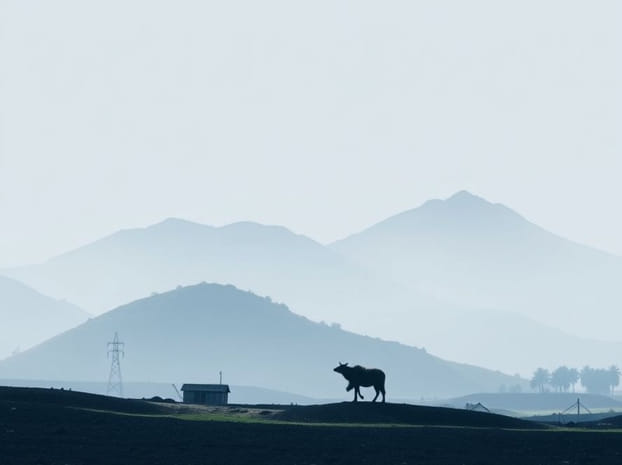
Godavari Valley Coalfield Photos
The Godavari Valley Coalfield, situated in the Indian state of Telangana, stands as the sole coal-producing region in South India. Spanning the districts of Adilabad, Karimnagar, Khammam, and Warangal, this expansive coalfield covers approximately 11,000 square kilometers of coal-bearing area within a larger basin of 17,400 square kilometers. Its significance lies not only in its geological attributes but also in its role in the energy sector and the livelihoods of countless individuals dependent on its resources.
Geological Overview
The Godavari Valley Coalfield is part of the Pranhita-Godavari Basin, a continuation of the Wardha Valley Coalfield. This basin is unique as it preserves about 3,000 meters of sedimentary layers deposited over a span of 200 million years, from the late Carboniferous to the Cretaceous period. The coal-bearing formations predominantly belong to the Lower Gondwana group, including the Talchir, Barakar, and Kamthi measures. The region is divided into twelve coal belts, with notable ones being the Tandur, North and South Godavari, Karlapalli, and Ramagundam coalfields. These belts are characterized by varying depths and qualities of coal, influencing mining techniques and extraction methods employed in the area.
Coal Reserves and Production
As of January 2004, the Geological Survey of India estimated the total coal reserves in the Godavari Valley Coalfield to be approximately 16,697 million tonnes, with about 8,091 million tonnes classified as proved reserves. The Singareni Collieries Company Limited (SCCL), a state-owned entity, oversees the mining operations in this region. Since its inception in 1920, SCCL has been instrumental in the development and expansion of mining activities, contributing significantly to the coal production in South India. The coal extracted from this region primarily comprises non-coking coal, which is predominantly utilized for power generation and industrial purposes.
Mining Operations and Techniques
The mining operations in the Godavari Valley Coalfield are diverse, employing both open-cast and underground mining methods. Open-cast mining is prevalent in areas where the coal seams are near the surface, allowing for the removal of overburden and extraction of coal in large quantities. In contrast, underground mining is employed in regions where the coal seams are deeper, necessitating shaft sinking and tunneling to access the coal deposits. The choice of mining technique is influenced by factors such as seam depth, coal quality, and environmental considerations.
Modern mining operations incorporate advanced technologies to enhance efficiency and safety. Mechanized equipment, including draglines, shovels, and haul trucks, are commonly used in open-cast mines to facilitate large-scale extraction. Additionally, the implementation of computerized systems for mine planning and resource management has improved operational effectiveness. Despite these advancements, mining activities in the region face challenges related to environmental sustainability, land reclamation, and the welfare of local communities.
Environmental and Social Impacts
Mining activities in the Godavari Valley Coalfield have significant environmental and social implications. The extraction process leads to deforestation, loss of biodiversity, and alteration of local water systems. Dust emissions and noise pollution from mining operations affect air quality and the health of nearby populations. Moreover, the displacement of communities due to land acquisition for mining projects raises concerns about rehabilitation and resettlement.
In response to these challenges, various measures have been implemented to mitigate adverse effects. Afforestation programs aim to restore vegetation in mined areas, while water management systems are designed to prevent contamination of local water bodies. The SCCL has also initiated community development projects focusing on education, healthcare, and infrastructure to improve the quality of life for affected populations. However, balancing economic growth with environmental conservation and social welfare remains an ongoing challenge.
Photographic Documentation
Visual documentation of the Godavari Valley Coalfield provides valuable insights into its scale, operations, and impacts. Photographs capture the vastness of open-cast mines, the intricate network of mining equipment, and the surrounding landscapes. These images serve as educational tools, raising awareness about the complexities of coal mining and its consequences. They also highlight the resilience of communities living in proximity to mining areas and their adaptation to changing environments.
For those interested in exploring visual representations of the Godavari Valley Coalfield, various platforms offer access to a collection of photographs. Websites such as Wikimedia Commons host images depicting different aspects of the coalfield, including aerial views, mining activities, and environmental conditions. These photographs are valuable resources for researchers, students, and the general public seeking to understand the multifaceted nature of coal mining in this region.
The Godavari Valley Coalfield is a cornerstone of South India’s coal industry, contributing significantly to the region’s energy needs and economic development. Its geological richness, coupled with extensive mining operations, underscores its importance. However, the environmental and social challenges associated with coal extraction necessitate a balanced approach that prioritizes sustainable practices and community welfare. Through continued research, technological innovation, and responsible management, the Godavari Valley Coalfield can continue to serve as a vital resource while minimizing its ecological footprint and enhancing the well-being of its inhabitants.
contentReference[oaicite0]