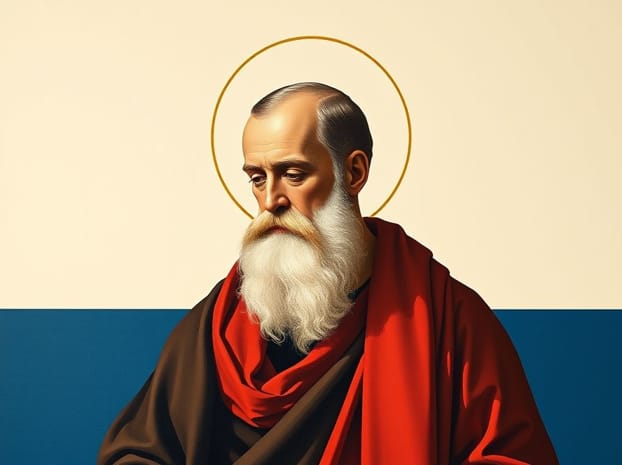
Giovanni Battista Moroni Artwork
Giovanni Battista Moroni is widely recognized as one of the most significant portrait painters of the Italian Renaissance, whose artwork captured not only the physical likeness but also the psychological depth of his subjects. Born around 1520 in the town of Albino, near Bergamo, Moroni developed a style that combined meticulous attention to detail with a striking sense of realism. His portraits reflect both the social status and the personal character of his sitters, ranging from wealthy patrons and clergy to members of the bourgeoisie. Over time, Moroni’s artwork has been celebrated for its nuanced representation, lifelike textures, and subtle psychological insight, making him a key figure in Renaissance art history.
Moroni’s Artistic Background and Influences
Giovanni Battista Moroni trained in the Lombard region of northern Italy, where he absorbed influences from prominent artists of the period. His early works show the impact of local painters as well as the techniques developed in Venice and Bergamo, where he would have encountered Titian and other Venetian masters. Moroni’s style is characterized by precise draftsmanship, careful handling of light and shadow, and a deep understanding of human anatomy and expression. Unlike many of his contemporaries who favored grandiose religious or mythological scenes, Moroni focused primarily on portraiture, emphasizing realism and authenticity over idealization.
Early Works and Development
Moroni’s earliest known works include religious paintings and altarpieces commissioned by local churches. These early pieces demonstrate his developing skill in capturing texture, drapery, and naturalistic lighting. Over time, he increasingly shifted toward portraiture, responding to growing demand from affluent patrons who sought to commemorate themselves or their families. This transition allowed him to refine his technique, focusing on detailed depictions of clothing, facial features, and hands, all while conveying subtle personality traits of his sitters.
Distinctive Features of Moroni’s Portraits
Giovanni Battista Moroni’s portraits stand out for their combination of realism, elegance, and psychological depth. He paid close attention to the individual characteristics of his subjects, rendering their faces with remarkable accuracy while capturing their mood and temperament. Moroni also had a talent for portraying fabrics and textures, from luxurious velvet garments to lace collars, enhancing the sense of realism. His use of light and shadow, often soft and diffused, gives his sitters a three-dimensional quality that draws viewers into the scene.
Key Elements in Moroni’s Artwork
- Detailed depiction of facial features that conveys personality and character.
- Realistic rendering of clothing, fabrics, and accessories to indicate social status.
- Subtle use of light and shadow to enhance depth and volume.
- Composed and often restrained poses that reflect dignity and elegance.
- Psychological insight, allowing viewers to perceive the inner life of the subject.
Notable Works
Among Moroni’s most celebrated portraits is The Tailor, which exemplifies his ability to portray everyday individuals with dignity and realism. In this painting, the tailor’s direct gaze, natural posture, and finely detailed attire illustrate Moroni’s skill in balancing realism with subtle narrative. Another important work is Portrait of a Gentleman in Black, which demonstrates his mastery of light and texture, presenting the sitter with a sense of gravitas and introspection. Moroni’s Young Man in a Red Cap also highlights his talent for capturing youthful energy and character through meticulous attention to expression and gesture.
Religious Commissions
While best known for his portraits, Moroni also produced religious artworks, including altarpieces and devotional paintings. These works often reflect the same attention to realism and human presence found in his portraits. Figures in his religious compositions are depicted with naturalistic proportions, detailed clothing, and expressive gestures, making them more relatable to viewers. Moroni’s religious art combines traditional iconography with a humanistic approach, bridging the gap between spiritual narrative and the real world.
Moroni’s Technique and Style
Moroni’s technique is distinguished by careful layering of paint, precise brushwork, and attention to anatomical correctness. He often used oil paints to achieve rich textures and subtle tonal variations, enhancing the realism of skin, hair, and fabrics. His compositions typically feature calm and measured poses, with minimal background distractions, allowing the viewer to focus on the sitter. The restrained color palette and controlled use of light give his portraits a serene, almost contemplative quality. Moroni’s combination of technical skill and psychological insight sets his work apart from many of his contemporaries.
Influence on Later Artists
Giovanni Battista Moroni’s influence extends beyond his lifetime, impacting portraiture in Italy and beyond. Later artists admired his dedication to realism and his ability to convey the individuality of his subjects. His focus on the human experience, combined with meticulous technique, inspired portraitists seeking to combine technical mastery with expressive depth. Art historians often regard Moroni as a precursor to later developments in psychological portraiture, emphasizing authenticity and character over idealized representation.
Collecting and Exhibitions
Moroni’s artwork is highly sought after by museums and collectors for its historical significance and technical excellence. Many of his portraits are held in prominent collections across Italy and Europe, including the Accademia Carrara in Bergamo and major Venetian galleries. Exhibitions featuring Moroni’s work often emphasize his contribution to Renaissance portraiture, showcasing the diversity of his subjects and the depth of his technique. Scholars continue to study his paintings to better understand his methods, patronage, and influence on Italian art.
Tips for Appreciating Moroni’s Work
- Observe the meticulous detail in clothing and accessories, which indicate social status and personality.
- Examine facial expressions and hand gestures to understand the psychological insight he provides.
- Notice the use of light and shadow that enhances the three-dimensional quality of his portraits.
- Compare religious and secular works to see the continuity of his realistic approach.
- Appreciate the balance between compositional simplicity and rich detail.
Giovanni Battista Moroni’s artwork represents a high point in Renaissance portraiture, combining technical skill, realism, and psychological depth. His portraits of nobles, professionals, and clergy convey both physical likeness and personal character, offering a window into the social and cultural fabric of his time. Moroni’s meticulous attention to detail, careful use of light, and humanistic approach have ensured his lasting legacy in art history. Through his works, viewers can appreciate the Renaissance emphasis on individuality, dignity, and the subtle interplay between appearance and personality, confirming Moroni as one of the most remarkable portraitists of his era.