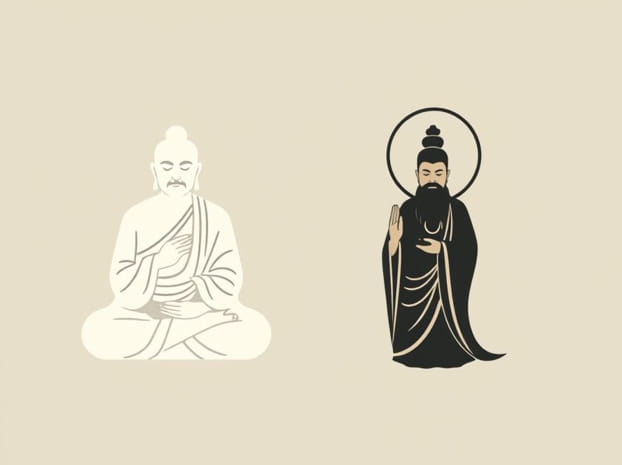
Gautam Buddha Vs Bodhidharma
The spiritual legacies of Gautam Buddha and Bodhidharma have left profound impacts on the philosophical and meditative traditions of Asia. While both figures are associated with enlightenment and the pursuit of inner peace, their teachings, historical contexts, and approaches to spiritual practice differ significantly. Gautam Buddha, the founder of Buddhism, focused on the path to liberation from suffering through ethical living, meditation, and wisdom. Bodhidharma, often regarded as the founder of Chan (Zen) Buddhism in China, emphasized direct experience, meditation, and the cultivation of mind-body unity. Comparing these two iconic figures sheds light on their contributions to spirituality, meditation practices, and the development of Eastern thought.
Gautam Buddha Life and Teachings
Gautam Buddha, born as Siddhartha Gautama in Lumbini, present-day Nepal, around the 5th-6th century BCE, was a prince who renounced his royal life in search of the truth about human suffering. After years of ascetic practice and deep meditation, he attained enlightenment under the Bodhi tree in Bodh Gaya, India. He spent the rest of his life teaching the Four Noble Truths and the Eightfold Path, guiding followers toward the cessation of suffering (dukkha) and the attainment of Nirvana. His teachings emphasize ethical conduct, mindfulness, compassion, and wisdom as the means to achieve spiritual liberation.
Core Principles of Gautam Buddha
- Four Noble TruthsRecognizing the existence of suffering, its causes, its cessation, and the path leading to its end.
- Eightfold PathRight understanding, right intention, right speech, right action, right livelihood, right effort, right mindfulness, and right concentration.
- Meditation and MindfulnessCultivating awareness and inner peace through focused mental practice.
- Compassion (Karuna)Developing empathy and ethical treatment toward all beings.
Bodhidharma Life and Contributions
Bodhidharma, believed to have lived around the 5th-6th century CE, is traditionally credited with bringing Chan Buddhism from India to China. While historical records about Bodhidharma are limited and sometimes legendary, he is renowned for emphasizing meditation, direct experience, and the importance of self-discipline. He is also associated with teaching the practice of wall-gazing meditation and is often linked to the Shaolin Monastery, where he supposedly instructed monks in both meditation and physical exercises to strengthen the body for long periods of seated practice. Bodhidharma’s teachings focus on realizing one’s innate Buddha-nature and awakening through introspection and rigorous training.
Key Teachings of Bodhidharma
- Meditation (Dhyana/Chan)Emphasis on seated meditation and self-awareness as the path to enlightenment.
- Direct TransmissionAwakening is realized through personal experience rather than textual study.
- Bodily DisciplineIntegration of physical and mental practice to cultivate focus and resilience.
- Mindfulness of the PresentAwareness of the present moment as the key to understanding reality.
Philosophical Differences
While Gautam Buddha and Bodhidharma share a focus on meditation and the attainment of enlightenment, their philosophical approaches differ. Gautam Buddha’s teachings are systematic, focusing on a structured path with ethical, meditative, and wisdom-based practices to overcome suffering. Bodhidharma’s approach is more experiential and emphasizes direct realization of one’s true nature without reliance on intellectual study or ritual. Zen (Chan) Buddhism, influenced by Bodhidharma, often uses paradoxes, koans, and direct meditation to guide practitioners toward awakening, reflecting a more intuitive approach compared to the analytical framework of traditional Buddhism.
Approach to Enlightenment
Gautam Buddha encouraged gradual progress through ethical living, meditation, and wisdom, highlighting the importance of understanding and practicing the Four Noble Truths and the Eightfold Path. Bodhidharma, in contrast, emphasized sudden enlightenment (satori) and direct insight into one’s mind, often bypassing textual study and ritualistic practices. This contrast illustrates the diversity within Buddhist traditions, highlighting how both structured guidance and intuitive realization can serve as paths to spiritual awakening.
Meditation Practices
Meditation is central to both Gautam Buddha’s and Bodhidharma’s teachings, but their methods and goals vary. Gautam Buddha’s meditation practices include mindfulness (Satipatthana) and concentration (Samadhi) aimed at cultivating awareness, ethical insight, and liberation from attachments. Bodhidharma focused on seated meditation (Zazen/Chan) and rigorous introspection to awaken to one’s innate Buddha-nature. Physical discipline and posture play a more pronounced role in Bodhidharma’s method, reflecting an integrated approach to mind-body cultivation.
Mindfulness vs. Direct Awareness
- Gautam Buddha Mindfulness meditation emphasizes observing thoughts, emotions, and sensations to develop insight and reduce suffering.
- Bodhidharma Direct awareness meditation seeks immediate recognition of one’s true nature, often through silent contemplation and intensive focus.
Influence on Later Traditions
Both Gautam Buddha and Bodhidharma profoundly influenced the development of Buddhist schools and practices. Gautam Buddha’s teachings formed the foundation of Theravada, Mahayana, and Vajrayana traditions, shaping ethical, meditative, and philosophical aspects of Buddhism across Asia. Bodhidharma’s influence is especially significant in Chan/Zen Buddhism, which spread to China, Korea, Japan, and beyond, emphasizing meditation, direct experience, and simplicity in practice. Together, their legacies illustrate how Buddhist philosophy can adapt to different cultural contexts while maintaining the core pursuit of enlightenment.
Global Impact
Gautam Buddha’s message of compassion, mindfulness, and liberation from suffering continues to inspire millions worldwide, influencing ethics, psychology, and meditation practices. Bodhidharma’s Chan/Zen teachings have left a lasting mark on East Asian spirituality, art, martial disciplines, and modern mindfulness practices. The interplay between structured guidance and intuitive insight in their teachings provides diverse approaches for seekers in contemporary times.
Gautam Buddha and Bodhidharma both represent monumental figures in the history of spiritual thought, yet their paths reflect complementary approaches to enlightenment. Gautam Buddha’s systematic teachings provide a structured route to ethical living, meditation, and wisdom, while Bodhidharma’s emphasis on direct experience, meditation, and mind-body discipline offers a more intuitive and immediate approach. By studying both figures, one can appreciate the depth and diversity of Buddhist practice, recognizing that the pursuit of inner peace and spiritual awakening can be achieved through multiple paths. Their legacies continue to inspire, guide, and transform lives around the world, highlighting the enduring relevance of their wisdom in modern spiritual practice.