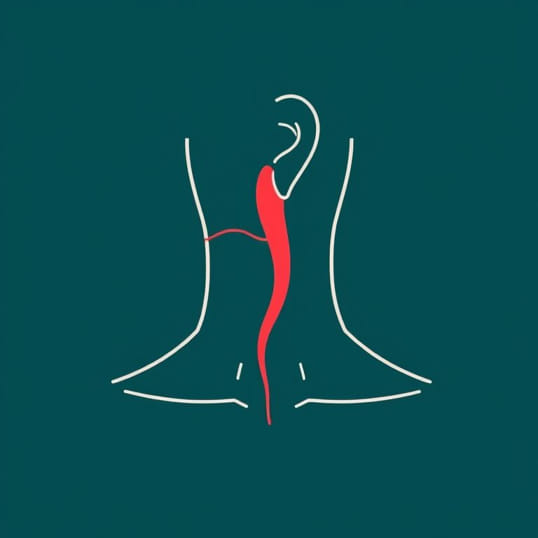
Function Of External Jugular Vein
The external jugular vein is a prominent vein located on the side of the neck that plays a critical role in the human circulatory system. Unlike the deeper veins that are not easily visible, the external jugular vein runs superficially just beneath the skin and is often noticeable, especially when a person is straining or standing upright. This vein is primarily responsible for draining blood from the head, face, and superficial regions of the neck, channeling it back toward the heart. Understanding the function of the external jugular vein is essential not only for medical students and professionals but also for individuals seeking a deeper knowledge of human anatomy and circulatory health.
Anatomical Structure of the External Jugular Vein
The external jugular vein originates near the angle of the mandible by the convergence of the posterior auricular vein and the retromandibular vein. It travels downward along the side of the neck, passing superficially over the sternocleidomastoid muscle before emptying into the subclavian vein, which ultimately returns blood to the heart. This vein is surrounded by connective tissue and contains one-way valves that prevent the backflow of blood, ensuring efficient circulation. Its superficial position makes it a landmark for medical procedures and clinical examinations.
Key Anatomical Features
- Runs superficially along the lateral side of the neck.
- Drains blood from the face, scalp, and superficial neck regions.
- Contains valves that prevent the backflow of blood.
- Empties into the subclavian vein, connecting to the heart.
- Frequently used as a site for intravenous access or central venous pressure assessment.
Main Functions of the External Jugular Vein
The primary function of the external jugular vein is to return deoxygenated blood from the superficial regions of the head and neck to the heart. By efficiently channeling blood into the subclavian vein, it helps maintain proper circulation and venous return. Additionally, the external jugular vein plays a role in clinical assessment, as its visibility and distension can provide valuable information about a patient’s cardiovascular health, fluid balance, and venous pressure.
Venous Drainage
The external jugular vein collects blood from smaller veins of the face, scalp, and superficial parts of the neck. These smaller veins include the anterior jugular vein, superficial temporal vein, and posterior auricular vein. This venous network ensures that blood from superficial tissues is efficiently collected and directed toward the subclavian vein, minimizing the risk of congestion and facilitating oxygen-poor blood return to the heart for reoxygenation in the lungs.
Clinical Importance
The external jugular vein is often examined to assess central venous pressure (CVP), which is an indicator of heart function and blood volume status. When a patient is lying at a 45-degree angle, the distension of the external jugular vein can indicate conditions such as heart failure, fluid overload, or obstruction of venous return. Medical professionals rely on this vein’s visibility and accessibility for diagnostic purposes, making it a valuable anatomical feature beyond its basic circulatory function.
Other Functional Roles
- Serves as a site for intravenous catheter insertion in emergency or critical care situations.
- Assists in maintaining efficient blood flow from superficial tissues to deeper veins.
- Provides a visible indicator for venous congestion, which can help detect cardiovascular abnormalities.
- Supports the venous network by connecting superficial and deep veins in the neck region.
Associated Conditions and Clinical Considerations
The external jugular vein can be affected by several medical conditions that may compromise its function or visibility. For example, thrombosis, or the formation of a blood clot, can obstruct blood flow and lead to swelling or pain in the neck. Varicosities, or abnormally enlarged veins, can occur due to increased venous pressure or valve malfunction. Additionally, external jugular vein distension is a common clinical sign in patients with right-sided heart failure, pulmonary hypertension, or pericardial effusion.
Common Conditions
- Thrombophlebitis – inflammation and clot formation in the vein.
- Varicose veins – enlarged or twisted veins due to valve failure.
- Distension indicating elevated central venous pressure.
- Injury or trauma to the neck affecting venous drainage.
Techniques for Examining the External Jugular Vein
Medical professionals often assess the external jugular vein to gather information about a patient’s circulatory status. Examination typically involves positioning the patient at a 45-degree incline and observing the vein for distension, pulsation, and symmetry. This assessment helps determine fluid status, cardiac function, and potential obstructions in venous return. Additionally, the external jugular vein can serve as an access point for intravenous fluids, medications, or central venous pressure monitoring, highlighting its importance in both diagnostics and treatment.
Examination Steps
- Position the patient at a 45-degree angle for optimal vein visibility.
- Observe for distension, pulsation, or asymmetry in the vein.
- Palpate gently to assess the vein’s elasticity and detect any tenderness or swelling.
- Note changes during respiration or when the patient performs maneuvers such as turning the head.
- Use findings to evaluate central venous pressure and circulatory health.
The external jugular vein is a vital component of the human circulatory system, responsible for draining blood from the head, face, and superficial neck regions back to the heart. Its superficial location not only facilitates venous return but also provides a window into cardiovascular health. Through its roles in venous drainage, clinical assessment, and intravenous access, the external jugular vein proves to be both functionally significant and clinically valuable. Understanding its anatomy, function, and clinical importance helps medical professionals diagnose conditions, monitor patient status, and administer treatments effectively, making it an essential feature in both human biology and medical practice.