Function Of Dendrites In Neuron
Neurons are the fundamental building blocks of the nervous system, responsible for transmitting information throughout the body. Among their key components, dendrites play a crucial role in receiving and processing signals from other neurons. These branched projections extend from the cell body, increasing the surface area available for synaptic connections. Understanding the function of dendrites in neurons is essential for comprehending how the brain processes information, forms memories, and coordinates complex behaviors. Dendrites are not merely passive receivers; they actively integrate electrical and chemical signals, influencing the overall activity of neurons and neural networks.
Structure of Dendrites
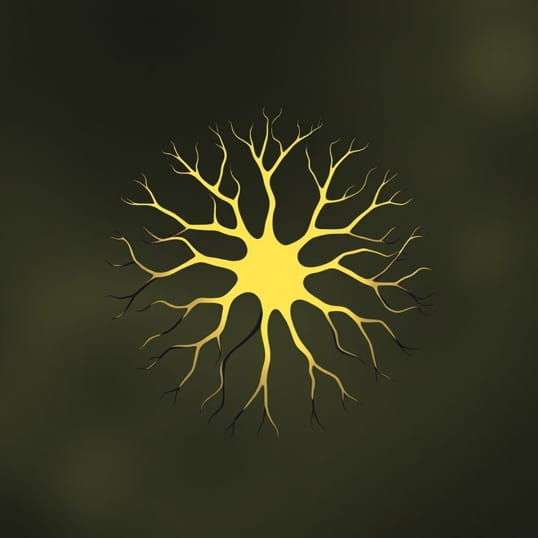
Dendrites are tree-like extensions of the neuron’s soma, or cell body. Their highly branched structure allows a single neuron to connect with thousands of other neurons, creating intricate networks that facilitate communication across the nervous system. The structure of dendrites includes dendritic shafts and dendritic spines, which are small protrusions that house synapses. The morphology of dendrites can vary widely depending on the type of neuron and its function. For instance, pyramidal neurons in the cerebral cortex have long, branching dendrites that receive inputs from multiple sources, while sensory neurons may have simpler dendritic structures adapted for specific stimuli.
Dendritic Components
- Dendritic shafts The main branches that extend from the cell body, transmitting electrical signals toward the soma.
- Dendritic spines Small, bulbous protrusions that serve as specialized sites for synaptic connections.
- Receptors Proteins embedded in the dendritic membrane that detect neurotransmitters released from other neurons.
- Ion channels Channels that allow ions to flow in and out, influencing the electrical activity of the dendrite.
- Cytoskeleton A structural network of microtubules and actin filaments that maintains dendritic shape and supports transport of molecules.
Signal Reception and Integration
The primary function of dendrites is to receive chemical signals from other neurons through synapses. Neurotransmitters released from presynaptic neurons bind to receptors on the dendritic membrane, generating electrical changes called postsynaptic potentials. These potentials can be excitatory, promoting neuronal firing, or inhibitory, reducing the likelihood of action potentials. Dendrites integrate thousands of such inputs, summing them in both space and time. This complex integration determines whether the neuron will generate an action potential, allowing dendrites to play a critical role in neural computation and information processing.
Synaptic Transmission
- Excitatory postsynaptic potentials (EPSPs) Signals that increase the likelihood of the neuron firing an action potential.
- Inhibitory postsynaptic potentials (IPSPs) Signals that decrease the likelihood of neuronal firing.
- Spatial summation The combination of inputs from multiple synapses at different locations on the dendrite.
- Temporal summation The integration of signals arriving in rapid succession at the same dendritic site.
- Signal propagation Electrical changes travel from dendrites to the soma, influencing action potential generation.
Plasticity and Learning
Dendrites are central to neural plasticity, the ability of the nervous system to adapt and reorganize in response to experiences. Dendritic spines can change shape, number, and strength over time, reflecting synaptic modifications associated with learning and memory. Long-term potentiation (LTP) and long-term depression (LTD) are processes in which dendritic synapses strengthen or weaken, altering the efficiency of signal transmission. These structural and functional changes enable neurons to store information and adapt to new experiences, highlighting the critical role of dendrites in cognitive processes.
Dendritic Plasticity Features
- Spine formation and elimination Dendritic spines can grow or retract depending on synaptic activity.
- Receptor trafficking Movement of neurotransmitter receptors into or out of dendritic spines modulates synaptic strength.
- Calcium signaling Calcium ions play a key role in dendritic signal processing and plasticity mechanisms.
- Local protein synthesis Dendrites can produce proteins locally to support synaptic changes.
- Experience-dependent remodeling Environmental stimuli and learning experiences influence dendritic structure and connectivity.
Role in Neural Computation
Dendrites are not passive conduits; they perform complex computations on incoming signals. Nonlinear properties of dendrites, such as voltage-dependent ion channels, allow for selective amplification or attenuation of inputs. This enables neurons to act as sophisticated processors, integrating diverse information streams and performing functions beyond simple signal relay. In cortical networks, dendritic computations contribute to sensory perception, decision-making, and motor control. Understanding how dendrites process and filter information is crucial for modeling brain function and developing neural-inspired technologies.
Computational Functions
- Signal filtering Dendrites can selectively enhance or suppress inputs based on frequency or timing.
- Coincidence detection Some dendrites detect simultaneous inputs, influencing action potential generation.
- Nonlinear integration Voltage-gated channels create complex response patterns to multiple inputs.
- Compartmentalized processing Different dendritic branches may process distinct inputs independently.
- Contribution to network dynamics Dendritic computation affects overall neural network behavior and information flow.
Dendrites and Neurological Disorders
Abnormalities in dendritic structure and function are linked to various neurological and psychiatric disorders. For example, reduced dendritic branching and spine density are observed in conditions such as autism, schizophrenia, and Alzheimer’s disease. These structural deficits can impair synaptic connectivity and information processing, contributing to cognitive and behavioral symptoms. Research into dendritic dysfunction provides valuable insights into disease mechanisms and potential therapeutic strategies aimed at restoring healthy dendritic networks.
Disorders Associated with Dendritic Dysfunction
- Autism spectrum disorder Altered dendritic spine morphology affects synaptic connectivity.
- Schizophrenia Abnormal dendritic architecture contributes to disrupted neural communication.
- Alzheimer’s disease Loss of dendritic spines correlates with memory impairment.
- Intellectual disabilities Dendritic abnormalities can affect learning and cognitive development.
- Epilepsy Changes in dendritic excitability influence seizure susceptibility.
Dendrites are essential components of neurons that perform a wide range of functions critical to nervous system activity. They receive and integrate synaptic inputs, participate in learning and memory through plasticity, and execute complex computations that influence neuronal output. Dendritic structure and function are also closely tied to neurological health, with abnormalities contributing to various disorders. By understanding the function of dendrites in neurons, researchers gain valuable insight into brain function, cognition, and potential avenues for treating neurological diseases. The study of dendrites continues to reveal the remarkable complexity and adaptability of the nervous system, highlighting their indispensable role in neural communication and behavior.