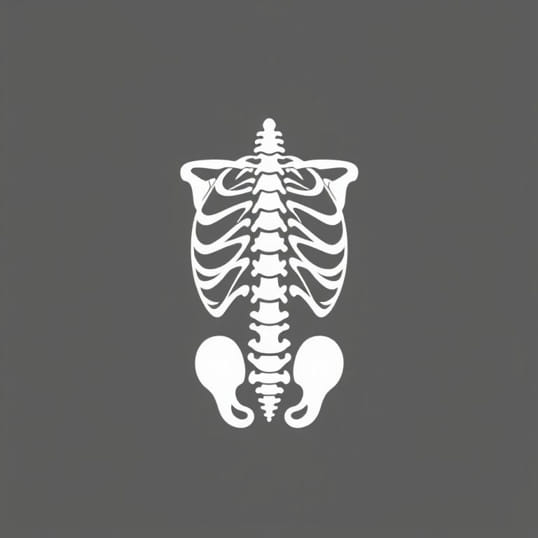
Function Of Caudal Vertebrae
The vertebral column is one of the most fascinating structural systems in the body, and among its many regions, the caudal vertebrae hold unique significance. While often overlooked compared to cervical, thoracic, or lumbar vertebrae, the caudal vertebrae play important roles in stability, balance, communication, and locomotion, particularly in animals with prominent tails. Even in humans, where the tailbone or coccyx represents a remnant of these vertebrae, the caudal region contributes to posture, support, and movement. Understanding the function of caudal vertebrae sheds light on evolutionary biology, anatomy, and the ways vertebrates adapt to their environments.
What Are Caudal Vertebrae?
Caudal vertebrae are the bones that form the tail portion of the vertebral column. The number of caudal vertebrae varies widely among species. For example, many reptiles and mammals with long tails have dozens of caudal vertebrae, while in humans, they are reduced to just three to five fused bones known as the coccyx. Despite these differences, the general purpose of caudal vertebrae remains the same to provide support and facilitate specific movements related to the tail or tail-like structures.
Function of Caudal Vertebrae in Different Species
The role of caudal vertebrae depends greatly on the species in question. Animals with long, functional tails rely heavily on these vertebrae for daily survival tasks, while humans retain them in a reduced form that still serves important purposes.
In Mammals
Mammals with tails, such as cats, dogs, and monkeys, use their caudal vertebrae for balance, communication, and locomotion. The bones provide flexibility and strength, allowing tails to act as extensions of the spine.
- BalanceCats use their tails for balance when walking on narrow surfaces.
- CommunicationDogs express emotions through tail movement, supported by caudal vertebrae.
- LocomotionMonkeys rely on prehensile tails, which contain numerous caudal vertebrae, for grasping branches.
In Birds
Birds have a modified structure where the caudal vertebrae are partially fused into the pygostyle. This structure supports tail feathers, which are essential for steering and balance during flight. Without functional caudal vertebrae, birds would struggle to maneuver efficiently in the air.
In Reptiles
Reptiles like lizards and crocodiles often have numerous caudal vertebrae that form long, muscular tails. These tails serve multiple purposes, from defense to swimming. Some lizards can even shed their tails (autotomy) as a survival strategy, and the caudal vertebrae are adapted to allow this process.
In Fish
Fish also have caudal vertebrae that extend into their tails. These bones provide the necessary structure for tail fins, which are crucial for propulsion and directional movement in water. The flexibility of these vertebrae makes swimming efficient and powerful.
In Humans
Although humans no longer have long tails, the caudal vertebrae remain as the coccyx. This small, triangular structure still plays a role in posture, stability, and attachment for ligaments and muscles. It also helps distribute pressure when sitting.
Main Functions of Caudal Vertebrae
The function of caudal vertebrae can be summarized into several categories that reflect their contribution to movement, stability, and communication.
Balance and Stability
In many animals, caudal vertebrae support tails that act as counterbalances. For instance, kangaroos use their tails like a third leg when hopping or standing still. This stabilizing function is essential for animals that climb, leap, or move quickly.
Locomotion and Propulsion
For species like fish and reptiles, the caudal vertebrae are central to movement. Fish use their tails to generate thrust, while crocodiles rely on strong tails for swimming. The vertebrae provide strength and flexibility to make these movements possible.
Protection and Defense
In some reptiles, tails are used as weapons. Crocodiles and large lizards can deliver powerful tail strikes, thanks to the support of robust caudal vertebrae. Even smaller lizards benefit from the ability to detach their tails, sacrificing part of their body to escape predators.
Communication and Expression
Tail movements convey important signals in many species. Horses swish their tails to deter insects, dogs wag their tails to express mood, and cats position their tails to indicate aggression or curiosity. The caudal vertebrae allow for these subtle and expressive movements.
Support for Muscles and Ligaments
Caudal vertebrae provide attachment points for muscles, tendons, and ligaments. These connections enable precise movements and support functions like sitting, running, or grasping, depending on the species.
The Coccyx Human Caudal Vertebrae
In humans, the coccyx may seem like a vestigial structure, but it still has important roles. It consists of three to five small bones fused together and connected to the sacrum. Far from being useless, the coccyx supports various physical functions.
Functions of the Human Coccyx
- Acts as an anchor point for pelvic floor muscles
- Supports ligaments involved in sitting and standing
- Helps distribute body weight when sitting
- Contributes to overall posture and stability
Although injury to the coccyx can cause significant discomfort, its contribution to everyday activities shows that even small caudal vertebrae have meaningful functions.
Evolutionary Significance of Caudal Vertebrae
From an evolutionary perspective, the caudal vertebrae highlight the adaptability of vertebrates. Early vertebrates developed tails as extensions of the spine for swimming and balance. Over time, as species adapted to new environments, tails took on new functions or became reduced, as seen in humans and apes. The persistence of caudal vertebrae in all vertebrates demonstrates their deep evolutionary roots.
Examples of Evolutionary Adaptations
- Fish tails specialized for propulsion in water
- Lizards with detachable tails for predator evasion
- Mammals with prehensile tails for climbing and grasping
- Birds with pygostyles for feather support in flight
- Humans with coccyx as a reduced but functional structure
Caudal Vertebrae and Health
In both humans and animals, the caudal vertebrae can be prone to injury or disease. In humans, coccyx pain (coccydynia) may result from trauma, prolonged sitting, or childbirth. In animals, fractures of the tail can affect balance, movement, or communication. Maintaining the health of caudal vertebrae is important for overall well-being.
Common Issues in Humans
- Fractures or dislocations of the coccyx
- Chronic coccyx pain from poor posture
- Pressure-related discomfort from prolonged sitting
Common Issues in Animals
- Tail fractures in dogs or cats due to accidents
- Infections or inflammation of tail tissue
- Loss of balance after severe tail injury
The function of caudal vertebrae extends far beyond their role as structural bones. They support tails that help with balance, locomotion, communication, and defense in many species. Even in humans, where they appear as the coccyx, these bones contribute to posture, stability, and muscle attachment. The caudal vertebrae also tell an important story of evolution, showing how structures can adapt, shrink, or transform over millions of years. Recognizing their importance provides a deeper appreciation for anatomy and the remarkable diversity of vertebrate life.