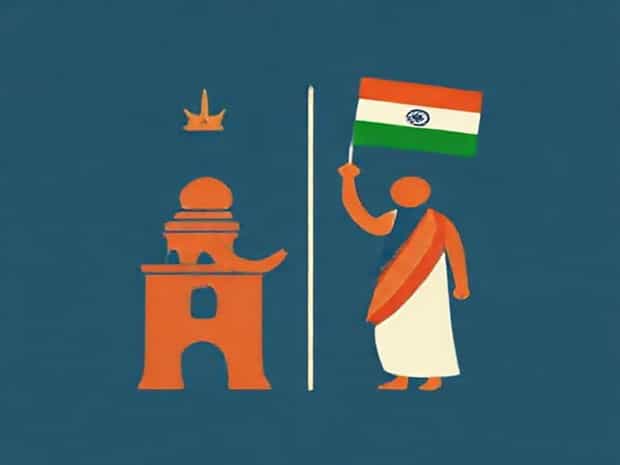
French Secularism Vs Indian Secularism
Secularism has been interpreted in different ways across the world, shaped by history, culture, and politics. Two fascinating models of secularism can be found in France and India. Both nations adopted secularism to manage religious diversity, but they practice it very differently. French secularism, known as laïcité, is rooted in strict separation between religion and the state, while Indian secularism emphasizes equal respect and protection for all religions. Understanding French secularism vs Indian secularism helps us see how societies attempt to balance faith, freedom, and governance.
Historical Background of Secularism in France
French secularism has its origins in the French Revolution, which challenged the power of the Catholic Church. The principle of laïcité was officially recognized in 1905 with the law separating church and state. This law declared that the state would neither recognize nor fund any religion. In practice, this created a model where religion is kept strictly private, and public life remains neutral. Schools, government offices, and public institutions are required to be free from religious influence. Over time, this model has shaped French identity, emphasizing universal citizenship over religious or cultural difference.
Historical Background of Secularism in India
India’s approach to secularism emerged after independence in 1947, when leaders faced the challenge of uniting a deeply diverse nation with multiple religions, languages, and traditions. Unlike France, India did not seek to exclude religion from public life. Instead, Indian secularism was designed to ensure equal treatment and protection of all religions. The Indian Constitution guarantees freedom of religion, allowing people to practice, profess, and propagate their faith. At the same time, the state maintains the authority to intervene in religious practices if they conflict with principles of equality, social reform, or justice.
Core Principles of French Secularism
French secularism is characterized by its strict neutrality. The state avoids endorsing any religion, and public spaces are kept free from religious symbols. Citizens are free to practice their faith in private, but religious expression is limited in official or educational settings. This model is based on the belief that religion should not interfere with civic life and that individuals should interact in the public sphere as equal citizens, without religious distinctions.
Key Features of Laïcité
- Clear separation of church and state
- No state funding for religious groups
- Ban on religious symbols in public schools and institutions
- Emphasis on individual freedom over group identity
- Universal citizenship as the foundation of equality
Core Principles of Indian Secularism
Indian secularism takes a more inclusive approach. Instead of removing religion from public life, the Indian model ensures that all religions receive equal recognition and protection. The state may even provide funding or support to religious institutions in certain contexts, such as maintaining religious monuments or supporting minority schools. The emphasis is not on separation, but on balance and harmony, ensuring that no religion dominates others.
Key Features of Indian Secularism
- Equal respect for all religions
- Freedom to practice, preach, and propagate religion
- State can intervene in religious practices for social reform
- Recognition of group rights alongside individual rights
- Pluralism and coexistence as core values
Differences Between French and Indian Secularism
When comparing French secularism vs Indian secularism, the differences are striking. France views secularism as a shield to protect the state from religious influence, while India sees it as a bridge to maintain harmony in a multi-faith society. These contrasting approaches have influenced laws, policies, and even public debates in both countries.
Key Differences
- PhilosophyFrance emphasizes separation, while India emphasizes equal respect.
- Religion in Public SpacesFrance restricts visible religious symbols, while India allows religious expression in public life.
- State SupportFrance denies state funding for religious institutions, while India may provide support in certain cases.
- Individual vs Group RightsFrance prioritizes individual identity as citizens, while India recognizes both individual and community rights.
- Historical ContextFrance was reacting against church dominance, while India was managing religious diversity after partition.
Controversies in French Secularism
The French model has faced challenges in recent decades, especially with increasing religious diversity. Laws banning the wearing of headscarves, burqas, or other religious symbols in schools and public institutions have sparked debate. Supporters argue that these laws protect equality and neutrality, while critics claim they target minority communities, particularly Muslims, and restrict freedom of expression. This tension reflects the difficulty of applying laïcité in a multicultural society.
Controversies in Indian Secularism
In India, secularism has also been contested. Critics argue that the state sometimes appears to favor certain religions for political gain, undermining the principle of neutrality. Issues like personal laws, which allow different religious groups to follow their own rules on marriage or inheritance, have also raised questions about equality. At the same time, religious tensions and communal conflicts have tested the limits of Indian secularism, highlighting the challenge of balancing diversity with unity.
Similarities Between the Two Models
Despite their differences, French and Indian secularism share common goals. Both aim to ensure that religion does not dominate politics and that individuals can enjoy freedom of belief. Both systems are rooted in democratic ideals, protecting citizens from religious coercion. At their core, they seek to create a fair society where people of different faiths or no faith can coexist peacefully.
Shared Goals
- Protecting freedom of religion
- Preventing religious domination of politics
- Promoting equality among citizens
- Encouraging peaceful coexistence
- Balancing faith and democracy
Impact on Society
The impact of secularism in France and India extends far beyond laws and policies. In France, laïcité shapes the national identity, where citizenship and equality are valued above cultural or religious differences. In India, secularism contributes to the country’s pluralistic character, where diversity is celebrated and woven into the social fabric. Both models influence how people interact in public life, how schools function, and how governments make decisions regarding religion and culture.
The comparison of French secularism vs Indian secularism highlights two very different yet equally important approaches to managing religion in society. France relies on strict separation to preserve neutrality, while India embraces pluralism to maintain harmony. Both models have strengths and challenges, reflecting their unique histories and social contexts. As societies continue to evolve, the debate around secularism will remain central to discussions about identity, freedom, and democracy. By understanding these models, we gain insights into how nations can strive for equality while respecting religious differences.