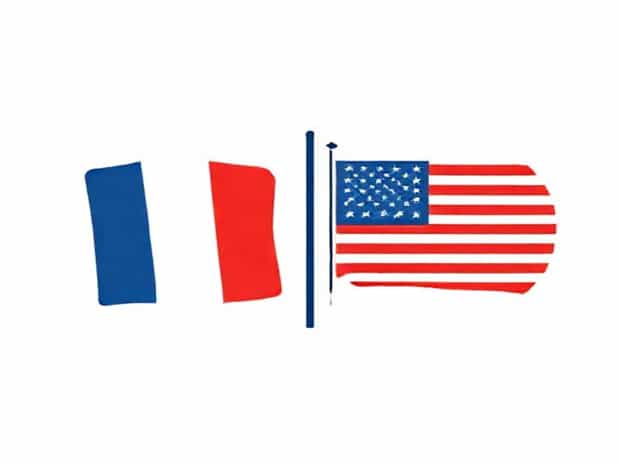
French Secularism Vs American Secularism
The idea of secularism plays a central role in shaping modern democracies, yet it takes different forms depending on history, culture, and politics. French secularism and American secularism are two of the most well-known models, each with unique interpretations of the separation between religion and the state. While both seek to protect freedom of belief, their approaches reveal significant contrasts in how religion interacts with public life, law, and individual rights. Understanding the differences between French secularism and American secularism is essential for grasping broader debates about freedom, equality, and democracy in the modern world.
Historical Roots of French Secularism
French secularism, known aslaïcité, has its roots in the French Revolution of the late 18th century. During that period, the Catholic Church held immense influence over politics, education, and daily life. Revolutionaries sought to reduce this power by emphasizing reason, equality, and the authority of the state over religion. Over time, this evolved into a principle that the state must remain neutral while religion is considered a strictly private matter.
The 1905 Law on Separation
The foundation of French secularism lies in the 1905 Law on the Separation of the Churches and the State. This law established that the Republic does not recognize, pay, or subsidize any religion. It marked a strict boundary where religion was excluded from public institutions, particularly schools and government spaces. The law aimed to guarantee freedom of conscience while reinforcing neutrality in public life.
Modern Interpretations
In today’s France, secularism is often associated with visible neutrality in public spaces. This has led to policies such as banning religious symbols, including the Islamic headscarf, in public schools. Supporters argue that these measures protect equality and prevent religious influence on state affairs, while critics see them as restrictions on personal freedoms.
Historical Roots of American Secularism
American secularism developed under very different circumstances. When the United States was founded in the late 18th century, many settlers had fled Europe to escape religious persecution. As a result, the Founding Fathers emphasized the protection of individual religious liberty rather than restricting religion from the public sphere. This approach aimed to prevent the establishment of a state church while ensuring people could freely practice their beliefs.
The First Amendment
The First Amendment to the U.S. Constitution states that Congress shall make no law respecting an establishment of religion, or prohibiting the free exercise thereof. This phrase created two key principles the Establishment Clause, which prevents the government from endorsing a religion, and the Free Exercise Clause, which protects individuals’ right to practice their faith. Unlike France, the U.S. system allows religion to flourish in public spaces as long as the government remains neutral.
Public Role of Religion
In practice, American secularism coexists with a strong religious presence in public life. References to God appear on currency, in pledges, and in political speeches. Religious organizations play a visible role in social debates, education, and charity. This demonstrates a model where religion is not excluded but balanced with constitutional protections of diversity and pluralism.
Key Differences Between French and American Secularism
Although both systems uphold freedom of belief, their differences reflect contrasting historical and cultural experiences. French secularism is more restrictive in public spaces, while American secularism embraces religious expression within certain limits.
- French Secularism (Laïcité)Religion is strictly private, and the state enforces neutrality by limiting visible religious expression in public institutions.
- American SecularismReligion is publicly visible and protected, with the state maintaining neutrality by avoiding favoritism toward any specific faith.
Approach to Religious Symbols
One of the most visible contrasts is the treatment of religious symbols. In France, laws restrict students and public officials from wearing visible religious items such as headscarves, crosses, or turbans in state schools and offices. In the U.S., religious symbols are generally permitted in public spaces, and restrictions are seen as violations of individual rights unless they interfere with government neutrality.
Philosophy of Freedom
French secularism emphasizes collective equality, seeking to protect citizens from religious influence in shared spaces. American secularism, by contrast, emphasizes individual liberty, ensuring that people can freely express their beliefs even in public institutions.
Controversies and Criticisms
Both models face criticisms and ongoing debates. In France, secularism is sometimes criticized for disproportionately affecting minority religions, particularly Muslims. Bans on headscarves and religious attire have been accused of targeting cultural identity under the name of neutrality. Critics argue this restricts freedom of expression and marginalizes communities.
In the U.S., critics argue that the strong public presence of religion risks blurring the line between church and state. Issues such as prayer in public schools, religious influence in politics, and debates over reproductive rights highlight tensions in maintaining neutrality while respecting freedom of religion.
Secularism and Education
Education is a central battleground for secularism in both countries. In France, state schools are strictly secular, with no place for religious expression. Teachers and students are expected to present themselves without religious symbols to maintain neutrality. This reflects the French vision of schools as spaces of unity and equal citizenship.
In the U.S., schools cannot endorse religion, but students are free to wear religious symbols, pray individually, or form religious clubs. The debate continues over issues such as teaching evolution versus creationism, but overall, American schools reflect a more open approach to religious diversity.
Impact on Society
The differences between French and American secularism shape their societies in distinct ways. France promotes a vision of public life where religion is invisible, aiming for a shared civic identity based on universal values. The United States promotes pluralism, where multiple religious traditions coexist in public life, reflecting the diversity of its population.
French Model Unity through Neutrality
In the French model, secularism seeks to create unity by removing religious differences from public institutions. The goal is to prevent division by ensuring that all citizens interact on equal terms without religious influence in shared spaces.
American Model Unity through Diversity
The American model encourages unity through diversity. By protecting religious expression, it allows communities to maintain their identity while contributing to the broader democratic system. This approach reflects the multicultural foundation of American society.
Similarities Between French and American Secularism
Despite their differences, the two systems share important similarities
- Both seek to prevent the dominance of a single religion over the state.
- Both protect freedom of conscience as a fundamental right.
- Both see secularism as essential for democracy and equality.
Global Relevance of the Debate
The comparison of French secularism vs American secularism goes beyond national borders. Countries around the world face similar debates on how to balance religion and state. Some adopt stricter models like France, while others prefer more open systems like the U.S. The global relevance lies in the ongoing challenge of respecting individual freedoms while ensuring equality in diverse societies.
French secularism and American secularism represent two distinct but equally important models of managing the relationship between religion and the state. France emphasizes neutrality and equality by keeping religion out of public institutions, while the U.S. emphasizes freedom and diversity by protecting religious expression. Both models highlight different prioritiescollective equality in France and individual liberty in the U.S.and both face challenges in adapting to modern multicultural societies. Ultimately, the comparison shows that secularism is not a fixed idea but a flexible principle shaped by history, culture, and democratic values.