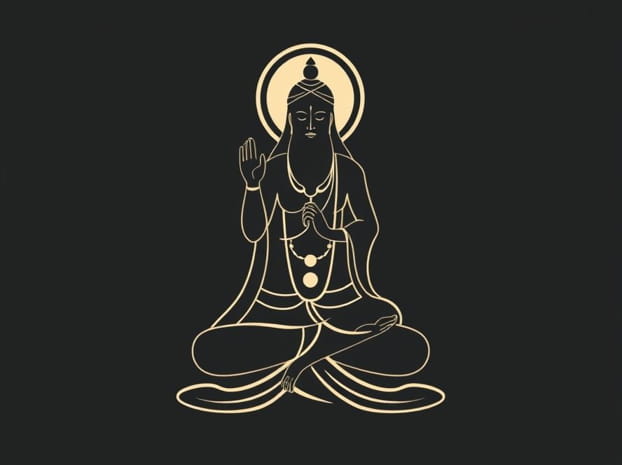
Founder Of Advaita Vedanta
The tradition of Advaita Vedanta has fascinated seekers of truth for centuries, offering a philosophy that points toward the unity of existence and the realization of ultimate reality. At the center of this profound school of Indian thought stands its founder, Adi Shankaracharya, also known as Adi Shankara. His contributions went beyond philosophy, as he built a framework that influenced religious practices, spiritual understanding, and cultural life in India. The life and work of this teacher continue to inspire discussions about self-realization, non-duality, and the meaning of liberation. Understanding the founder of Advaita Vedanta provides not only historical knowledge but also insights into one of the most influential spiritual systems in human thought.
Who Was Adi Shankaracharya?
Adi Shankaracharya, often simply called Shankara, was born in Kerala, India, around the 8th century CE. From a very young age, he displayed remarkable intelligence and spiritual depth. His writings and debates shaped the Advaita Vedanta tradition, which emphasizes the non-dual nature of reality. According to his teachings, the individual soul (Atman) is not separate from the ultimate reality (Brahman). This principle of non-duality is the foundation of Advaita Vedanta.
Philosophy of Advaita Vedanta
The philosophy taught by Shankara centers on the idea that the multiplicity of the world is an illusion, or Maya. Behind this illusion lies the one, indivisible truth Brahman. The goal of human life, according to Advaita Vedanta, is to transcend ignorance and realize the unity of Atman and Brahman.
Core Principles
- Non-dualityReality is one; distinctions between self and universe are illusions.
- MayaThe material world is transient and deceptive, hiding the true nature of existence.
- MokshaLiberation comes through self-knowledge and realization of unity with Brahman.
- Jnana YogaThe path of knowledge is the primary way to achieve liberation.
Life Journey of Adi Shankaracharya
Shankara’s life was both short and extraordinary. Tradition says he lived only 32 years, yet in that time, he traveled across the Indian subcontinent, debating scholars, establishing monastic centers, and writing profound commentaries.
Early Life
Born into a Brahmin family, Shankara lost his father at a young age. He showed spiritual inclinations early and desired to become a monk. His mother initially resisted, but legends describe miraculous events that convinced her to allow his renunciation. He then set out on a path of study and teaching.
Teacher and Disciple Tradition
Shankara became a disciple of Govinda Bhagavatpada, who introduced him to the deeper aspects of Vedantic philosophy. Under his guidance, Shankara developed his understanding of non-duality, which later became the essence of Advaita Vedanta.
Travels and Debates
One of the most remarkable aspects of Shankara’s life was his extensive travel across India. He engaged in debates with philosophers of other schools, including Buddhists, Jains, and Mimamsakas. Through these debates, he clarified and strengthened the Advaita philosophy, gaining recognition as a profound thinker and teacher.
Writings of Shankara
The founder of Advaita Vedanta left behind an impressive body of work. His writings provide clarity and depth to the Upanishads, Bhagavad Gita, and Brahma Sutras, which are considered the foundational texts of Vedanta.
Key Works
- Brahma Sutra BhashyaA commentary on the Brahma Sutras that lays the foundation for Advaita interpretation.
- Upanishad CommentariesShankara explained the philosophical essence of major Upanishads, focusing on non-duality.
- Bhagavad Gita BhashyaHis commentary highlights the supremacy of knowledge and self-realization.
- Prakarana GranthasIndependent treatises like Vivekachudamani further explain Advaita principles.
Establishment of Monastic Institutions
Shankara was not only a philosopher but also an organizer. He established four mathas, or monastic centers, in different regions of India Sringeri in the south, Dwarka in the west, Puri in the east, and Jyotirmath in the north. These institutions helped preserve and spread Advaita Vedanta, and they continue to function as centers of learning and spirituality.
Shankara’s Impact on Indian Thought
The founder of Advaita Vedanta influenced Indian philosophy in ways that resonate even today. By harmonizing ritual practices with philosophical inquiry, he provided a balanced approach to spirituality. His debates also revived Hinduism during a time when Buddhist and Jain philosophies were widespread.
Key Contributions
- Unified different strands of Vedantic thought under the Advaita system
- Reinforced the authority of the Vedas as ultimate sources of knowledge
- Integrated philosophy with practice through monastic centers
- Encouraged pursuit of liberation through knowledge and meditation
Comparison with Other Schools of Vedanta
Advaita Vedanta, as shaped by Shankara, stands apart from other schools of Vedanta such as Vishishtadvaita and Dvaita. While Advaita emphasizes absolute non-duality, Vishishtadvaita speaks of qualified non-duality, and Dvaita focuses on dualism between God and soul. Shankara’s system provided a unique perspective that appealed to seekers of intellectual and spiritual clarity.
Legacy of the Founder of Advaita Vedanta
Even centuries after his life, Adi Shankaracharya’s legacy continues to shape spiritual discourse. His teachings on non-duality resonate not only in India but also in modern global discussions on philosophy, consciousness, and self-realization. The principles of Advaita Vedanta have been studied alongside Western philosophies, psychology, and even modern science, highlighting their universal appeal.
Global Influence
Advaita Vedanta has inspired spiritual movements around the world. Many modern teachers draw from Shankara’s writings, making his philosophy accessible to global audiences. The emphasis on inner realization and unity beyond divisions makes Advaita relevant to seekers from diverse backgrounds.
The founder of Advaita Vedanta, Adi Shankaracharya, was not just a philosopher but a spiritual visionary whose ideas continue to inspire generations. His articulation of non-duality, his establishment of monastic centers, and his profound writings created a lasting foundation for Indian philosophy. By emphasizing the unity of Atman and Brahman, Shankara provided a timeless path toward liberation and self-realization. His life shows how a brief span can hold immeasurable influence, making him one of the most remarkable figures in world philosophy and spirituality.