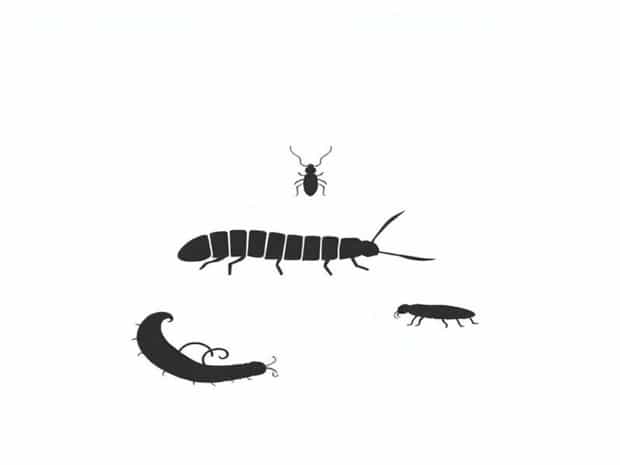
First Wingless Insects And Millipedes
The history of terrestrial life is marked by remarkable evolutionary developments, among which the emergence of the first wingless insects and millipedes represents a significant milestone. These early arthropods played a crucial role in the colonization of land, adapting to new environmental conditions and paving the way for more complex ecosystems. Understanding the evolution, morphology, and ecological significance of these ancient organisms provides insight into how life transitioned from aquatic to terrestrial habitats, highlighting the adaptations that allowed invertebrates to thrive without wings in the early terrestrial landscapes.
Evolutionary Background of Wingless Insects
The first insects appeared during the Silurian to early Devonian period, roughly 400 to 420 million years ago. Initially, these insects were wingless, representing a primitive form that lacked the ability to fly. Known as Apterygota, these early wingless insects were small, elongated, and adapted to a terrestrial lifestyle, feeding on detritus, algae, or plant material. Their development reflects the evolutionary transition from aquatic ancestors to land-dwelling arthropods, emphasizing the importance of structural and physiological adaptations for survival outside water.
Characteristics of Early Wingless Insects
- Small, segmented bodies with a head, thorax, and abdomen.
- Lack of wings, distinguishing them from later pterygote insects.
- Simple mouthparts adapted for chewing plant material or organic detritus.
- Well-developed antennae used for sensing the environment.
- Exoskeleton providing protection and minimizing water loss on land.
Significance in Evolution
Wingless insects played a key role in terrestrial ecosystems, participating in nutrient cycling and serving as prey for other invertebrates. Their presence influenced plant evolution by facilitating herbivory and indirectly promoting the diversification of flowering plants later in the Paleozoic era. Studying these insects helps scientists understand the initial adaptations required for terrestrial life, including locomotion on solid surfaces, moisture retention, and sensory perception in air rather than water.
Millipedes Early Terrestrial Arthropods
Millipedes, belonging to the class Diplopoda, are among the earliest known terrestrial arthropods, with fossil evidence dating back to the Silurian period. These multi-legged invertebrates were larger than most early insects and played a crucial role in decomposing plant matter and contributing to soil formation. Early millipedes were wingless, elongated, and heavily armored with a rigid exoskeleton, making them well-suited to the challenges of life on land.
Physical Features of Early Millipedes
- Segmented bodies with two pairs of legs per segment, facilitating slow but stable locomotion.
- Strong, chitinous exoskeleton providing protection against predators and desiccation.
- Simple, unbranched antennae for environmental sensing.
- Detritivorous diet, feeding primarily on decaying plant material.
- Spiracles or other adaptations for breathing air, representing a shift from aquatic respiration.
Ecological Role
Millipedes were vital in the early terrestrial ecosystems, contributing to nutrient recycling by breaking down plant debris and enriching soil with organic matter. Their detritivorous habits helped maintain ecosystem balance, providing resources for fungi, bacteria, and other decomposers. Additionally, millipedes influenced the evolution of early plants by affecting decomposition rates and nutrient availability, creating favorable conditions for the expansion of terrestrial flora.
Comparison Between First Wingless Insects and Millipedes
Although both groups were among the earliest terrestrial arthropods, wingless insects and millipedes exhibit significant differences in structure, behavior, and ecological function. Understanding these differences highlights the diversity of strategies that early arthropods employed to colonize land.
Body Structure and Locomotion
- Wingless insects Typically smaller, with three main body regions (head, thorax, abdomen), and six legs allowing greater mobility and agility.
- Millipedes Larger, elongated, with many body segments and multiple pairs of legs per segment, resulting in slower but stable movement.
Feeding and Diet
- Wingless insects Omnivorous or detritivorous, feeding on plant material, algae, or small invertebrates.
- Millipedes Primarily detritivorous, specializing in decomposing decaying plant matter.
Reproduction and Development
- Wingless insects Undergo simple metamorphosis, gradually maturing through nymphal stages without significant body reorganization.
- Millipedes Exhibit direct development, hatching with fewer segments and legs that increase with each molt.
Environmental Adaptations
- Wingless insects Adapted for active movement on leaf litter, soil, or under bark, with mechanisms to conserve water and sense predators.
- Millipedes Adapted for slow burrowing and surface movement in moist environments, with robust exoskeletons reducing desiccation risk.
Fossil Evidence and Evolutionary Insights
Fossils of early wingless insects and millipedes provide critical information about the colonization of land. Fossilized millipedes, such asPneumodesmus newmani, demonstrate that some species had spiracles for breathing air, indicating complete terrestrial adaptation. Fossil wingless insects like silverfish and bristletails show primitive features that help scientists trace the evolutionary lineage leading to modern insects. These findings underscore the significance of both groups in shaping early terrestrial ecosystems and highlight the gradual accumulation of adaptations necessary for life outside water.
Evolutionary Significance
- Wingless insects represent the ancestral form of insects before the evolution of wings, showcasing early terrestrial adaptation.
- Millipedes illustrate the successful colonization of land by detritivorous arthropods, contributing to soil development and nutrient cycling.
- Both groups demonstrate that life on land required specialized adaptations for respiration, moisture retention, and locomotion.
- The diversity of early arthropods indicates that multiple evolutionary strategies were employed to thrive in terrestrial environments.
Impact on Terrestrial Ecosystems
The emergence of wingless insects and millipedes had profound effects on early terrestrial ecosystems. They created new ecological niches, influenced plant evolution, and established the foundations for complex food webs. Millipedes improved soil quality through decomposition, while insects diversified into various ecological roles, including herbivory, predation, and scavenging. Together, they helped shape the structure and function of the first land-based ecosystems, facilitating the success of later arthropods, plants, and vertebrates.
The first wingless insects and millipedes represent critical milestones in the evolutionary history of life on Earth. Their adaptations for terrestrial living, including exoskeletal protection, specialized respiration, and feeding strategies, allowed them to thrive in early land environments. While wingless insects were agile and capable of occupying diverse ecological roles, millipedes focused on detritivory and soil enrichment. Fossil evidence provides insight into their morphology, behavior, and evolutionary significance, revealing how these ancient arthropods contributed to the establishment of terrestrial ecosystems. Studying these organisms enhances our understanding of evolutionary biology, the colonization of land, and the intricate web of life that continues to shape modern ecosystems.
Overall, the first wingless insects and millipedes illustrate the remarkable adaptability and diversity of early arthropods. Their evolutionary innovations not only ensured their survival but also set the stage for the vast array of terrestrial life forms that followed. By exploring their history, scientists gain valuable insights into how life transitioned from water to land, highlighting the complexity and resilience of life on our planet.