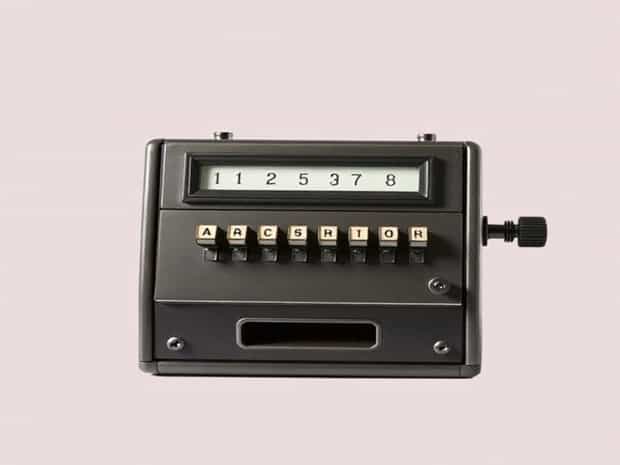
First Electromechanical Punched Card Tabulator
The development of the first electromechanical punched card tabulator marked a significant milestone in the history of computing and data processing. Before the digital era, handling large amounts of information was a cumbersome and time-consuming task, especially for businesses and government agencies. The introduction of punched card technology, combined with electromechanical tabulation, revolutionized the way data could be recorded, stored, and analyzed. This innovation laid the foundation for modern computing systems, allowing complex calculations and statistical processing to be completed efficiently and accurately, which was previously impossible with purely manual methods.
The Origins of Punched Card Technology
Punched card technology can trace its origins back to the 19th century, with early innovations aimed at automating information storage and processing. Herman Hollerith, an American inventor and engineer, played a pivotal role in adapting punched cards for practical applications in data tabulation. The concept involved using cards with holes punched in predefined positions, representing data in a format that machines could read. Initially, this method was employed for tasks such as census data processing and large-scale record keeping, where manual sorting and calculation were inefficient and error-prone.
Herman Hollerith’s Contribution
Hollerith’s work on punched card tabulation began in the late 1880s, culminating in the development of the first practical electromechanical tabulating machine. His design used electrical circuits to detect the presence or absence of holes in the punched cards. When a hole aligned with a specific position in the card reader, an electrical contact would close, triggering a mechanical counter or printing mechanism. This approach significantly sped up data processing and reduced human error, allowing large volumes of information to be tabulated in hours rather than months.
Design and Mechanism of the First Electromechanical Tabulator
The first electromechanical punched card tabulator combined mechanical counting devices with electrical detection circuits. The system worked in several stages, each carefully coordinated to ensure accurate data collection and tabulation. Cards were fed into the machine using a manual or semi-automatic input mechanism. As the card passed through the reader, electrical contacts detected holes, activating counters corresponding to the data recorded on the card. These counters could total numeric data, print results on a ledger, or prepare information for further analysis.
Key Components
- Card Reader A device that physically held and guided the punched card through the machine while detecting the presence of holes.
- Electrical Contacts Small switches that closed circuits when a hole in the card allowed a pin to pass through, signaling a count.
- Mechanical Counters Analog devices that registered numeric data, providing cumulative totals for each column on the punched card.
- Printing Mechanism Some tabulators included a typewriter-like output to create printed summaries or reports directly from the data.
Applications and Impact
The first electromechanical punched card tabulator was primarily adopted by government agencies and large organizations that handled extensive datasets. One of the most notable early applications was the 1890 United States Census. Using Hollerith’s tabulators, the census data was processed in just a few months, a task that would have taken years with manual counting. This efficiency demonstrated the practical advantages of mechanized data processing and set the stage for widespread adoption across various sectors.
Business and Industrial Uses
Beyond census work, businesses recognized the value of electromechanical tabulators for accounting, payroll, inventory management, and statistical analysis. Companies could handle large ledgers, calculate sums, and produce reports with unprecedented speed. This innovation streamlined administrative tasks, reduced operational costs, and enabled more sophisticated decision-making based on reliable data.
Scientific and Research Applications
In addition to commercial use, the tabulator became valuable for scientific research. Researchers in fields such as demography, economics, and engineering used punched cards and tabulators to manage experimental data, conduct surveys, and analyze trends. The system allowed for complex computations that would have been impractical by hand, fostering more rigorous and data-driven research methods.
Evolution into Modern Computing
The invention of the electromechanical punched card tabulator laid the groundwork for the modern computer. By demonstrating that machines could systematically process large volumes of data, this technology inspired further innovations in automation, computation, and digital logic. The principles of electrical detection, mechanical counting, and data encoding through punched cards influenced early digital computers, programming concepts, and storage systems.
Transition to Digital Systems
As electronic technologies advanced, the limitations of mechanical tabulators became apparent. Digital computers emerged, offering faster processing, greater memory capacity, and more flexible programming. However, the legacy of punched card tabulators persisted for decades, with punched cards remaining a primary input medium well into the mid-20th century. Many early computer programs and data sets were still stored and read using punch card systems, bridging the gap between mechanical tabulation and fully electronic computing.
Legacy and Historical Significance
The first electromechanical punched card tabulator holds a significant place in the history of computing. It represented the first practical method for automating large-scale data processing and demonstrated the power of combining mechanical ingenuity with electrical innovation. Hollerith’s tabulator not only transformed government and business operations but also inspired the broader field of information technology. Its success paved the way for IBM’s development of more advanced tabulating machines and eventually the evolution of programmable electronic computers.
Lessons from Early Tabulators
Studying the first electromechanical punched card tabulator provides valuable insights into problem-solving, innovation, and technological progress. It illustrates how addressing practical needs such as efficiently handling census data can lead to transformative inventions. Additionally, it highlights the importance of integrating multiple engineering disciplines, including mechanics, electricity, and data encoding, to create effective solutions.
The first electromechanical punched card tabulator was a groundbreaking invention that reshaped data processing and computing. By automating the counting and tabulation of large datasets, it saved time, improved accuracy, and enabled new applications in business, government, and research. Herman Hollerith’s ingenuity in combining punched card technology with electromechanical systems set the stage for the evolution of modern computers, influencing generations of technological innovation. The tabulator’s legacy remains relevant today, reminding us of the importance of creative engineering and the transformative impact of automating information management. Understanding this early technology allows us to appreciate the roots of modern computing and the evolution of data processing from mechanical ingenuity to electronic sophistication.
In essence, the first electromechanical punched card tabulator symbolizes the intersection of human ingenuity and technology. It demonstrates how innovative solutions to practical challenges can drive progress across multiple domains, from government administration to scientific research. By studying its design, applications, and historical significance, we gain a deeper understanding of the foundations of computing and the evolution of information technology. The tabulator remains a testament to the transformative power of mechanical and electrical engineering in shaping the modern world.