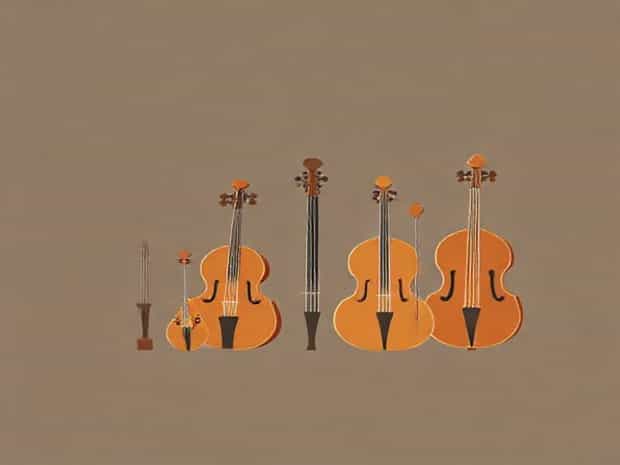
Family Of Bowed String Instruments
The family of bowed string instruments is a central component of classical and contemporary music, known for its rich tones, expressive range, and versatility. These instruments are played using a bow that draws across strings, producing sound through vibration and resonance. From the smallest violin to the largest double bass, bowed string instruments have shaped orchestral music, chamber ensembles, and solo performances for centuries. Understanding the characteristics, history, and applications of these instruments provides a deeper appreciation of their role in music, as well as their unique construction and playing techniques. This topic explores the family of bowed string instruments, detailing their varieties, sound qualities, and contributions to musical traditions around the world.
Overview of Bowed String Instruments
Bowed string instruments are defined by the combination of strings and a bow, which is typically strung with horsehair. The bow is drawn across the strings, causing them to vibrate and produce sound. These instruments vary in size, range, and timbre, allowing them to perform a wide array of musical roles. They are categorized primarily into four main members the violin, viola, cello, and double bass, each with distinct characteristics and musical functions.
Common Features
- Strings made from gut, steel, or synthetic materials
- A wooden body that resonates to amplify sound
- A bow strung with horsehair, rosin-coated for friction
- Fingerboard for changing pitch by pressing strings
- Bridge that transfers string vibrations to the instrument body
The Violin
The violin is the smallest and highest-pitched member of the bowed string family. Known for its bright, agile sound, the violin often carries the melody in orchestral compositions and chamber music. Violins are played with precision and expressiveness, allowing for techniques such as vibrato, pizzicato, and double stops. The instrument typically has four strings tuned in perfect fifths, and its versatility makes it essential in both classical and contemporary music genres.
Role in Music
Violins frequently serve as the lead instrument in orchestras, chamber groups, and solo performances. Their ability to convey emotion and adapt to various musical styles has cemented their place in symphonies, concertos, and folk traditions around the world.
The Viola
The viola is slightly larger than the violin and produces a deeper, warmer tone. It bridges the sonic range between the violin and cello, providing harmonic support and rich middle tones. The viola also has four strings tuned a fifth apart, but its lower pitch gives it a distinctive voice that is crucial for blending in ensembles.
Musical Function
In orchestral settings, the viola often plays inner harmonies, filling the texture between violins and cellos. While less commonly featured as a solo instrument, the viola has a growing repertoire of solo pieces that highlight its unique, mellow sound.
The Cello
The cello is a larger instrument played upright between the knees, offering a deep and resonant tone. It covers a wide range, capable of both lyrical melodies and powerful bass lines. The cello’s expressive capacity makes it a favorite for solo performances, chamber music, and orchestral roles.
Techniques and Sound
Cellists utilize a range of techniques such as spiccato, legato, and harmonics to produce varied tonal effects. Its rich lower register complements other bowed strings, while its upper register allows for melodic passages similar to the viola or violin. The cello’s versatility makes it indispensable in orchestras, string quartets, and solo compositions.
The Double Bass
The double bass is the largest and lowest-pitched member of the bowed string family. It provides the foundation for harmony and rhythm in both orchestral and jazz ensembles. Its deep, resonant sound anchors the musical texture, supporting melodies played by higher-pitched instruments.
Function and Techniques
Double bassists employ various techniques, including arco (bowed) and pizzicato (plucked), to achieve different tonal qualities. Despite its size and lower pitch, the double bass can also perform virtuosic passages and contribute expressive melodic lines, especially in contemporary compositions and jazz music.
Historical Background
The family of bowed string instruments has evolved over centuries, with origins in Europe during the Renaissance and Baroque periods. Early instruments like the viola da gamba and rebec influenced the development of the modern violin, viola, cello, and double bass. Luthiers such as Stradivari, Guarneri, and Amati refined the design and craftsmanship, creating instruments renowned for their tonal quality and playability. Over time, these instruments became central to orchestras, chamber music, and solo performances.
Evolution and Adaptation
- Refinement of shape and materials to improve resonance and durability
- Standardization of string tuning and fingerboard length
- Integration into orchestras and symphonies during the Baroque period
- Expansion of technique and repertoire in Classical, Romantic, and modern music
Ensemble and Orchestral Roles
Bowed string instruments form the core of most orchestras and chamber ensembles. Their tonal range, from the high-pitched violin to the deep double bass, allows composers to create complex harmonies, dynamic contrasts, and expressive textures. String sections are often divided into first and second violins, violas, cellos, and double basses, providing a rich, layered sound that underpins symphonic compositions.
Chamber Music
In smaller ensembles such as string quartets, each bowed string instrument has a specific role. Violins often carry the melody, violas provide inner harmonies, cellos contribute both harmony and bass lines, and double basses (when included) add depth and foundation. This combination allows for intricate interplay, nuanced dynamics, and expressive musical storytelling.
Contemporary Applications
Beyond classical music, bowed string instruments are featured in jazz, folk, rock, and experimental genres. Modern composers and performers explore extended techniques such as col legno (striking the strings with the bow), sul ponticello (playing near the bridge), and electronic amplification to expand the sonic possibilities. Their adaptability ensures that bowed string instruments remain relevant in contemporary music and cross-genre collaborations.
Choosing and Learning Bowed String Instruments
When selecting a bowed string instrument, factors such as size, sound preference, musical goals, and skill level are important. Beginners may start with a violin or viola, progressing to cello or double bass based on interest and physical suitability. Learning proper technique, bowing, and finger placement is essential for achieving a resonant and expressive sound. Instruction from qualified teachers, regular practice, and exposure to ensemble playing help musicians develop mastery over these instruments.
The family of bowed string instruments, consisting of the violin, viola, cello, and double bass, offers a rich palette of sounds and expressive possibilities. Each instrument contributes unique tonal qualities, technical challenges, and musical roles, forming the backbone of orchestral, chamber, and solo music. Understanding their construction, history, and applications deepens appreciation for the artistry involved in playing and composing for these instruments. From classical symphonies to modern genres, bowed string instruments continue to captivate audiences and inspire musicians worldwide, demonstrating their enduring significance in the world of music.