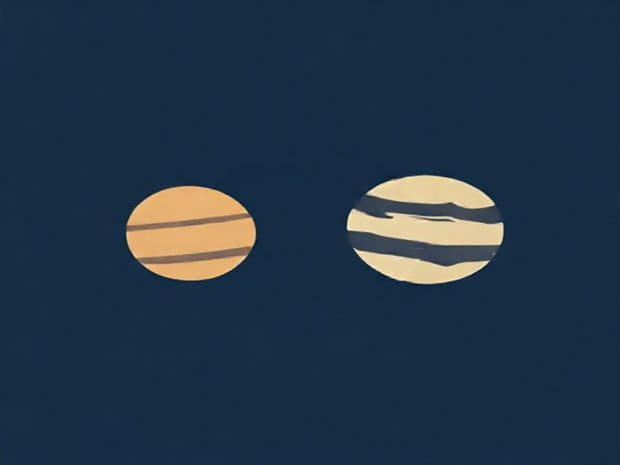
Explain Why The Planets Do Not Twinkle
When you look up at the night sky, you may notice that stars seem to sparkle and flicker, while planets often shine with a steady, calm light. This difference has fascinated observers for centuries, and many wonder why stars twinkle but planets do not. The explanation lies in how light travels through Earth’s atmosphere, how distance plays a role, and the physical differences between stars and planets. By understanding these factors, we can better appreciate the beauty of the night sky and the science behind what we see.
Atmospheric Effects on Light
One of the most important reasons planets do not twinkle the way stars do is atmospheric turbulence. Earth’s atmosphere is made up of layers of moving air, each with different temperatures and densities. As light from celestial objects passes through, it bends or refracts. For stars, which are incredibly far away, their light appears as a single narrow ray. Small atmospheric disturbances cause their position to appear to shift rapidly, giving them a sparkling or twinkling effect.
Planets, however, are much closer to Earth than stars. Even though they are still millions of kilometers away, their light reaches us as a disk rather than a pinpoint. When atmospheric turbulence distorts their light, the variations average out across the disk. This makes planets appear steadier and less prone to twinkling.
Distance and Apparent Size
The enormous distances of stars compared to planets explain much of the difference in appearance. Stars are located light-years away, making them look like tiny points in the sky. Because their light has to travel such vast distances, by the time it enters our atmosphere, it is concentrated into a single point. That makes the light especially sensitive to atmospheric interference.
Planets are within our solar system, so they appear larger in the sky, even if not always visible as extended objects to the naked eye. Their apparent size dilutes the effect of turbulence. Instead of flickering, they shine with a consistent glow. This steady appearance is one way amateur astronomers can distinguish between stars and planets at night without telescopes.
How Refraction Creates Twinkling
Refraction occurs when light passes through air layers of varying density. Hot air is less dense than cool air, and wind mixes these layers constantly. For stars, this bending effect causes light to shift back and forth rapidly, creating the illusion of flickering brightness and changing colors. The phenomenon is strongest when stars are close to the horizon because their light travels through more atmosphere.
Planets are less affected by this because of their extended apparent size. The multiple light rays that reach our eyes from different parts of the planetary disk balance out the refractive shifts. As a result, the overall light remains stable.
Why Planets Sometimes Appear to Twinkle
Although planets generally shine steadily, they can sometimes seem to twinkle under certain conditions. For example
- When planets are low on the horizon, their light passes through more atmosphere, which can cause some flickering.
- During nights of extreme atmospheric turbulence, planets may also show small fluctuations in brightness.
- Bright planets like Venus or Jupiter can reflect so much sunlight that small distortions become visible to the naked eye.
Still, even in these cases, the effect is far less dramatic than the constant sparkle of stars.
The Role of Telescopes
Through a telescope, the difference between stars and planets becomes even clearer. Stars remain point sources of light and still twinkle under magnification, though some techniques such as adaptive optics can reduce the effect. Planets, however, reveal their disks, moons, and even surface details like Saturn’s rings or Jupiter’s cloud bands. Their steadier light makes it possible for astronomers to study them in much greater detail.
Practical Applications of Understanding Twinkling
Recognizing why planets do not twinkle has practical value. Amateur stargazers can use the steadiness of light to identify planets without charts. Professional astronomers also take atmospheric turbulence into account when designing telescopes and observatories. Technologies like adaptive optics and space-based telescopes such as Hubble are direct responses to the challenges posed by atmospheric refraction.
Cultural and Historical Perspectives
Throughout history, people have noticed the difference between stars and planets. Ancient civilizations often referred to planets as wandering stars because they moved against the fixed backdrop of twinkling stars but shone with a calm light. This unique quality contributed to the special role planets played in astrology and mythology. Even today, casual observers are struck by the fact that Jupiter and Venus often shine so steadily and brightly that they are mistaken for aircraft or other unusual lights.
Scientific Summary of the Difference
To put the explanation simply, the difference comes down to three main points
- Starsare extremely far away and appear as points of light, making them more vulnerable to atmospheric distortion.
- Planetsare closer and appear as small disks, so atmospheric variations average out and their light remains steady.
- Refractionin Earth’s atmosphere bends light differently for stars and planets, creating twinkling for stars but not for planets.
Observing the Night Sky with This Knowledge
Next time you look up at the sky, you can put this knowledge into practice. If you see a bright object that does not twinkle, it is likely a planet such as Venus, Jupiter, Mars, or Saturn. On the other hand, if the light sparkles and shifts colors, it is almost certainly a star. This simple observation can enhance your stargazing experience and deepen your appreciation for the science behind what you see.
The reason planets do not twinkle like stars lies in the combination of distance, apparent size, and atmospheric refraction. Stars appear as distant points of light, which makes them shimmer when disturbed by Earth’s atmosphere. Planets, being closer, appear larger and shine steadily. Understanding this difference not only satisfies curiosity but also connects us to centuries of observation and wonder about the night sky. Whether you are an amateur stargazer or simply someone who enjoys looking up at the heavens, noticing why planets shine steadily while stars twinkle adds a new layer of fascination to the cosmic view.