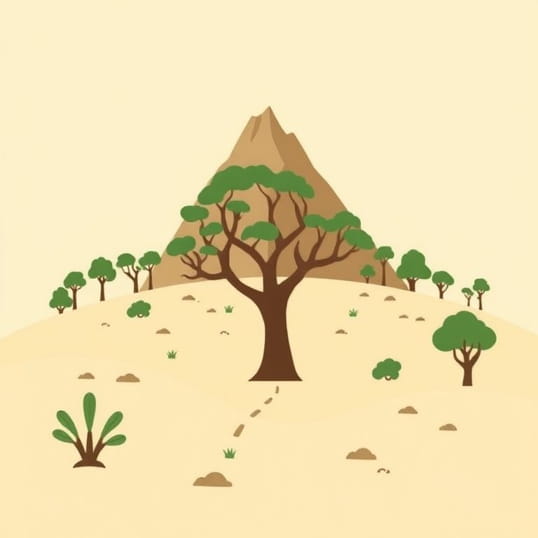
Explain How Deforestation Leads To Desertification
When discussing environmental challenges, deforestation and desertification are two terms that often arise together. Both processes have serious consequences for ecosystems, agriculture, and human life. Deforestation, the removal of forests on a large scale, is often linked to the gradual transformation of fertile land into barren deserts. To explain how deforestation leads to desertification, it is necessary to understand the role forests play in maintaining soil quality, water cycles, and biodiversity. Without this protective system, land quickly becomes dry, infertile, and vulnerable to degradation.
Understanding the Connection Between Forests and Soil Health
Forests are more than just collections of trees. They function as regulators of natural systems, protecting the soil from erosion, maintaining moisture, and enriching it with organic matter. When forests are cleared, several changes occur
- The canopy that shields the soil from harsh sunlight disappears, causing faster drying of the land.
- Roots that stabilize soil and prevent erosion are removed, leaving the ground exposed.
- The loss of organic leaf litter reduces soil fertility and nutrient cycling.
These changes weaken the soil, making it more vulnerable to degradation and forming the first step in the process of desertification.
How Deforestation Alters the Water Cycle
One of the major reasons deforestation leads to desertification is its effect on the water cycle. Trees play a critical role in absorbing groundwater and releasing it into the atmosphere through transpiration. This process helps form clouds and regulate rainfall. When forests are removed, the amount of local and regional rainfall decreases. Less rain means drier soil, reduced vegetation, and ultimately conditions that favor desertification.
Reduced Rainfall and Climate Impact
Deforestation not only reduces local moisture levels but can also affect regional climate. Areas that once received regular rainfall may experience droughts, creating conditions where deserts can expand. Over time, what begins as a small reduction in rainfall can become a long-term climate shift, leaving once-productive land barren.
Soil Erosion and Land Degradation
Soil erosion is another direct link between deforestation and desertification. Without tree roots to hold soil in place, wind and water easily wash it away. Valuable topsoil, which is rich in nutrients, is often the first layer to disappear. Once this layer is gone, the soil beneath is less fertile and less capable of supporting vegetation.
As erosion continues, the land becomes rocky, compacted, and unable to retain water. This accelerates the process of desertification, leaving little chance for recovery without significant intervention.
Loss of Vegetation and Biodiversity
Deforestation strips away plant life that contributes to a balanced ecosystem. Vegetation not only provides food and shelter for wildlife but also protects the soil. When trees and plants are removed, animal species that contribute to soil health disappear as well. This loss of biodiversity reduces the land’s resilience, making it harder to recover from droughts, erosion, or other stresses. The combined effects push the land toward desert-like conditions.
Human Activities Driving Deforestation
To fully explain how deforestation leads to desertification, it is important to look at human actions that contribute to the problem. Common causes include
- LoggingCutting trees for timber removes forest cover permanently when not followed by reforestation.
- AgricultureClearing forests for crops or grazing destroys the natural balance of the ecosystem.
- Urban expansionDevelopment often paves over fertile soil, preventing water absorption and destroying vegetation.
- Fuelwood collectionIn many regions, trees are cut for firewood, gradually depleting forests.
Each of these activities contributes to soil degradation and increases the risk of desertification over time.
Examples of Deforestation Leading to Desertification
There are real-world examples that illustrate this connection. In parts of Africa, large-scale deforestation combined with overgrazing has led to rapid desert expansion. The Sahel region is one of the most well-known cases, where fertile land has turned into desert due to loss of vegetation and unsustainable land use. Similarly, in South America, portions of the Amazon basin face risks where deforestation alters rainfall patterns, potentially creating drier conditions that threaten long-term soil fertility.
Deforestation’s Impact on Local Communities
The consequences of deforestation are not limited to the environment alone. Local communities that depend on the land for farming and water supply are directly affected. Once desertification sets in, agricultural productivity drops, water sources dry up, and food insecurity increases. People may be forced to migrate, leading to social and economic challenges. This highlights the urgent need to understand the dangers of deforestation and its link to desertification.
Preventing Desertification Through Forest Conservation
Since deforestation is a leading cause of desertification, preventing it is key to protecting vulnerable lands. Strategies include
- ReforestationPlanting new trees helps restore soil stability and water cycles.
- Sustainable loggingCutting trees selectively and responsibly ensures that forests can regenerate.
- AgroforestryCombining agriculture with tree planting helps maintain soil fertility while supporting farming needs.
- Community educationTeaching local populations about sustainable practices reduces pressure on forests.
By adopting these measures, communities and governments can slow down or even reverse desertification caused by deforestation.
The Global Importance of Addressing Deforestation
While deforestation and desertification are often discussed in local or regional contexts, the issue has global consequences. Desertification contributes to climate change by releasing stored carbon into the atmosphere. It also reduces the earth’s capacity to absorb greenhouse gases, worsening the climate crisis. By addressing deforestation, we not only protect local ecosystems but also contribute to global environmental stability.
Final Reflections
Explaining how deforestation leads to desertification reveals a clear chain of cause and effect. The removal of forests disrupts soil health, reduces rainfall, causes erosion, and destroys biodiversity. Over time, these changes transform fertile land into desert, threatening both ecosystems and human survival. The good news is that solutions exist, from reforestation to sustainable land management. By taking action today, societies can break the cycle of deforestation and desertification, ensuring that future generations inherit a world with fertile soils and thriving forests rather than expanding deserts.