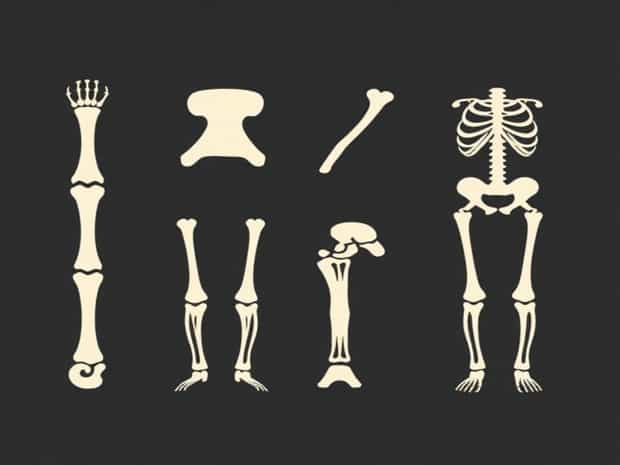
Examples Of Bony Joints
Bony joints, also known as synostoses, are a fascinating type of joint in the human skeleton where two bones are fused together, creating a rigid and immovable connection. These joints play a critical role in providing structural stability and supporting the overall framework of the body. Unlike other joint types such as synovial or fibrous joints, bony joints allow little to no movement, which is essential in areas that require strength and protection rather than flexibility. Understanding examples of bony joints helps in comprehending human anatomy, skeletal function, and how the body maintains stability in vital regions. These joints can be found in various parts of the skeleton, each serving specific functional purposes.
Definition and Characteristics of Bony Joints
Bony joints are formed when two bones fuse together through the ossification process, which converts fibrous or cartilaginous tissue into bone. This fusion results in a permanent, immovable joint that provides stability rather than mobility. The term bony joint emphasizes the complete bone-to-bone connection, which distinguishes it from joints that retain connective tissue between bones. Key characteristics of bony joints include rigidity, strength, durability, and the ability to protect internal structures. They are essential in areas where motion is not desired but where structural support is critical.
Formation of Bony Joints
Bony joints typically form through the process of ossification in two main ways from fibrous joints or from cartilaginous joints. Fibrous joints, which are initially held together by connective tissue, can gradually ossify and transform into bony joints over time. Similarly, cartilaginous joints, where bones are connected by cartilage, can also ossify to form rigid bone connections. This process is common in certain cranial bones and the development of long bones in childhood and adolescence. The gradual conversion into bony joints ensures that the skeleton maintains both strength and proper alignment as the body grows.
Examples of Bony Joints in the Human Skeleton
There are several notable examples of bony joints in the human body, each serving specific functions. These joints are critical in maintaining the structural integrity of the skeleton and protecting internal organs.
Cranial Sutures
One of the most well-known examples of bony joints is the cranial sutures in the skull. These joints connect the bones of the skull, such as the frontal, parietal, and occipital bones. In infants and children, cranial sutures are initially fibrous and flexible, allowing the skull to expand during brain growth. Over time, these sutures ossify, forming immovable bony joints that provide a rigid protective case for the brain. The coronal suture, sagittal suture, and lambdoid suture are all examples of cranial bony joints.
Mandibular Symphysis
The mandibular symphysis is another example of a bony joint, located at the midline of the lower jaw. In early childhood, the left and right halves of the mandible are separated by a cartilaginous joint, which allows for slight growth and movement. As a person matures, the cartilaginous tissue ossifies, creating a solid bony connection. This fusion strengthens the jaw for functions such as chewing and speaking.
Epiphyseal Lines in Long Bones
In long bones such as the femur, tibia, and humerus, the growth plates, or epiphyseal plates, initially allow for bone growth during childhood and adolescence. Once growth is complete, these plates ossify to form epiphyseal lines, which are examples of bony joints. The transformation ensures that the bones become rigid and fully capable of supporting body weight and muscle attachment without risk of deformation.
Sacrum Formation
The sacrum, located at the base of the vertebral column, is formed by the fusion of several vertebrae. Initially, these vertebrae are separated by cartilaginous joints, which allow for flexibility during development. Over time, they ossify into a single bony structure, creating a strong and stable support for the pelvis. This bony fusion is crucial for weight-bearing and provides a secure anchor for ligaments and muscles involved in movement and posture.
Functional Significance of Bony Joints
Bony joints play several important roles in the body, contributing to both stability and protection. Because these joints are immovable, they are ideal for areas that must resist stress and provide structural integrity. The skull, for example, benefits from bony joints to shield the brain, while fused vertebrae in the sacrum and epiphyseal lines in long bones ensure efficient force transfer during movement.
Protection
Bony joints protect vital organs by forming rigid barriers. The cranial sutures create a protective shell around the brain, while the sacral vertebrae safeguard the lower spinal cord and nerve roots. This rigid structure helps prevent injury from external forces, making bony joints essential for overall safety and function.
Support and Stability
These joints provide a stable framework for muscle attachment and movement. For instance, the epiphyseal lines ensure that long bones can handle stress from muscles and weight-bearing activities without bending or breaking. The mandible symphysis supports effective mastication by providing a solid connection between the two halves of the jaw.
Clinical Relevance of Bony Joints
Understanding bony joints is crucial in medicine and orthopedics. Conditions affecting the fusion process or the integrity of these joints can lead to structural abnormalities or functional impairment. For example, delayed fusion of cranial sutures may result in craniosynostosis, affecting skull shape and brain development. Similarly, incomplete ossification of growth plates can impact bone length and strength. Knowledge of bony joints assists healthcare professionals in diagnosing, treating, and preventing skeletal disorders.
Common Disorders Involving Bony Joints
- CraniosynostosisPremature fusion of cranial sutures, leading to abnormal skull shapes.
- Mandibular MalformationsImproper fusion at the mandibular symphysis can affect jaw alignment and function.
- Epiphyseal Growth IssuesDisorders of bone growth plates can result in dwarfism or unequal limb lengths.
- Sacral MalformationsIncomplete fusion of sacral vertebrae may cause instability in the pelvis or spine.
Bony joints are essential components of the human skeleton, providing rigidity, stability, and protection to key areas of the body. Examples of bony joints include cranial sutures, the mandibular symphysis, epiphyseal lines in long bones, and the sacrum. These joints are formed through the ossification of fibrous or cartilaginous tissue, transforming flexible connections into solid bone structures. Their functional significance lies in protecting vital organs, supporting weight-bearing structures, and facilitating efficient movement. Understanding examples of bony joints offers valuable insights into skeletal anatomy, growth, and clinical relevance, emphasizing the intricate design and evolutionary importance of these immovable joints.