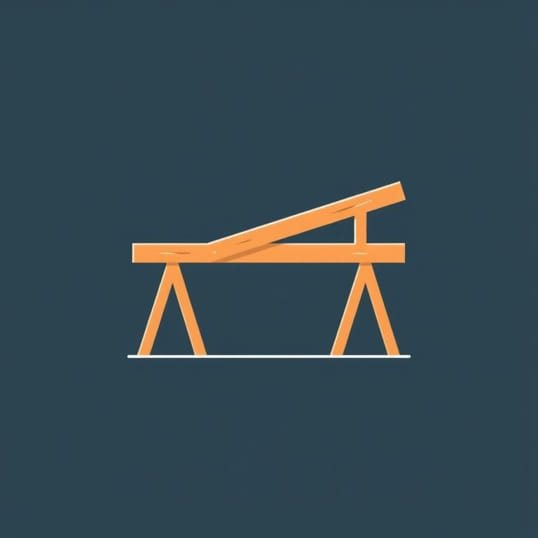
Example Of Propped Cantilever Beam
The concept of a propped cantilever beam is an important topic in structural engineering, as it represents a common solution for supporting loads while balancing material efficiency and structural stability. Unlike a simple cantilever beam, which is fixed at one end and free at the other, a propped cantilever beam is supported at both ends, with one end fixed and the other supported by a roller or pin. This combination allows the beam to resist bending more effectively, reduces deflection, and distributes stresses more evenly. Understanding examples of propped cantilever beams can help engineers, architects, and students visualize practical applications and improve design decisions for both small and large-scale projects.
Definition and Characteristics of a Propped Cantilever Beam
A propped cantilever beam is a structural element that combines the features of a cantilever and a simply supported beam. One end of the beam is rigidly fixed to prevent rotation and translation, while the other end rests on a simple support, such as a roller, that allows rotation but prevents vertical displacement. This dual support system offers several advantages
- Reduced bending moments compared to a fully cantilevered beam of the same length.
- Lower deflection under uniform or concentrated loads.
- Increased structural stability and resistance to vibrations.
- Efficient use of materials, allowing for lighter beams without compromising strength.
Load Distribution in a Propped Cantilever Beam
The behavior of a propped cantilever beam under load is a combination of the effects seen in cantilever and simply supported beams. When a uniform load is applied, the fixed end resists rotation and bending, while the propped end provides additional support. The result is a reduction in maximum bending stress and a more favorable deflection profile. Engineers use formulas and structural analysis methods to calculate bending moments, shear forces, and deflection for accurate design.
Common Examples of Propped Cantilever Beams
Propped cantilever beams appear in a wide variety of real-world applications, from residential construction to large-scale civil engineering projects. One common example is in balcony construction. Many balconies extend outward from a building and are supported at the wall while also resting on a prop or column at the outer edge. This configuration reduces bending stresses and allows the balcony to safely support loads such as people, furniture, or snow accumulation.
Another example is in bridge construction. Short-span bridges or pedestrian walkways often use propped cantilever beams to span gaps while minimizing the number of supports underneath. The fixed end is attached to the abutment or pier, while the other end rests on a roller or secondary support. This design allows for controlled expansion and contraction due to temperature changes and reduces stress concentrations at midspan.
Industrial and Structural Applications
Propped cantilever beams are also used in industrial frameworks, such as crane rails, overhanging platforms, and storage racks. In crane designs, a beam may be fixed at one end to the main structure while the free end rests on a support column. This allows the crane to carry heavy loads along the beam without excessive deflection, ensuring safety and durability.
In building construction, roof overhangs sometimes utilize propped cantilever beams. The fixed end is integrated into the main roof structure, and a column or wall prop supports the overhanging section. This reduces the moment at the fixed end and ensures that the roof can carry additional loads such as insulation, roofing material, or accumulated water.
Analysis of Propped Cantilever Beams
Structural engineers perform detailed analysis of propped cantilever beams to ensure safety and efficiency. Key parameters include bending moment, shear force, slope, and deflection. Analytical methods such as the conjugate beam method, moment distribution method, or finite element analysis are commonly used. The maximum bending moment usually occurs near the fixed end, while the simply supported end experiences less stress but still contributes to overall stability.
- Bending MomentThe bending moment at any point along a propped cantilever beam depends on the type and magnitude of applied loads and the span length between supports.
- Shear ForceShear forces vary along the length of the beam, typically peaking near supports.
- DeflectionDeflection is smaller than in a fully cantilevered beam due to the additional support.
- Stress DistributionThe fixed end carries significant stress, but the propped end reduces the maximum moment and spreads stress more evenly.
Design Considerations
When designing a propped cantilever beam, engineers must account for material selection, beam dimensions, type of loading, and support conditions. The choice of steel, concrete, or composite materials affects bending strength and deflection characteristics. Additionally, designers must consider dynamic loads, environmental factors, and long-term material behavior. Codes and standards provide guidelines to ensure that propped cantilever beams perform safely under expected service conditions.
Advantages and Disadvantages
Propped cantilever beams offer several advantages. They reduce maximum bending moments and deflection, improve stability, and allow for efficient material usage. They also provide flexibility in architectural design, enabling overhangs, balconies, and cantilevered roofs. However, there are some limitations. The beam requires precise support placement to function effectively, and settlement of the propped end can lead to unintended stresses. Additionally, fixed-end connections require careful detailing to handle the concentrated moments.
Propped cantilever beams are versatile structural elements widely used in residential, commercial, and industrial applications. Examples such as balcony supports, bridge spans, and roof overhangs demonstrate their practicality and efficiency. By combining the features of cantilever and simply supported beams, they offer improved bending resistance, reduced deflection, and better stress distribution. Understanding their behavior, analysis, and design considerations is essential for engineers and architects aiming to create safe, durable, and cost-effective structures. Proper implementation of propped cantilever beams ensures that structures can withstand loads while optimizing material use, making them an integral part of modern engineering design.