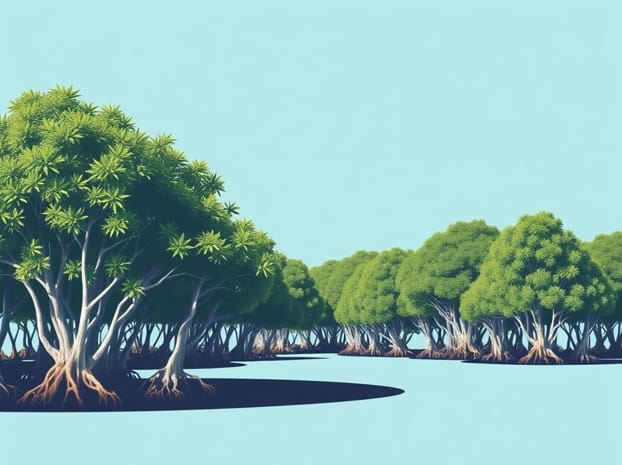
Example Of Mangrove Trees
Mangrove trees are unique coastal plants that thrive in tropical and subtropical intertidal zones, where they are regularly exposed to saltwater and tidal fluctuations. These trees are adapted to survive in challenging conditions, including saline water, waterlogged soils, and low oxygen availability. Mangroves play a crucial ecological role by stabilizing shorelines, preventing erosion, supporting biodiversity, and acting as natural buffers against storms and tidal surges. Understanding examples of mangrove trees helps illustrate their diversity, ecological importance, and the ways in which these plants sustain both marine and terrestrial ecosystems. Their adaptations, types, and functions make mangroves an essential part of coastal environments worldwide.
Definition and Characteristics of Mangrove Trees
Mangrove trees are salt-tolerant plants, also known as halophytes, that grow in coastal intertidal zones. They possess specialized root systems, such as prop roots and pneumatophores, which allow them to anchor in soft, waterlogged soils and obtain oxygen in low-oxygen environments. Mangroves are typically evergreen and can survive in harsh conditions where most other trees cannot thrive. Key characteristics include
- Salt tolerance through filtration and salt-excreting leaves.
- Unique root systems for stabilization and respiration.
- Ability to survive periodic flooding and tidal movements.
- Evergreen foliage to maintain photosynthesis year-round.
- High biodiversity support by providing habitat and breeding grounds for marine and terrestrial species.
These features enable mangrove trees to form dense coastal forests, which are vital to both ecological balance and human livelihood.
Importance of Mangrove Trees
Mangrove trees provide numerous ecological, economic, and environmental benefits. Their presence contributes to the overall health of coastal ecosystems, enhances fisheries, and protects human communities. Key benefits include
1. Coastal Protection
Mangroves act as natural barriers against storm surges, hurricanes, and tsunamis. Their dense root systems absorb wave energy and reduce the impact of flooding, preventing erosion and safeguarding inland areas.
2. Habitat for Biodiversity
Mangrove forests support a wide variety of species, including fish, crustaceans, mollusks, birds, and insects. They serve as breeding and nursery grounds for numerous marine organisms, which contributes to the sustainability of fisheries and overall biodiversity.
3. Carbon Sequestration
Mangroves are effective carbon sinks, storing significant amounts of carbon in their biomass and soil. This contributes to climate change mitigation by reducing greenhouse gas concentrations in the atmosphere.
4. Water Filtration
Mangrove trees help filter pollutants and sediments from water, improving water quality in coastal areas. Their roots trap debris and stabilize sediments, preventing them from entering the open sea.
5. Economic and Cultural Value
Many coastal communities depend on mangroves for timber, fuelwood, honey, and medicinal plants. Additionally, mangroves support ecotourism and contribute to cultural and traditional practices in various regions.
Examples of Mangrove Trees
There are several species of mangrove trees, each adapted to specific environmental conditions. Some notable examples include
1. Rhizophora mucronata (Red Mangrove)
The red mangrove is characterized by its prominent prop roots, which provide stability and allow the tree to thrive in waterlogged, saline environments. These trees are commonly found in East Africa, Southeast Asia, and the Pacific islands. Their roots create a dense network that protects shorelines and provides habitat for fish and crustaceans.
2. Avicennia marina (Grey Mangrove)
Grey mangroves, also known as white mangroves in some regions, have pneumatophores specialized aerial roots that enable gas exchange in oxygen-poor soils. This species is highly salt-tolerant and is found in the coastal regions of Australia, the Middle East, and Africa. Grey mangroves play a crucial role in stabilizing sediments and supporting diverse marine life.
3. Sonneratia alba (Mangrove Apple)
Mangrove apple trees are typically found in Southeast Asia and the Pacific islands. They have stilt roots similar to red mangroves and produce large, edible fruits. Sonneratia species contribute to shoreline protection and provide food for both humans and wildlife.
4. Bruguiera gymnorrhiza (Large-Leafed Mangrove)
Bruguiera species have buttress roots and are found in coastal regions of Asia and Northern Australia. Their dense canopies and extensive root systems provide critical habitat for fish, crabs, and other marine species while protecting the shoreline from erosion.
5. Laguncularia racemosa (White Mangrove)
White mangroves are found in the Americas, particularly in Florida, the Caribbean, and Central and South America. They typically grow in slightly higher elevations than red or grey mangroves and contribute to the stabilization of coastal sediments.
Adaptations of Mangrove Trees
Mangrove trees exhibit unique adaptations that allow them to survive in extreme coastal environments. Some key adaptations include
- Salt filtration through roots and salt excretion through leaves.
- Aerial roots such as prop roots and pneumatophores for gas exchange and stability.
- Vivipary, or the ability of seeds to germinate while still attached to the parent tree, ensuring survival in tidal zones.
- Thick, waxy leaves to reduce water loss and minimize salt accumulation.
- Flexible stems and roots to withstand strong tides and storms.
These adaptations enable mangrove trees to maintain ecological functions and survive in challenging coastal habitats.
Threats to Mangrove Trees
Despite their resilience, mangrove forests face numerous threats that endanger their survival and the ecosystems they support. Major threats include
- Coastal development and land reclamation for urbanization and agriculture.
- Pollution from industrial, agricultural, and domestic sources.
- Overharvesting of timber and other mangrove resources.
- Climate change impacts, including sea-level rise and increased storm intensity.
- Invasive species that disrupt native mangrove ecosystems.
Conservation efforts are essential to protect mangrove forests and the critical services they provide to both ecosystems and human communities.
Conservation and Restoration Efforts
Various initiatives worldwide aim to conserve and restore mangrove ecosystems. Examples include
- Planting programs to restore degraded mangrove areas.
- Legal protection and establishment of marine protected areas.
- Community-based management involving local stakeholders in sustainable use and conservation.
- Research and monitoring programs to track mangrove health and biodiversity.
- Integration of mangrove conservation into climate change mitigation strategies.
These efforts help maintain the ecological integrity of mangrove forests and ensure their continued benefits for future generations.
Mangrove trees are vital components of coastal ecosystems, providing shoreline protection, habitat for biodiversity, carbon sequestration, and resources for human communities. Examples such as red mangroves, grey mangroves, mangrove apples, large-leafed mangroves, and white mangroves illustrate the diversity of species and adaptations that allow them to thrive in saline and waterlogged conditions. Mangroves’ specialized root systems, salt tolerance, and reproductive strategies make them uniquely equipped to survive challenging environments. Protecting and restoring mangrove forests is essential for ecological balance, climate mitigation, and the well-being of coastal communities. By understanding the importance and examples of mangrove trees, we can better appreciate their role in sustaining life along tropical and subtropical coastlines and take steps to ensure their conservation for future generations.