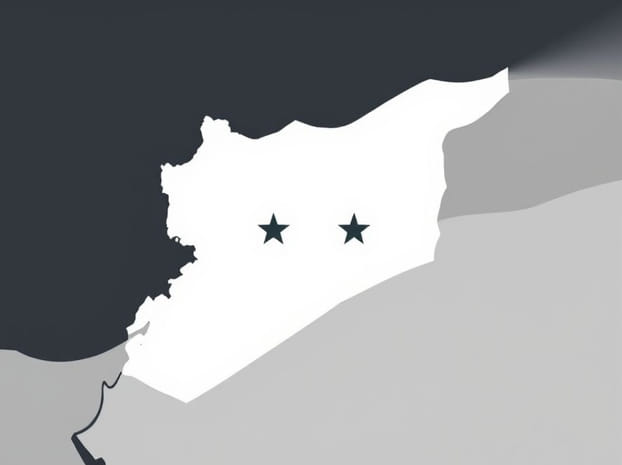
Ethnic Map Of Syria
Syria, located in the heart of the Middle East, is a country with a rich and complex tapestry of ethnic and religious groups. The ethnic composition of Syria has evolved over centuries due to migration, conquests, and historical settlements. Understanding the ethnic map of Syria provides insight into the country’s social dynamics, cultural diversity, and political landscape. The population is distributed across urban and rural areas, each with distinct ethnic characteristics that influence language, traditions, and community structures.
Overview of Syria’s Ethnic Composition
Syria’s population is a mixture of several ethnic groups, with Arabs forming the majority. The presence of Kurds, Turkmen, Armenians, Assyrians, and Circassians adds to the diversity of the nation. These groups have historically settled in specific regions, leading to identifiable concentrations on an ethnic map. The country’s ethnic diversity contributes to its cultural richness but has also been a factor in political and social tensions over time.
Arab Majority
Arabs constitute the largest ethnic group in Syria, making up roughly 74% of the population. Arab communities are predominantly Sunni Muslims, but there are also significant populations of Alawites, Druze, and Christians among Arabs. They are spread throughout Syria, from major cities like Damascus, Aleppo, and Homs to rural agricultural areas. Arabic is the official language and the primary medium of communication among most Syrians, reinforcing the cultural cohesion of the Arab majority.
Kurdish Population
Kurds form the largest non-Arab ethnic group in Syria, concentrated primarily in the northeastern provinces, including Al-Hasakah and parts of Aleppo. Kurdish communities have distinct cultural practices, language, and traditions. Kurdish language, music, and festivals are central to their identity, and Kurdish regions often maintain semi-autonomous administrative structures. Their presence near the borders with Turkey and Iraq reflects historical settlement patterns and cross-border ethnic continuity.
Turkmen Communities
Turkmen in Syria are another significant minority, largely living in northern regions near the Turkish border, including Latakia and Aleppo provinces. They speak a Turkic dialect and share cultural ties with Turkey. Turkmen communities have historically been involved in agriculture, trade, and local governance. Their strategic northern location often places them in areas of cultural and political interaction between Arab and Kurdish populations.
Other Ethnic Minorities
In addition to Arabs, Kurds, and Turkmen, Syria hosts smaller ethnic groups that contribute to its diversity. Armenians, Assyrians, Circassians, and others have settled in urban and rural areas, each preserving their language, religion, and cultural heritage. These minorities often live in enclaves or mixed communities, maintaining traditions while participating in broader Syrian society.
Armenians
Armenians are concentrated in Aleppo and Damascus, descendants of refugees from the Armenian Genocide. They maintain churches, schools, and cultural institutions that preserve their heritage. Armenian communities are active in commerce, crafts, and cultural festivals, contributing to Syria’s social and economic fabric. Their language, traditions, and religious practices distinguish them within the broader Syrian mosaic.
Assyrians
Assyrians, an ancient Semitic people, mainly inhabit the northeastern regions near Al-Hasakah and along the Khabur River. They speak Neo-Aramaic and are predominantly Christian, belonging to various denominations. Assyrians have preserved historical traditions, language, and religious practices for centuries. Their communities often operate schools and cultural centers to promote the Assyrian language and heritage, contributing to the ethnic diversity of Syria.
Circassians
Circassians settled in Syria during the 19th century after being displaced from the Caucasus. They mainly reside in Al-Ghab Valley and certain parts of Damascus and Homs. Circassians maintain traditional dances, cuisine, and language, adding to the cultural mosaic of Syria. Their military history and community organization have historically influenced local governance and social cohesion in areas where they are concentrated.
Religious and Ethnic Intersections
Ethnicity and religion in Syria are closely linked, creating a layered social structure. Sunni Arabs form the majority, but ethnic minorities may belong to distinct religious groups. Alawites, Druze, and Christians are primarily Arab or non-Arab minorities with unique religious identities. Understanding the intersections of religion and ethnicity is crucial for analyzing social dynamics, political affiliations, and regional governance in Syria.
Alawites and Coastal Regions
Alawites, an offshoot of Shia Islam, are concentrated in coastal areas, particularly in Latakia and Tartus. They form a politically influential community and have historical ties to the Syrian government. Their distinct religious practices and close-knit community structures influence local politics, social networks, and cultural traditions. The Alawite presence on the ethnic map highlights how religion and ethnicity can converge geographically.
Druze Communities
Druze populations are primarily found in the southern region of Jabal al-Druze. This small but cohesive ethnic-religious group maintains unique religious practices and cultural traditions. The Druze community’s isolation in mountainous regions has preserved their heritage and allowed for distinct social and governance structures. Their presence adds another layer to Syria’s complex ethnic map.
Urban vs. Rural Distribution
The ethnic map of Syria shows a pattern of urban concentration and rural enclaves. Major cities like Damascus, Aleppo, Homs, and Latakia host diverse populations, including Arabs, Armenians, Kurds, and others. Rural areas often feature more homogeneous ethnic communities, such as Kurdish villages in the northeast or Alawite coastal towns. Urban areas serve as melting pots of ethnicities, fostering trade, cultural exchange, and intermarriage, while rural areas preserve traditional lifestyles and ethnic identity.
Migration and Displacement
Recent conflicts and economic pressures have influenced the ethnic distribution in Syria. Internal displacement, refugee flows, and emigration have altered traditional patterns, with some areas experiencing a decrease in certain minority populations. Understanding these shifts is essential for interpreting the current ethnic map and planning for humanitarian aid, governance, and reconciliation efforts. The dynamic nature of population movements continues to reshape Syria’s ethnic landscape.
Significance of the Ethnic Map
The ethnic map of Syria is more than a visual representation of population distribution; it is a tool for understanding social cohesion, political dynamics, and cultural preservation. Policymakers, researchers, and humanitarian organizations use this information to address governance, minority rights, resource allocation, and conflict resolution. The map also highlights historical settlement patterns, cross-border ethnic connections, and the influence of geography on community development.
Policy and Governance
Accurate knowledge of ethnic distribution aids in creating inclusive policies, promoting minority representation, and ensuring equitable access to services. Recognizing ethnic diversity helps prevent marginalization and fosters community resilience. Ethnic mapping is essential for designing education, healthcare, and social programs that respect cultural and linguistic differences.
Conflict and Reconciliation
The ethnic map provides insight into areas prone to tension or conflict, enabling targeted interventions for peacebuilding and reconciliation. By understanding historical grievances, settlement patterns, and cultural identities, stakeholders can facilitate dialogue and cooperation between communities. Ethnic mapping is crucial for post-conflict reconstruction and social cohesion strategies.
The ethnic map of Syria illustrates a rich and complex landscape shaped by centuries of migration, settlement, and cultural interaction. Arabs form the majority, while Kurds, Turkmen, Armenians, Assyrians, Circassians, and other minorities contribute to the country’s diversity. Religious affiliations intersect with ethnicity, creating layered social structures across urban and rural areas. Recent conflicts have influenced migration patterns, reshaping the ethnic map and presenting new challenges for governance, social cohesion, and cultural preservation. Understanding Syria’s ethnic composition is essential for appreciating its cultural richness, addressing social and political issues, and planning for a future that honors the country’s diverse communities.