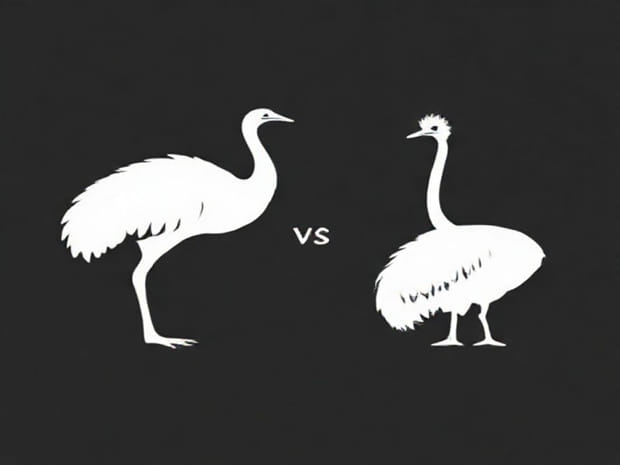
Emu Vs Ostrich Vs Rhea
When it comes to large, flightless birds, emus, ostriches, and rheas are among the most fascinating species. These birds are not only impressive in size but also exhibit unique behaviors, adaptations, and habitats that make them distinct from one another. Understanding the differences and similarities between emus, ostriches, and rheas provides insight into evolutionary biology, animal behavior, and ecological diversity. Each of these birds has adapted to survive in different parts of the world, and comparing them highlights how environment and evolutionary pressures shape the anatomy and lifestyle of large terrestrial birds.
Overview of Emus
Emus are native to Australia and are the second-largest birds in the world after the ostrich. Emus can reach heights of up to 6 feet and weigh between 90 to 130 pounds. They are known for their long legs, which allow them to run at speeds of up to 30 miles per hour, making them highly efficient at escaping predators. Emus are omnivorous and feed on a variety of plants, seeds, fruits, insects, and small animals. Their distinctive soft brown feathers help them blend into the Australian grasslands and forests, providing camouflage from predators.
Key Characteristics of Emus
- Height Up to 6 feet tall.
- Weight Between 90 and 130 pounds.
- Speed Can run up to 30 miles per hour.
- Diet Omnivorous, feeding on plants, fruits, insects, and small animals.
- Habitat Grasslands, savannas, and forests of Australia.
- Behavior Emus are nomadic, moving in search of food and water.
Overview of Ostriches
Ostriches are the largest living birds in the world and are native to Africa. They can reach heights of up to 9 feet and weigh as much as 340 pounds. Ostriches are famous for their powerful legs, which allow them to sprint at speeds of 45 miles per hour for short distances. These birds are primarily herbivorous, feeding on grasses, seeds, shrubs, and occasionally insects. Ostriches have a unique adaptation where they use their wings for balance while running and for courtship displays. Their large eyes and excellent vision provide an advantage for spotting predators in open savannas and deserts.
Key Characteristics of Ostriches
- Height Up to 9 feet tall.
- Weight Up to 340 pounds.
- Speed Can run up to 45 miles per hour.
- Diet Primarily herbivorous, with occasional insects.
- Habitat Savannas and deserts of Africa.
- Behavior Ostriches live in groups and exhibit complex social structures.
Overview of Rheas
Rheas are large, flightless birds native to South America, particularly Argentina, Brazil, and Uruguay. They are smaller than emus and ostriches, reaching heights of 5 to 6 feet and weighing between 50 to 88 pounds. Rheas are known for their long legs, which allow them to run swiftly to evade predators, though their top speed is generally lower than that of ostriches. Rheas are herbivorous, feeding on a wide variety of plants, seeds, fruits, and small animals. Their grey or brown feathers help them camouflage in grasslands and open plains. Rheas are social birds, often seen in small flocks, especially during breeding season.
Key Characteristics of Rheas
- Height 5 to 6 feet tall.
- Weight 50 to 88 pounds.
- Speed Can run up to 30 miles per hour.
- Diet Herbivorous, occasionally insects and small animals.
- Habitat Grasslands and open plains of South America.
- Behavior Social, often moving in small flocks.
Comparative Anatomy
When comparing emus, ostriches, and rheas, their anatomy shows both similarities and distinct differences. All three are flightless birds with strong legs adapted for running, long necks, and small wings relative to body size. However, ostriches are the tallest and heaviest, with muscular legs designed for speed and defense. Emus are slightly smaller but well-adapted for endurance running over long distances. Rheas are lighter and more agile in dense grasslands but are not as fast as ostriches. Differences in feather structure, coloration, and toe number further distinguish these species. Ostriches have two toes, which enhance sprinting speed, while emus and rheas have three toes for stability and endurance.
Anatomical Highlights
- Leg structure Ostriches optimized for sprinting; emus for endurance; rheas for agility.
- Neck length All have long necks, but ostriches’ necks are more robust.
- Feathers Ostriches have stiff, sparse feathers; emus have soft, hairy feathers; rheas have coarse, flexible feathers.
- Toes Ostriches have two toes; emus and rheas have three.
Behavioral Differences
Behaviorally, these birds also show variations influenced by habitat and ecological pressures. Ostriches are highly social, often forming flocks for protection and breeding. Emus tend to roam more independently or in pairs and are highly nomadic. Rheas live in smaller flocks and exhibit unique mating behaviors where males incubate eggs and care for chicks. Each species demonstrates specialized communication methods, such as drumming, booming, or hissing sounds, to interact with others or deter predators. These behavioral traits reflect adaptations to different environments and survival strategies.
Behavioral Highlights
- Social structure Ostriches in large flocks; emus nomadic; rheas in small flocks.
- Reproduction Rheas males incubate eggs; emus males also incubate; ostriches both sexes involved in protection.
- Communication Vocalizations vary, including booming in ostriches, drumming in emus, and hissing in rheas.
- Predator defense Ostriches use speed and strong kicks; emus rely on endurance and camouflage; rheas rely on flock vigilance.
Dietary Habits
Diet is another area where emus, ostriches, and rheas differ slightly. Ostriches are mainly herbivores but occasionally consume insects, while emus are true omnivores, eating plants, fruits, and small animals. Rheas primarily consume plant material but may include small insects for protein. These dietary habits are shaped by the availability of food in their native habitats. Understanding their diets is important for conservation, captive care, and wildlife management.
Diet Summary
- Ostriches Grasses, seeds, shrubs, occasionally insects.
- Emus Plants, fruits, insects, small animals.
- Rheas Grasses, fruits, seeds, some insects.
Habitat and Distribution
Geographical distribution and habitat preferences further distinguish these species. Ostriches dominate African savannas and deserts, emus roam Australian grasslands and forests, and rheas inhabit the open plains of South America. These habitats influence their physical adaptations, behavior, and social structure. Each species has evolved unique strategies for finding food, avoiding predators, and reproducing successfully within its environment.
In summary, emus, ostriches, and rheas are three remarkable species of large, flightless birds, each with unique characteristics shaped by their environment. Ostriches are the tallest and fastest, adapted for African savannas; emus are resilient and omnivorous, thriving in Australia’s grasslands; and rheas are agile and social, suited to South American plains. Understanding their anatomy, behavior, diet, and habitat highlights the fascinating diversity of flightless birds and provides valuable insights into how evolution shapes species to survive and thrive in different ecological niches.