Electronic Theodolite Least Count
Surveying is a field where accuracy is the foundation of every measurement, and modern instruments have made precision easier to achieve. One of the most important tools in surveying is the electronic theodolite, a device designed to measure both horizontal and vertical angles. Among its many technical specifications, the least count of an electronic theodolite is crucial because it defines the smallest value that can be read or measured by the instrument. Understanding the meaning of least count, how it works in an electronic theodolite, and its importance in practical applications can help students, engineers, and professionals achieve reliable results in construction, mapping, and engineering projects.
What is Least Count?
The term least count refers to the smallest measurable unit or value an instrument can detect. In simpler words, it is the minimum measurement that the device can accurately display. For instance, in a regular ruler, the least count is 1 millimeter, because that is the smallest division marked. For precise instruments like a theodolite, the least count becomes a defining feature of its accuracy. A smaller least count indicates a higher degree of precision, which is essential in technical fields like surveying, civil engineering, and geodesy.
Understanding Electronic Theodolite
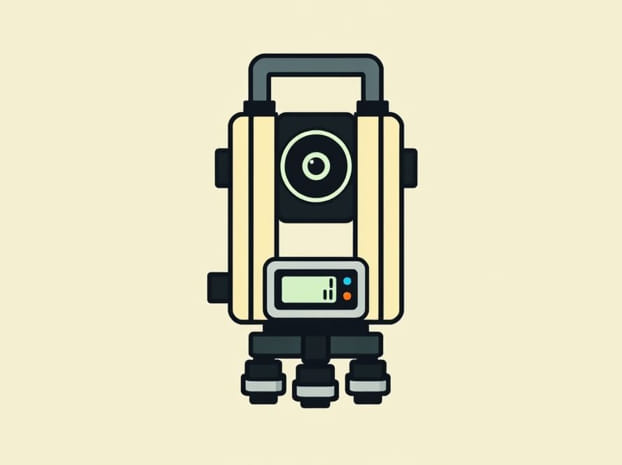
An electronic theodolite is an advanced version of the traditional optical theodolite. Instead of relying solely on mechanical scales, it uses electronic sensors and digital displays to provide more accurate and easily readable angle measurements. By eliminating human error associated with manual reading, the electronic theodolite has become a standard instrument for engineers and surveyors. With its compact design, longer battery life, and data storage capabilities, it has revolutionized how professionals record and process field data.
Least Count of an Electronic Theodolite
The least count of an electronic theodolite usually ranges from 1 second (1) to 20 seconds (20), depending on the model and manufacturer. This means that the smallest angle the instrument can measure is as fine as one second of arc. To put this into perspective, one degree is divided into 60 minutes, and one minute is further divided into 60 seconds. Therefore, an electronic theodolite with a least count of 1 can measure extremely small angular differences with impressive accuracy. This level of precision makes the instrument suitable for large-scale engineering projects, alignment tasks, and even scientific applications.
Importance of Least Count in Surveying
The least count is not just a number in the specifications; it directly influences the quality of results obtained in the field. In surveying and construction
- A smaller least count ensures greater accuracy in angle measurement.
- Precise readings reduce cumulative errors in long-distance measurements.
- Reliable data ensures the correct positioning of structures such as bridges, tunnels, and roads.
- In projects involving high-rise buildings, minute angular errors can cause large deviations at greater heights.
- It supports advanced tasks such as triangulation, traverse surveying, and setting out curves.
Therefore, choosing an electronic theodolite with the right least count is essential based on the project requirements.
Comparison with Traditional Theodolite
Traditional theodolites rely on vernier scales for angle measurements, where the least count was often around 20 seconds or more. Reading these scales required skill and careful observation, and even then, human error could affect results. With electronic theodolites, digital displays have replaced manual readings, offering least counts as low as 1 second with ease of use. This shift has greatly improved the reliability and efficiency of fieldwork, making electronic theodolites the preferred choice for modern surveying.
Applications Requiring High Precision
Not all projects demand the highest possible precision, but certain applications absolutely depend on it. Situations where the least count of an electronic theodolite plays a vital role include
- Construction of dams, bridges, and tunnels where structural alignment is critical.
- Geodetic surveys covering vast areas that need precise angular control.
- Monitoring deformations in structures over time to detect subtle shifts.
- Astronomical observations where fine angular differences are essential.
- Railway track alignment and large infrastructure projects.
In these cases, the ability of the theodolite to measure angles accurately to the nearest second can mean the difference between success and costly errors.
Factors Affecting Accuracy
While the least count defines the theoretical precision of an electronic theodolite, several factors influence actual accuracy in the field
- Instrument calibrationRegular maintenance ensures consistent performance.
- Operator skillProper setup, leveling, and usage techniques reduce errors.
- Environmental conditionsHeat, wind, and vibrations may affect stability and readings.
- Quality of instrumentHigh-end models generally offer smaller least counts with advanced features.
Being mindful of these factors helps professionals maximize the precision offered by their instruments.
Advantages of Small Least Count
Having a small least count in an electronic theodolite offers several advantages
- Allows surveyors to detect minute angular differences.
- Improves alignment of structures across long distances.
- Provides confidence in engineering designs and implementations.
- Supports scientific studies where extreme accuracy is required.
- Reduces the risk of cumulative errors in multi-step surveying tasks.
This precision is particularly beneficial for projects where safety, durability, and cost efficiency are top priorities.
Electronic Theodolite vs Total Station
A common question arises about whether to choose an electronic theodolite or a total station. A total station combines the functions of an electronic theodolite with distance measurement and data recording features. While both instruments rely on the principle of least count for angular precision, total stations often offer integrated solutions for complex tasks. However, for projects focusing mainly on angle measurement, the electronic theodolite remains a cost-effective and efficient tool.
Examples of Common Least Counts
Different manufacturers produce electronic theodolites with varying specifications. Here are some common least count values
- 1 second (high precision models, used for scientific or large-scale engineering work).
- 5 seconds (standard precision, suitable for general surveying tasks).
- 10 to 20 seconds (basic models, used for educational or less critical projects).
The choice of least count depends on the balance between project needs, budget, and the required level of accuracy.
The concept of least count in an electronic theodolite is fundamental for understanding how precise measurements can be achieved in surveying and engineering. From defining the smallest measurable unit to ensuring structural alignment in major projects, least count plays a central role in the reliability of results. While modern instruments offer least counts as low as one second, the actual accuracy depends on factors such as calibration, environment, and operator skill. Knowing the least count of the instrument being used helps professionals select the right tool for the job, ensuring accuracy, safety, and efficiency in every project. The electronic theodolite, with its refined least count and advanced features, remains an indispensable asset in the field of surveying and construction.
Apakah kamu ingin saya tambahkan **FAQ section** di akhir artikel (misalnya 45 pertanyaan tentang least count dan electronic theodolite) supaya artikel ini lebih lengkap dan kaya kata kunci untuk SEO?