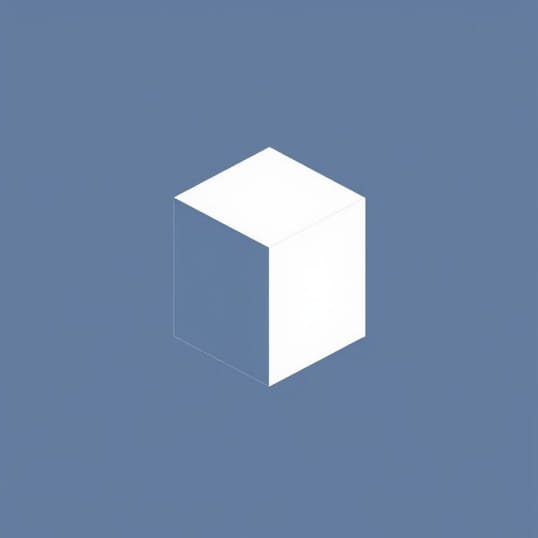
Edge Of Cubical Box
The concept of the edge of a cubical box is fundamental in understanding the properties of cubes in geometry. Cubes are three-dimensional shapes with equal-length edges, and each face is a perfect square. The edge of a cubical box plays a crucial role in determining its surface area, volume, and overall dimensions. Understanding how to calculate and utilize the edge length is essential in mathematics, physics, engineering, and practical applications such as packaging, construction, and storage solutions.
Definition of the Edge of a Cubical Box
The edge of a cubical box is the line segment that joins two adjacent vertices of the cube. Since a cube has six faces, twelve edges, and eight vertices, each edge has the same length. This uniformity in dimensions makes cubes one of the simplest and most symmetric three-dimensional shapes, which is why they are widely studied in geometry and used in practical applications.
Properties of the Edge
- All edges of a cube are equal in length.
- Each edge connects two vertices of the cube.
- Edges form the boundaries of each square face of the cube.
- The cube has twelve edges in total.
Calculating Edge Length
The edge length of a cubical box can be calculated using various formulas depending on the information available, such as volume or surface area. Knowing the edge length is important for solving geometric problems and for practical applications like determining the amount of material needed to construct a box.
From Volume
If the volume of the cube is known, the edge length can be calculated using the formula
Edge length (a) = âVolume (V)
For example, if a cube has a volume of 125 cubic units, the edge length can be calculated as
a = â125 = 5 units
From Surface Area
If the surface area of the cube is known, the edge length can be calculated using the formula
Edge length (a) = â(Surface Area / 6)
For instance, if a cube has a surface area of 150 square units
a = â(150 / 6) = â25 = 5 units
Importance in Calculations
The edge of a cubical box is critical in various mathematical calculations, including volume, surface area, and diagonal lengths. These calculations are not only theoretical but also have practical implications in real-life applications.
Volume
The volume of a cube is directly related to its edge length using the formula
Volume (V) = a³
Here, a” represents the edge length. This formula is used to calculate the capacity of a cubical box, which is important in packaging and storage industries.
Surface Area
The surface area of a cubical box is the total area of all six faces. It can be calculated as
Surface Area (S) = 6a²
This calculation helps in determining the amount of material required to manufacture the box, such as cardboard, metal, or wood.
Diagonals
The edges also help in calculating the diagonal lengths of the cube, which include
- Face diagonal
d_face = aâ2 - Space diagonal
d_space = aâ3
Understanding diagonals is essential in design, construction, and structural engineering.
Practical Applications of Edge Length
Knowing the edge length of a cubical box has significant practical applications in everyday life and various industries.
Packaging and Storage
In packaging, the edge length determines how much space a box occupies and its volume capacity. It also helps in arranging boxes efficiently for shipping and storage.
Construction and Engineering
Engineers and architects use cube edge measurements when designing modular structures, building blocks, and other geometric constructions. Accurate edge calculations ensure stability and proper alignment of components.
Education and Learning
In education, cubical boxes are used to teach geometry concepts, including edges, faces, vertices, and spatial reasoning. Understanding edge lengths helps students grasp more complex three-dimensional geometry topics.
Examples and Problem Solving
Using the edge length of a cubical box, several problems can be solved efficiently. Here are some examples
- If the edge of a cube is 4 units, calculate its volume
V = 4³ = 64 units³ - If the edge is 3 units, calculate the surface area
S = 6 à 3² = 54 units² - If the edge is 5 units, find the space diagonal
d = 5â3 â 8.66 units
These examples illustrate how knowledge of edge length is essential in solving both theoretical and practical geometric problems.
The edge of a cubical box is a fundamental concept in geometry that serves as the basis for calculating volume, surface area, and diagonals. It plays a crucial role in various practical applications, including packaging, storage, construction, and education. Understanding how to determine and use edge length helps in both mathematical problem-solving and real-world applications. Mastery of this concept allows students, engineers, and professionals to efficiently work with cubes and other three-dimensional shapes, ensuring accurate measurements and effective designs.