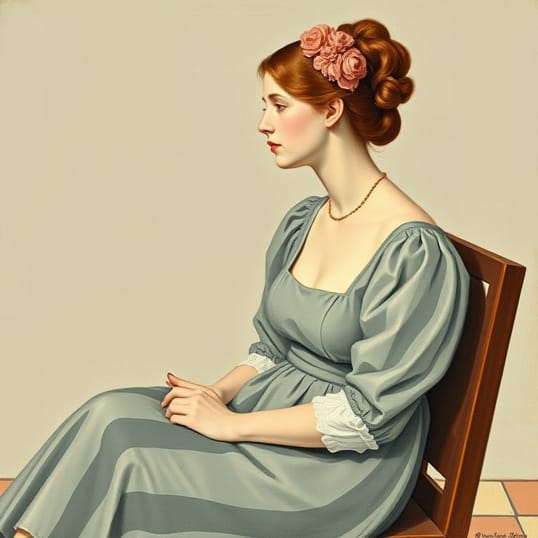
Edgar Degas Mary Cassatt At The Louvre
In the late nineteenth century, Paris was the heart of the art world, and the Louvre stood as a sanctuary for artists seeking inspiration. Among those who walked its grand galleries were Edgar Degas and Mary Cassatt, two remarkable painters whose friendship and shared admiration for the masterpieces of the past shaped their creative journeys. The story of Edgar Degas and Mary Cassatt at the Louvre is more than an anecdote of mentorship and collaboration; it is a window into the development of Impressionism, the role of women in art, and the dynamic interplay of tradition and modernity that defined their era.
The Meeting of Two Artists
Edgar Degas, already an established figure in Parisian art circles, encountered Mary Cassatt in the 1870s. At the time, Cassatt, an American painter living in Paris, was determined to make her mark in the European art world. The Louvre became a shared space where their paths crossed, both literally and artistically. Degas was drawn to her sharp eye and commitment to craft, while Cassatt admired his technical mastery and fearless exploration of new techniques.
The Louvre was more than a museum to them; it was a classroom. Artists were often seen copying Old Masters as a way of refining their skills, and both Degas and Cassatt spent countless hours studying the works housed there. This shared dedication laid the foundation for a creative exchange that would shape their art for decades to come.
Degas as Mentor and Collaborator
Degas was known for his candid opinions, often pushing those around him to refine their work. With Mary Cassatt, he found a partner who could match his intensity. He encouraged her to experiment with composition, to look at unconventional viewpoints, and to embrace modern subjects. Cassatt, in turn, challenged him with her independence and her ability to capture intimate domestic scenes with sensitivity and strength.
At the Louvre, Degas is said to have guided Cassatt in analyzing paintings not only for their beauty but for their structure. They studied line, form, and the way old masters balanced light and shadow. This meticulous approach deeply influenced Cassatt’s technique, particularly in her later works that combined Impressionist color with strong compositional frameworks.
The Role of the Louvre as Inspiration
The Louvre offered endless possibilities for study. Together, Degas and Cassatt explored works by artists such as Raphael, Titian, and Rembrandt. These masterpieces provided a foundation from which they could innovate. For Degas, the museum’s treasures reinforced his interest in line and classical structure, even as he experimented with modern life subjects. For Cassatt, the museum represented legitimacy, anchoring her pursuit of excellence in a space that had long excluded women from recognition.
Mary Cassatt’s Transformation
The partnership with Degas proved transformative for Cassatt. While she had already developed her own artistic voice, Degas’s encouragement and critique gave her confidence to push boundaries. She became one of the few women actively involved in the Impressionist exhibitions, contributing works that depicted the everyday lives of women with remarkable depth and empathy.
Her time at the Louvre reinforced her dual role as both a student of tradition and a pioneer of modern art. Unlike many of her contemporaries, Cassatt was able to balance reverence for the Old Masters with a commitment to capturing contemporary life. This duality became one of the hallmarks of her career.
The Dynamic of Friendship
The relationship between Edgar Degas and Mary Cassatt has fascinated art historians for generations. While their personalities sometimes clashed Degas could be harsh, and Cassatt fiercely independent their mutual respect endured. They inspired one another, collaborated on projects, and shared an intellectual bond that enriched both their bodies of work.
At the Louvre, this friendship found its most symbolic setting. The museum represented the weight of tradition, but their conversations and studies within its walls were focused on the future. Together, they turned classical lessons into modern innovations, making their partnership an essential chapter in the history of Impressionism.
Artistic Dialogues at the Louvre
What makes the story of Edgar Degas and Mary Cassatt at the Louvre so compelling is the way their dialogue as artists is reflected in their work. Degas often explored movement dancers, bathers, and figures caught mid-action while Cassatt’s focus was on stillness, intimacy, and the subtle expressions of everyday life. Yet both shared a fascination with perspective, composition, and the study of human form.
Their time at the Louvre solidified these shared interests. By studying the Old Masters side by side, they created a visual language that merged classical discipline with modern freedom. This dialogue can be seen in Cassatt’s portraits of women in thoughtful poses and in Degas’s carefully constructed scenes of dancers framed with almost architectural precision.
Exhibiting the New While Honoring the Old
The Impressionist exhibitions of the late 19th century were controversial, as many critics dismissed them as unfinished or chaotic. Yet, for both Degas and Cassatt, the Louvre provided the counterpoint proof that their innovations were rooted in centuries of tradition. By situating their modern work against the backdrop of history, they strengthened their claim to legitimacy.
The Significance of the Louvre in Their Legacy
The Louvre was not only a backdrop but a symbol in the story of Degas and Cassatt. For Degas, it represented continuity with the classical world. For Cassatt, it symbolized entry into a male-dominated artistic canon. Their shared experiences at the museum became part of their legacies, linking their names not only to Impressionism but to the timeless pursuit of artistic mastery.
Their friendship reminds us that great art often emerges from collaboration, conversation, and the blending of different perspectives. At the Louvre, Degas and Cassatt found common ground that allowed them to grow both individually and together.
Life Beyond the Louvre
While their time at the Louvre was formative, both artists eventually carried its lessons into broader contexts. Degas continued to experiment with pastel, sculpture, and photography, pushing his exploration of movement to new levels. Cassatt became known for her intimate depictions of women and children, works that combined technical brilliance with emotional depth. The Louvre remained a touchstone for them both a reminder of where their dialogue began.
In the decades that followed, Cassatt also became an influential figure in introducing French Impressionism to American collectors, further cementing the legacy of both her and Degas. The Louvre, as a shared memory, remained a quiet presence in the background of their careers, symbolizing the bridge between past and present.
The story of Edgar Degas and Mary Cassatt at the Louvre is more than a historical footnote; it is a testament to the power of mentorship, collaboration, and artistic dialogue. Within the museum’s grand halls, the two painters not only studied the masters of the past but also laid the groundwork for a modern movement that would redefine art. Their friendship, forged in respect and mutual inspiration, continues to inspire artists and historians alike.
Ultimately, the Louvre stands as both a physical and symbolic space in their story a reminder that even in the pursuit of the new, artists must grapple with the old. Edgar Degas and Mary Cassatt found in its galleries not just lessons in art but lessons in endurance, creativity, and the transformative power of collaboration.