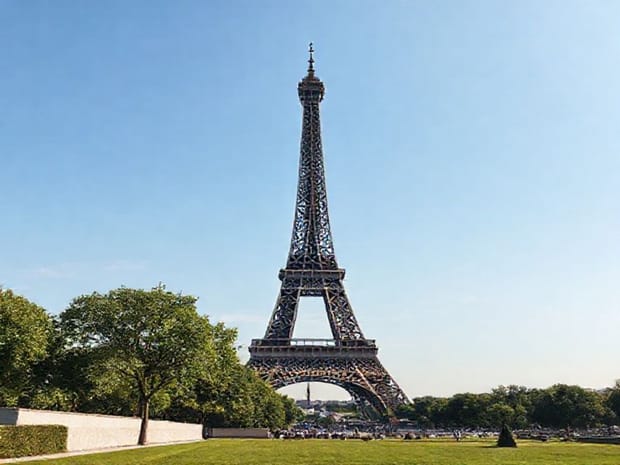
Does The Eiffel Tower Get Taller In The Summer
The Eiffel Tower is one of the most iconic landmarks in the world, attracting millions of visitors each year who marvel at its architectural beauty and engineering prowess. While most people admire its iron structure and panoramic views of Paris, a lesser-known fact is that the tower’s height is not entirely fixed. Due to the physical properties of iron and thermal expansion, the Eiffel Tower can actually grow taller during the summer months. Understanding this phenomenon involves a combination of physics, material science, and the tower’s unique construction, highlighting the fascinating ways in which large structures interact with their environment.
Thermal Expansion and Iron Structures
Thermal expansion is a physical property of materials that causes them to expand when heated and contract when cooled. The Eiffel Tower, constructed primarily from wrought iron, is particularly affected by changes in temperature. Iron expands as it absorbs heat from the sun, causing subtle but measurable increases in the tower’s height. Conversely, during colder months, the iron contracts, and the tower becomes slightly shorter.
How Thermal Expansion Works
Thermal expansion occurs because atoms in a material vibrate more intensely as temperature increases, causing the material to expand in size. For a large structure like the Eiffel Tower
- On hot summer days, the iron components heat up and lengthen.
- Expansion is more pronounced in areas directly exposed to sunlight, such as the tower’s upper sections.
- The change in height is typically several centimeters, enough to be measurable but not visually dramatic.
Engineers account for these changes when designing structures, ensuring that expansion and contraction do not compromise stability or safety.
The Eiffel Tower’s Construction and Height Variations
The Eiffel Tower stands at approximately 324 meters tall, including its antennas. The structure’s iron lattice design allows it to flex and expand slightly without damage. The open lattice design is particularly advantageous for thermal expansion, as it reduces wind resistance and allows the iron to move naturally.
Seasonal Height Differences
During summer, the Eiffel Tower can grow up to 15 centimeters taller due to heat-induced expansion. This variation is caused by several factors
- Direct sunlight heating the iron structure.
- Air temperature around the tower influencing overall thermal energy.
- Daily fluctuations in temperature causing minor expansions and contractions.
In winter, the opposite occurs the tower contracts slightly as temperatures drop, reducing its height. These seasonal changes are a natural and expected aspect of large metal constructions.
Historical Observations and Measurements
Since its completion in 1889, engineers have closely monitored the Eiffel Tower for structural integrity. One interesting observation is its seasonal height variation
- Historical records indicate that temperature changes can cause the tower’s height to vary by as much as 15 to 17 centimeters.
- Modern laser measurements and engineering studies continue to confirm these seasonal shifts.
- The tower’s flexibility ensures that expansion and contraction do not compromise safety, even during extreme weather conditions.
These findings make the Eiffel Tower a fascinating example of how environmental factors interact with human-made structures.
Engineering Considerations
Engineers designed the Eiffel Tower with thermal expansion in mind. The iron structure can flex and bend slightly without damage, thanks to the lattice design and carefully calculated connections between beams. Key engineering considerations include
- Allowing for thermal expansion in the tower’s joints and rivets.
- Ensuring the foundation can handle minor shifts caused by the structure’s height variations.
- Using durable materials to withstand repeated seasonal changes over decades.
Without these considerations, thermal expansion could cause structural stress or misalignment in large iron constructions.
Practical Implications
While the height change is interesting scientifically, it has little impact on visitors. Observation decks, elevators, and antennas are all designed to accommodate minor shifts. However, understanding this phenomenon is important for
- Engineers maintaining the tower over time.
- Architects studying material properties and large-scale construction.
- Educators using the tower as an example of thermal expansion in real-world scenarios.
Elevator Operations
Even elevator systems are designed with the tower’s expansion and contraction in mind. Cable lengths and mechanical systems allow slight adjustments to maintain smooth operation throughout seasonal changes.
Fun Facts About the Eiffel Tower and Thermal Expansion
Visitors often find it fascinating that the Eiffel Tower grows taller in summer. Some fun facts include
- The tower can move slightly in strong winds, bending up to 7 centimeters.
- During extremely hot days, the top of the tower can tilt slightly due to uneven heating.
- Its iron lattice design not only allows thermal movement but also makes it lighter and more resistant to wind stress.
Yes, the Eiffel Tower does get taller in the summer, primarily due to thermal expansion of the iron structure. Seasonal changes in temperature cause the metal to expand, increasing the tower’s height by several centimeters. While this change is not noticeable to the casual observer, it is a significant demonstration of physics in action and highlights the importance of engineering foresight in designing durable structures. From its lattice construction to carefully calculated joints and rivets, the Eiffel Tower exemplifies how human-made structures can adapt to natural environmental factors. Understanding its seasonal height variations offers a unique perspective on both the marvels of modern engineering and the fascinating interactions between architecture and the natural world.