Do Prokaryotes Have A Nucleus
Prokaryotes are among the simplest and most ancient forms of life on Earth, encompassing bacteria and archaea. One of the most fundamental questions about these organisms concerns their cellular structure, particularly whether they possess a nucleus. Understanding this aspect of prokaryotic cells is crucial for grasping the differences between prokaryotic and eukaryotic cells, their evolutionary significance, and their functional biology. Unlike eukaryotic cells, which have complex compartmentalization including a defined nucleus, prokaryotes exhibit unique organizational features that allow them to survive and thrive in diverse environments. Exploring whether prokaryotes have a nucleus reveals key insights into cellular evolution, genetic organization, and microbial physiology.
What is a Nucleus?
A nucleus is a membrane-bound organelle found in eukaryotic cells that serves as the control center of the cell. It houses the cell’s genetic material in the form of DNA, organized into chromosomes. The nucleus is enclosed by a double membrane called the nuclear envelope, which regulates the exchange of materials such as RNA and proteins between the nucleus and cytoplasm. The presence of a nucleus allows for sophisticated regulation of gene expression, DNA replication, and RNA transcription, supporting the complex functions of eukaryotic cells. This compartmentalization distinguishes eukaryotic cells from simpler cell types, such as prokaryotes.
Functions of the Nucleus
- Houses genetic material (DNA) and organizes it into chromosomes.
- Coordinates cell growth, metabolism, and reproduction.
- Controls gene expression and RNA synthesis.
- Regulates transport of molecules between nucleus and cytoplasm through nuclear pores.
The nucleus is a hallmark of eukaryotic cells, providing spatial organization for genetic processes and enabling complex cellular regulation.
Prokaryotic Cell Structure
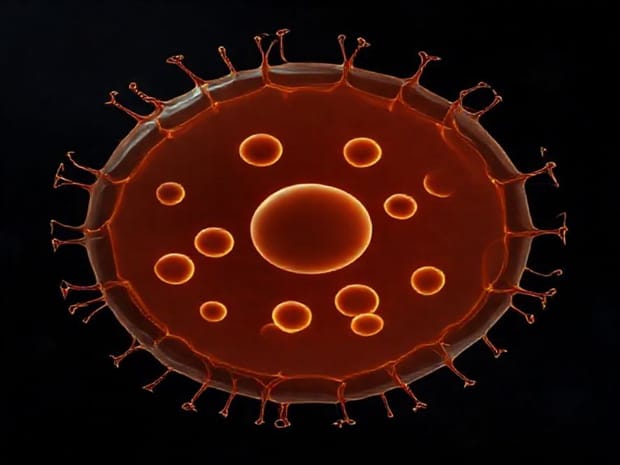
Prokaryotic cells differ fundamentally from eukaryotic cells. They lack membrane-bound organelles, including a true nucleus. Instead, their genetic material is located in a region of the cell called the nucleoid, which is not separated from the cytoplasm by a membrane. The nucleoid contains a single, circular DNA molecule, along with associated proteins that help in organizing and compacting the DNA. Despite the absence of a nucleus, prokaryotes efficiently carry out essential cellular processes such as DNA replication, transcription, and translation within this more open cellular environment.
Key Features of Prokaryotic Cells
- No membrane-bound nucleus; DNA located in nucleoid.
- Single circular chromosome.
- Ribosomes present for protein synthesis but smaller than in eukaryotes.
- Cell wall commonly present, providing structural support.
- Reproduce primarily through binary fission, a simple form of cell division.
These characteristics highlight how prokaryotes maintain cellular function without the compartmentalization seen in eukaryotic cells, relying on efficient molecular interactions in the cytoplasm.
Do Prokaryotes Have a Nucleus?
The answer is no prokaryotes do not have a true nucleus. Unlike eukaryotic cells, which possess a nucleus enclosed by a nuclear envelope, prokaryotic cells contain a nucleoid region where their DNA resides. This nucleoid is irregularly shaped and not separated from the cytoplasm by a membrane. While the nucleoid performs many of the same functions as a nucleus storing and organizing genetic material and coordinating DNA replication and gene expression it lacks the structural compartmentalization characteristic of a true nucleus. This distinction is a defining feature of prokaryotic cells.
Implications of Lacking a Nucleus
- Genetic material is more exposed to the cytoplasm, allowing rapid transcription and translation.
- Cell division is simpler and faster, typically occurring via binary fission.
- Limited regulation of gene expression compared to eukaryotes due to lack of compartmentalization.
- Allows prokaryotes to adapt quickly to environmental changes.
Despite the absence of a nucleus, prokaryotes are highly efficient and versatile organisms, capable of thriving in a wide range of habitats, from extreme heat and acidity to aquatic and soil environments.
Comparison Between Prokaryotic Nucleoid and Eukaryotic Nucleus
Although prokaryotes lack a true nucleus, their nucleoid region shares some functional similarities with a nucleus
- Genetic Material StorageBoth house DNA, though eukaryotic DNA is linear and organized into multiple chromosomes.
- DNA Replication and TranscriptionBoth regions coordinate these processes, but eukaryotic cells use a more compartmentalized and regulated system.
- RegulationEukaryotic nuclei have nuclear pores and complex regulatory mechanisms; prokaryotic nucleoids rely on direct interaction with the cytoplasm.
This comparison emphasizes that while functionally similar, structural differences are key to understanding cellular organization and evolutionary complexity.
Evolutionary Significance
The absence of a nucleus in prokaryotes is considered a primitive trait, reflecting their early origin in the evolutionary timeline. Prokaryotic cells emerged over 3.5 billion years ago and have maintained a simple yet highly effective cellular organization. The evolution of a true nucleus in eukaryotes allowed for larger genomes, more complex regulation of gene expression, and the development of multicellularity. Studying prokaryotes helps scientists understand fundamental aspects of life, cellular evolution, and the transition from simple to complex cellular forms.
Advantages of Prokaryotic Simplicity
- Rapid growth and reproduction due to simple organization.
- Efficient metabolic processes without compartmentalization.
- Ability to survive in extreme environments.
- Flexibility in horizontal gene transfer, promoting adaptation.
These advantages have allowed prokaryotes to colonize virtually every habitat on Earth, making them critical to ecosystems, human health, and biotechnology.
Applications in Science and Medicine
Understanding that prokaryotes lack a nucleus has practical implications in microbiology, medicine, and biotechnology. Antibiotics, for example, often target processes unique to prokaryotic cells, such as DNA replication, transcription, and protein synthesis, without affecting eukaryotic cells. Additionally, prokaryotic cells are widely used in genetic engineering and industrial microbiology because their simple structure and rapid growth make them ideal hosts for producing proteins, enzymes, and other biomolecules. Studying prokaryotes also helps in developing strategies to combat bacterial infections and understand microbial ecology.
Prokaryotes, including bacteria and archaea, do not have a true nucleus. Instead, they contain a nucleoid region where their DNA is located, lacking a surrounding nuclear membrane. This structural simplicity distinguishes them from eukaryotic cells and allows for rapid growth, adaptation, and survival in diverse environments. Despite the absence of a nucleus, prokaryotes efficiently carry out essential cellular processes, demonstrating the versatility and evolutionary success of these organisms. Understanding the difference between prokaryotic nucleoids and eukaryotic nuclei is fundamental for studying microbiology, cellular evolution, and the applications of microbes in medicine and biotechnology.