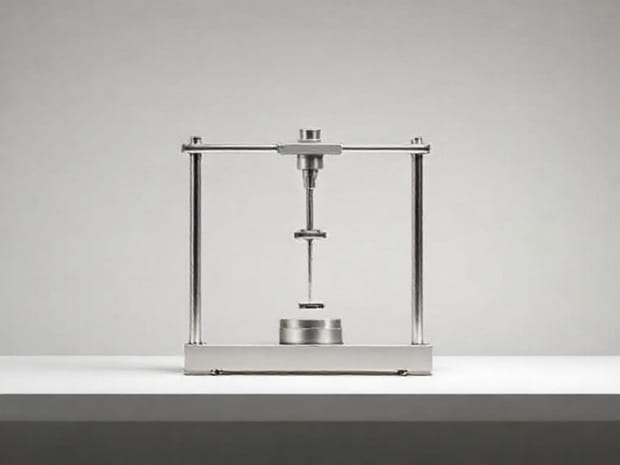
Direct Shear Test Apparatus
In geotechnical engineering, understanding the shear strength of soil is essential for designing foundations, retaining walls, slopes, and other structures. One of the most widely used methods to measure this property is the direct shear test, carried out with a direct shear test apparatus. This equipment allows engineers to study how soil or other granular materials behave under controlled loading conditions. By simulating real-world forces, the test provides valuable data for safe and effective construction design. The apparatus itself is relatively simple but highly effective, making it a standard tool in soil mechanics laboratories worldwide.
Overview of the direct shear test apparatus
The direct shear test apparatus is specifically designed to apply shear force to a soil specimen while keeping the normal load constant. The specimen is usually placed in a shear box divided into two halves that can move relative to each other. When horizontal force is applied, one half of the box slides against the other, creating a shear failure plane within the soil sample. The measurements collected help determine the shear strength parameters of soil, namely cohesion and the angle of internal friction.
Main components of the apparatus
The apparatus is made up of several key parts that work together to simulate and measure soil behavior under shear stress. Common components include
- Shear boxA square or circular box divided horizontally into two halves, holding the soil specimen.
- Loading systemProvides vertical stress, often using dead weights or a lever mechanism.
- Horizontal drive systemApplies shear force at a controlled rate, either manually or by a motorized mechanism.
- Proving ring or load cellMeasures the applied shear force accurately.
- Dial gaugesRecord horizontal displacement and vertical movement during shearing.
Types of direct shear test apparatus
Different designs of direct shear apparatus are available depending on the level of automation and precision required
- Manual apparatusOperated by hand cranks or simple weights, suitable for educational use or smaller labs.
- Motorized apparatusUses electric motors to apply shear force at a constant rate, improving accuracy and efficiency.
- Fully automated systemsIntegrated with digital sensors and software to collect, process, and analyze data in real time.
Procedure of the direct shear test
The test is performed in a series of steps, ensuring reliable and repeatable results
- The soil specimen is prepared and placed into the shear box, often compacted or remolded to desired conditions.
- A normal load is applied to simulate the overburden pressure experienced in the field.
- The specimen is submerged in water if a saturated condition is required.
- Shear force is gradually applied to one half of the box while the other half remains fixed.
- Displacement and shear force are recorded until the specimen fails along the shear plane.
- The test is repeated at different normal stresses to develop a shear strength envelope.
Applications of the direct shear test apparatus
The direct shear test is widely used in soil mechanics and geotechnical engineering. Some applications include
- Determining shear strength parameters for slope stability analysis.
- Designing retaining walls and understanding lateral earth pressures.
- Foundation design, especially shallow foundations where shear failure is critical.
- Studying soil behavior under different drainage conditions.
- Analyzing granular materials like sand, gravel, and silty soils.
Advantages of using direct shear apparatus
The popularity of the direct shear test apparatus comes from its simplicity and reliability. Some advantages include
- Easy setup and relatively quick testing process.
- Ability to test different soil types under drained or undrained conditions.
- Direct measurement of shear strength along a defined failure plane.
- Suitable for both laboratory testing and teaching purposes.
- Provides clear visual indication of soil failure.
Limitations of the direct shear test apparatus
Despite its usefulness, the apparatus has certain limitations that engineers must consider
- The failure plane is predetermined by the shear box rather than forming naturally.
- Stress distribution within the specimen may not be uniform.
- The test is less suitable for cohesive soils, which may not fail along a single plane.
- Results are sensitive to sample preparation and drainage conditions.
- It may not represent complex stress paths in real field conditions.
Shear strength parameters from the test
The primary outcome of the direct shear test is the determination of shear strength parameters. These are expressed using Mohr-Coulomb’s failure criterion
τ = c + σ tan φ
- τShear strength of the soil.
- cCohesion intercept obtained from the test results.
- σNormal stress applied during testing.
- φAngle of internal friction, representing the resistance due to interptopic friction.
By plotting shear stress against normal stress for different trials, engineers can develop a straight line that defines soil strength characteristics.
Drained and undrained conditions in testing
The direct shear test can be performed under different drainage conditions to simulate field situations
- Drained testAllows pore water to escape, typically used for sands and long-term stability analysis.
- Undrained testPrevents drainage, simulating short-term loading conditions, commonly used for clays.
The choice of drainage condition depends on the type of soil and the design scenario being analyzed.
Maintenance of the direct shear test apparatus
For accurate and consistent results, the apparatus must be well maintained. Good practices include
- Regular calibration of proving rings and load cells.
- Lubricating moving parts of the horizontal drive system.
- Ensuring shear boxes are clean and free from soil residues.
- Inspecting dial gauges and sensors for accuracy.
- Protecting the apparatus from corrosion or mechanical damage.
Recent advancements in shear testing
Modern technology has improved the direct shear test apparatus with digital enhancements. Data acquisition systems now automatically record displacement and force, reducing human error. Software integration allows instant plotting of stress-strain curves, making analysis faster and more accurate. Advanced systems also offer variable shear rates, precise load control, and better simulation of in-situ conditions.
Practical importance for engineers
For civil and geotechnical engineers, the data obtained from the direct shear test apparatus is invaluable. It helps in predicting soil behavior, designing safe structures, and preventing failures in construction projects. Engineers rely on the simplicity of the test for preliminary studies, while combining results with more complex tests such as triaxial compression tests for detailed analysis.
The direct shear test apparatus remains one of the most practical and essential tools in soil mechanics laboratories. By providing reliable measurements of shear strength, it plays a critical role in ensuring the safety and stability of engineering projects. While it has limitations, its straightforward procedure, wide applicability, and adaptability with modern technology make it a cornerstone in geotechnical testing. Whether used in academic settings, commercial labs, or field investigations, the apparatus continues to support engineers in making informed and safe design decisions for infrastructure worldwide.