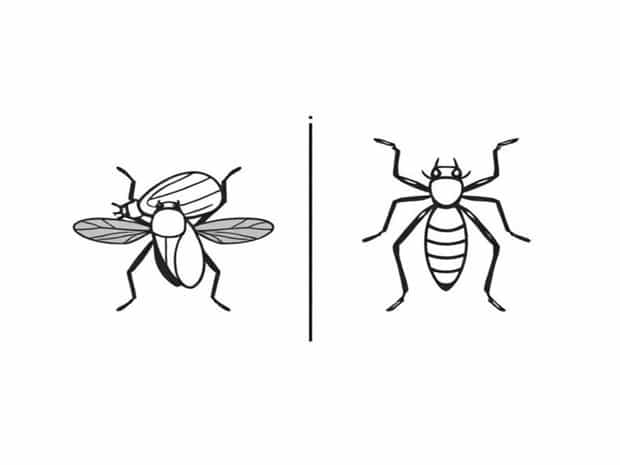
Difference Between Winged And Wingless Insects
Insects are one of the most diverse groups of animals on Earth, exhibiting an extraordinary range of adaptations that allow them to thrive in almost every habitat. One of the most striking differences among insects is the presence or absence of wings, which significantly affects their behavior, mobility, and ecological roles. Winged and wingless insects differ not only in their physical structure but also in their life cycles, survival strategies, and methods of interacting with their environment. Understanding these differences is essential for studying entomology, pest management, and ecological systems, as wings play a critical role in dispersal, mating, and resource acquisition for many insect species.
Definition of Winged and Wingless Insects
Winged insects, also known as alate insects, are those that possess wings at some stage of their life cycle, either permanently or temporarily. Wings can be fully functional for flight, modified for specific purposes, or reduced in size, but they generally provide the insect with the ability to move efficiently through air. In contrast, wingless insects, or apterous insects, lack wings entirely. These insects rely on crawling, jumping, or other means of locomotion for movement. While wingless forms may evolve from winged ancestors, they have developed strategies to survive and reproduce without flight.
Physical Differences Between Winged and Wingless Insects
- Presence of WingsWinged insects have one or two pairs of wings attached to the thorax, whereas wingless insects have no wings at any stage of their adult life.
- Body StructureThe thorax of winged insects is often more robust to support wing muscles, while wingless insects may have a more compact or simplified thoracic structure.
- Size and ShapeWingless insects are often smaller or more streamlined, allowing them to navigate confined spaces such as soil, leaf litter, or human dwellings.
- Leg AdaptationsWingless insects may have stronger or specialized legs for jumping, digging, or running, compensating for their lack of flight.
Life Cycle and Developmental Differences
Wings not only influence adult mobility but also affect the life cycle and reproductive strategies of insects. Winged insects often have complex life cycles that include stages of larval, pupal, and adult development, during which wings may develop or remain inactive until the adult stage. In contrast, wingless insects usually show simpler life cycles and may remain in a single habitat for most of their lives, relying on crawling or burrowing for dispersal.
Wing Development
Insects can be classified based on the presence of wings at various stages
- Hemimetabolous InsectsThese insects, such as grasshoppers, develop wings gradually through nymphal stages, with each molt bringing them closer to fully developed wings.
- Holometabolous InsectsInsects like butterflies and beetles develop wings during the pupal stage, emerging as fully winged adults ready for flight.
- Permanently Wingless SpeciesSome insects, including ants in worker castes or silverfish, never develop wings at any stage.
Ecological Roles and Adaptations
The presence or absence of wings greatly influences how insects interact with their environment. Winged insects can cover vast distances, allowing them to colonize new habitats, escape predators, or seek food sources. Wingless insects are typically limited to local areas but often possess adaptations that allow them to survive in specialized niches.
Mobility and Dispersal
- Winged InsectsFlight enables rapid movement across different habitats, aiding in finding mates, escaping predators, and exploiting seasonal resources. Examples include bees, dragonflies, and moths.
- Wingless InsectsLimited to crawling or hopping, these insects rely on local resources and often have strategies for hiding or burrowing to avoid danger. Examples include fleas, termites in worker castes, and silverfish.
Predation and Defense
Winged insects can evade predators by flying, using speed and aerial maneuvers to escape. Some also have wings with patterns or colors that serve as camouflage or warning signals. Wingless insects, lacking flight, often rely on other defense mechanisms such as hard exoskeletons, chemical repellents, or group behaviors like social insects in colonies.
Examples of Winged and Wingless Insects
Recognizing specific examples can help illustrate the differences between winged and wingless insects in real-world contexts.
Winged Insects
- Butterflies and Moths – Known for their large, colorful wings and ability to migrate long distances.
- Beetles – Most beetles have two pairs of wings, with the outer pair hardened into elytra to protect the flying wings underneath.
- Dragonflies – Exceptional fliers with two pairs of strong wings that allow hovering and agile movements.
- Bees and Wasps – Essential pollinators with wings adapted for sustained flight.
Wingless Insects
- Fleas – Small, wingless, jumping insects adapted to parasitic lifestyles on mammals and birds.
- Silverfish – Primitive, wingless insects that live in dark, humid environments and feed on organic matter.
- Ant Workers – Wingless female ants specialized for foraging, nest building, and colony maintenance.
- Termite Workers and Soldiers – Typically wingless and adapted to life underground or within wood.
Evolutionary Perspectives
The evolution of wings in insects represents a major adaptive breakthrough that has contributed to their diversity and ecological success. However, some lineages have secondarily lost wings to adapt to specific environments. Winglessness can evolve due to energy conservation, habitat restrictions, or social behaviors, illustrating that wings are not universally advantageous in all ecological contexts.
Advantages of Winged Insects
- Enhanced dispersal and colonization of new habitats.
- Greater access to food resources and mates.
- Improved escape from predators.
Advantages of Wingless Insects
- Energy savings from not developing or maintaining wings.
- Better suited for confined spaces or subterranean habitats.
- Specialized behaviors for social living and colony defense.
The difference between winged and wingless insects is a fundamental aspect of entomology that affects morphology, behavior, ecology, and evolution. Winged insects possess wings that allow them to fly, disperse, and exploit diverse habitats, while wingless insects have adapted to survival without flight, often excelling in specialized niches or social structures. Recognizing these differences is crucial for understanding insect ecology, evolution, and the ways these fascinating creatures interact with the environment. By studying winged and wingless insects, scientists can better appreciate the remarkable diversity and adaptability of one of Earth’s most successful animal groups.