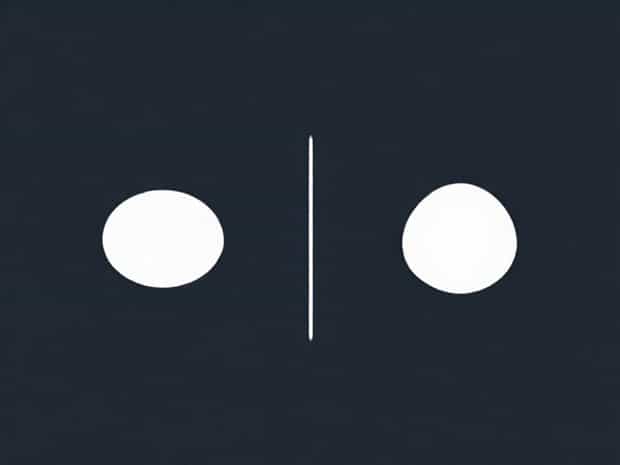
Difference Between Oval And Ovoid
Shapes are an essential aspect of both everyday life and scientific study, and understanding the subtle differences between similar forms can improve accuracy in communication, design, and analysis. Two shapes that are often confused are oval and ovoid. At first glance, these terms may seem interchangeable because they both describe elongated, rounded forms, but they have distinct characteristics and applications. Knowing the difference between oval and ovoid can help in fields ranging from geometry and art to biology and engineering, where precision in shape description is important.
Defining Oval
An oval is a two-dimensional shape that resembles an elongated circle. It is symmetrical along two axes, though these axes may not be of equal length, which distinguishes it from a perfect circle. The most common type of oval is the ellipse, which has a mathematically defined shape where the sum of the distances from any point on the curve to two fixed points called foci remains constant. Ovals can also be freeform, meaning they maintain a general elongated circular appearance without strict mathematical constraints. Ovals are frequently used in design, architecture, and illustration because of their visually appealing balance between length and curvature.
Characteristics of an Oval
Ovals have several distinctive features that make them recognizable and unique. These include
- Two axes of symmetry, with the major axis being longer than the minor axis in elongated forms.
- A smooth, continuous curve with no sharp angles or points.
- A two-dimensional structure, existing primarily on a flat plane.
- Common usage in graphic design, logos, and decorative patterns due to their pleasing proportions.
Defining Ovoid
An ovoid, on the other hand, refers to a three-dimensional shape that resembles an egg. Unlike the flat, two-dimensional oval, an ovoid has volume and depth, making it a solid form. Ovoids are characterized by having one end broader than the other, typically tapering to a narrower tip, which gives them a distinctive asymmetry. This shape is naturally found in eggs, some seeds, and certain types of fruit. In mathematics and biology, the term ovoid is used to describe objects that are elongated and rounded in three dimensions but are not perfectly spherical.
Characteristics of an Ovoid
The ovoid shape has unique features that differentiate it from an oval. These include
- Three-dimensional volume, giving it depth and solidity.
- Asymmetry along its main axis, often with one end larger or rounder than the other.
- A smooth, continuous surface that curves from the wider base to the narrower tip.
- Common appearances in nature, such as eggs, fruits, and certain anatomical structures.
Comparing Oval and Ovoid
While oval and ovoid shapes share a general resemblance in being elongated and rounded, several key differences distinguish them. Understanding these differences is crucial for accuracy in fields like geometry, biology, art, and engineering.
Dimension
The most fundamental difference is dimensionality. An oval is strictly two-dimensional, existing as a flat outline. An ovoid, however, is three-dimensional and possesses depth and volume. This difference affects not only the visual appearance but also the practical applications of each shape.
Symmetry
Ovals are typically symmetrical along two axes, whereas ovoids are generally asymmetrical along their length. The broader end and tapered tip of an ovoid create a natural imbalance that is not present in the uniform curvature of an oval.
Applications
Both shapes have unique applications suited to their characteristics
- OvalOften used in design, logos, and art for its aesthetic appeal and balanced form. Ovals can also appear in diagrams, race tracks, and illustrations where a flat, elongated shape is required.
- OvoidFound in nature, including eggs, certain fruits, and seeds. Ovoids are also used in product design, architecture, and medical modeling to represent three-dimensional forms that require volume and tapering.
Mathematical Considerations
Ovals can be described mathematically as ellipses, allowing precise calculation of area, perimeter, and other properties. Ovoids, being three-dimensional, require more complex calculations, often involving volume formulas and surface curvature considerations. These mathematical distinctions influence how engineers, architects, and scientists model and utilize these shapes in practical applications.
Visualizing the Difference
Visualizing the distinction between oval and ovoid can help solidify understanding. Imagine drawing a flat elongated circle on paper – that is an oval. Now imagine an egg in three-dimensional space – that is an ovoid. The addition of depth, asymmetry, and tapering makes the ovoid a distinct shape from its two-dimensional counterpart. Illustrations, models, and 3D renderings are often used to communicate these differences clearly in educational and professional contexts.
Common Misconceptions
Because the terms are similar, many people use oval and ovoid interchangeably, but this is inaccurate. An oval cannot exist in three dimensions without becoming an ovoid, and an ovoid cannot be represented accurately in two dimensions without losing essential characteristics like volume and taper. Recognizing this distinction prevents errors in communication, design, and scientific description.
Practical Examples of Usage
Understanding when to use oval versus ovoid helps in everyday life and professional work. Examples include
- Designing logos or decorative shapes Use oval for flat, symmetrical designs.
- Modeling eggs, seeds, or architectural domes Use ovoid for three-dimensional representation.
- Art and sculpture Ovoid forms create realistic depictions of natural objects.
- Medical illustration Ovoid shapes can represent organs, bones, or other anatomical features accurately.
The difference between oval and ovoid lies primarily in dimensionality, symmetry, and application. Ovals are two-dimensional, symmetrical shapes resembling elongated circles, commonly used in art, design, and diagrams. Ovoids are three-dimensional, asymmetrical forms that taper from a broader base to a narrower tip, commonly found in nature and used in modeling and product design. Understanding these distinctions allows for precise communication and application in a variety of fields. By recognizing the unique properties of each shape, designers, scientists, educators, and artists can create accurate representations, functional designs, and aesthetically pleasing works that leverage the specific qualities of ovals and ovoids.
Ultimately, both oval and ovoid shapes have their place in human understanding of geometry and natural forms. While they may appear similar at first glance, their differences are significant and influence how they are used and interpreted. Mastery of these concepts ensures clarity in professional, educational, and creative contexts, highlighting the importance of precision when describing shapes and forms.