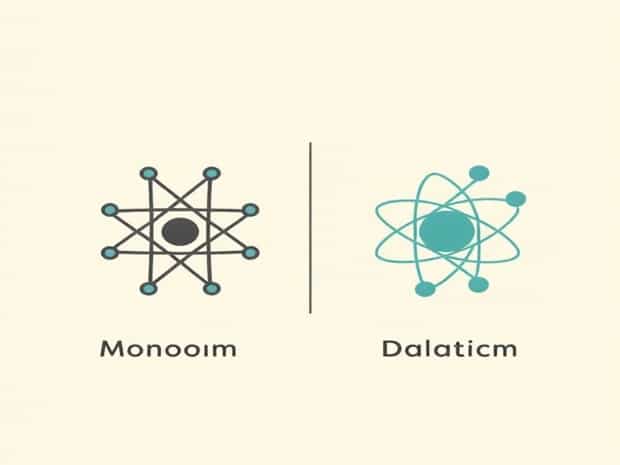
Difference Between Monatomic And Diatomic
In chemistry, atoms and molecules are classified based on how many atoms they contain. This distinction is especially important when learning about gases, bonding, and chemical reactions. Two commonly discussed categories are monatomic and diatomic species. While both terms may sound similar, they describe very different chemical realities. To fully understand the difference between monatomic and diatomic, one must explore their definitions, properties, examples, and the role they play in scientific and real-world contexts. By analyzing these aspects, it becomes clearer why this distinction is crucial in understanding matter at the atomic and molecular level.
Definition of Monatomic
A monatomic species consists of a single atom that is stable on its own. It does not need to bond with other atoms to exist under standard conditions. This category is often associated with noble gases, which are chemically inert and exist as individual atoms in nature.
Examples of Monatomic Elements
- Helium (He)
- Neon (Ne)
- Argon (Ar)
- Krypton (Kr)
- Xenon (Xe)
- Radon (Rn)
These elements are stable because they have a complete outer electron shell, which eliminates the need to form chemical bonds with other atoms.
Key Characteristics of Monatomic Elements
- Exist as single atoms in nature
- Low chemical reactivity
- Belong mainly to the noble gases group
- Commonly used in lighting, lasers, and as inert atmospheres for reactions
Definition of Diatomic
A diatomic species consists of two atoms that are chemically bonded together. These atoms may be of the same element or of different elements. When two identical atoms bond, the molecule is called a homonuclear diatomic. When the two atoms are different, the molecule is a heteronuclear diatomic.
Examples of Diatomic Molecules
- Hydrogen (H2)
- Nitrogen (N2)
- Oxygen (O2)
- Fluorine (F2)
- Chlorine (Cl2)
- Carbon monoxide (CO)
- Hydrogen chloride (HCl)
These molecules are stable because the atoms share or transfer electrons, achieving a more balanced electronic configuration.
Key Characteristics of Diatomic Molecules
- Always contain two atoms
- May be homonuclear or heteronuclear
- Found naturally in gases like oxygen and nitrogen
- Essential for biological and industrial processes
Difference Between Monatomic and Diatomic
Although both monatomic and diatomic species are simple in structure compared to larger molecules, their differences are significant in chemistry and applications. Understanding the difference between monatomic and diatomic involves comparing their physical, chemical, and functional properties.
Number of Atoms
The most obvious difference is the number of atoms. Monatomic species consist of a single atom, while diatomic species consist of exactly two atoms bonded together.
Bonding
Monatomic elements do not form bonds to exist, whereas diatomic molecules rely on covalent or ionic bonds to maintain stability. This makes diatomic species more chemically active compared to monatomic gases like helium or neon.
Reactivity
Monatomic gases, especially noble gases, are largely inert because of their complete electron shells. Diatomic molecules, on the other hand, are often highly reactive. For example, oxygen supports combustion, and chlorine is a strong oxidizing agent.
Physical State
Many monatomic species exist as gases under standard conditions, while diatomic molecules may also be gases but can sometimes exist in other states depending on temperature and pressure. For instance, chlorine is a diatomic gas at room temperature, but bromine is diatomic and liquid.
Applications in Daily Life
The difference between monatomic and diatomic is not just theoretical. Both types of species play major roles in real-world applications, from medicine to industry.
Uses of Monatomic Species
- Heliumis used in balloons, cryogenics, and as a cooling medium in nuclear reactors.
- Neonis used in neon lights and advertising signs.
- Argonprovides an inert atmosphere for welding and preserving reactive samples.
Uses of Diatomic Molecules
- Oxygenis essential for respiration and is used in medical treatments and welding processes.
- Nitrogenis used in fertilizers, food packaging, and as a protective atmosphere for sensitive reactions.
- Hydrogenis a clean fuel source and plays a role in the chemical industry for producing ammonia.
Scientific Importance
Understanding the difference between monatomic and diatomic is also critical in scientific research. For example, the behavior of gases is explained by the kinetic molecular theory, where the energy distribution in monatomic gases differs from that in diatomic gases due to rotational and vibrational motions present in the latter.
Thermodynamic Properties
Monatomic gases have fewer degrees of freedom compared to diatomic gases. This impacts their heat capacity, internal energy, and how they respond to temperature changes. For example, the molar heat capacity of helium is different from that of oxygen because of these differences.
Role in the Atmosphere
The Earth’s atmosphere contains both monatomic and diatomic species. While noble gases like argon are monatomic, nitrogen and oxygen are diatomic and make up the bulk of the air we breathe.
Comparison Table
The following table highlights the difference between monatomic and diatomic in a concise format
- MonatomicSingle atom, no bonding required, inert, examples include noble gases.
- DiatomicTwo atoms bonded, chemically active, includes essential gases like O2and N2.
The difference between monatomic and diatomic species lies mainly in the number of atoms and their bonding nature, but the implications of this difference extend far beyond definitions. Monatomic elements like helium and neon are stable, inert, and useful in specialized applications, while diatomic molecules like oxygen and nitrogen are vital for life and industry. Recognizing how each category functions provides deeper insight into both basic chemistry and its countless real-world applications. By appreciating these differences, one can better understand the diversity and complexity of the atomic and molecular world.