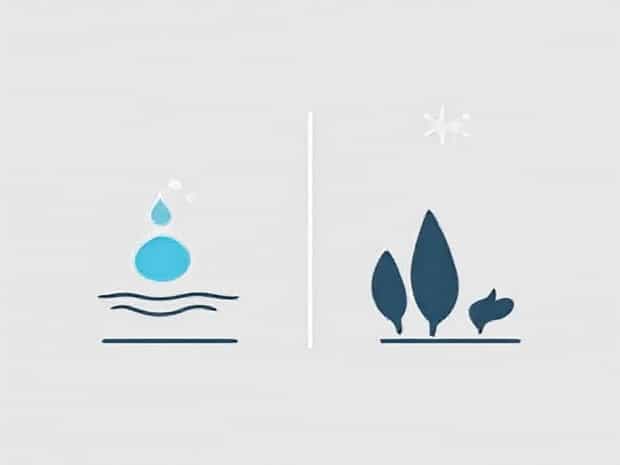
Difference Between Hydrosere And Xerosere
Ecological succession is a fascinating process that explains how ecosystems develop and change over time. Two well-known types of primary succession are hydrosere and xerosere, which occur in very different environments. Hydrosere takes place in waterlogged areas like lakes, ponds, or marshes, while xerosere begins in dry, harsh conditions such as deserts, bare rocks, or sand dunes. Understanding the difference between hydrosere and xerosere not only provides insight into how plant communities establish and evolve but also highlights the resilience of nature in adapting to contrasting environments. Both processes eventually lead to stable ecosystems, often reaching a climax community, but the path they take to get there differs significantly.
Definition of Hydrosere
A hydrosere is a type of ecological succession that starts in aquatic environments. It begins with open water and gradually transforms into land through the accumulation of organic matter and soil. Over time, aquatic plants give way to semi-aquatic and eventually terrestrial vegetation. This transformation is a slow but natural process that demonstrates how water bodies can eventually disappear and be replaced by forests or grasslands.
Key Features of Hydrosere
- Begins in freshwater habitats like lakes, ponds, or marshes.
- Dominated initially by phytoplankton, algae, and submerged plants.
- Progresses through stages such as floating plants, reed swamp, and meadow.
- Ends with a terrestrial climax community, often a forest.
- Requires ample moisture and nutrient availability for succession.
Definition of Xerosere
Xerosere is ecological succession that occurs in dry and extreme conditions. Unlike hydrosere, it begins in places where water is scarce, such as deserts, rocky terrains, and sand dunes. Plants that first colonize these areas are specially adapted to withstand harsh climates, minimal water, and poor soils. Over time, these pioneering species modify the environment, making it suitable for other plants to grow.
Key Features of Xerosere
- Starts in dry, nutrient-poor areas like deserts, bare rocks, or sandy soils.
- Initial colonizers are lichens, mosses, or xerophytes (drought-resistant plants).
- Progresses through stages like crustose lichen, foliose lichen, mosses, and herbs.
- Eventually develops into grasslands or woodlands, depending on conditions.
- Adaptations to conserve water are crucial for early colonizers.
Main Difference Between Hydrosere and Xerosere
While both hydrosere and xerosere are forms of primary succession, their starting points and processes vary due to environmental conditions. These differences influence the types of pioneer species, the rate of succession, and the final climax communities that form.
Comparison Overview
- Starting PointHydrosere begins in aquatic habitats, while xerosere starts in dry, barren environments.
- Water AvailabilityHydrosere has abundant water, whereas xerosere occurs in water-deficient conditions.
- Pioneer SpeciesHydrosere pioneers are phytoplankton and aquatic plants; xerosere pioneers are lichens and xerophytes.
- Rate of SuccessionHydrosere succession is generally faster due to moisture availability, while xerosere is slower because of harsh conditions.
- Climax CommunityHydrosere often ends in a forested ecosystem; xerosere may end in grassland or forest, depending on climate.
Stages of Hydrosere
Hydrosere passes through several stages as water gradually becomes land. Each stage involves a different plant community adapting to the changing environment.
- Phytoplankton StageMicroscopic algae and bacteria dominate.
- Submerged Plant StagePlants like Hydrilla and Vallisneria establish.
- Floating Plant StageSpecies such as water lilies and Lemna appear.
- Reed Swamp StageEmergent plants like Typha grow in shallow waters.
- Meadow StageMarshes transform into grassy meadows.
- Woodland StageShrubs and trees colonize the land.
- Climax Forest StageA stable forest develops, completing succession.
Stages of Xerosere
Xerosere also undergoes distinct stages, but they begin with species that tolerate dryness and poor soil. Over time, these species alter the habitat, enabling more complex plants to establish.
- Lichen StageCrustose lichens colonize bare rocks, breaking them down into soil.
- Moss StageMosses grow on the thin soil layer, adding organic matter.
- Herb StageSmall herbs and grasses appear, enriching the soil further.
- Shrub StageHardy shrubs establish, stabilizing the soil.
- Tree StageTrees begin to grow, creating shade and moderating the environment.
- Climax CommunityDepending on the climate, this may be woodland or forest.
Adaptations of Species in Hydrosere and Xerosere
The survival strategies of pioneer species in hydrosere and xerosere differ due to their contrasting environments. Adaptations play a key role in allowing these organisms to establish and prepare the habitat for subsequent species.
Hydrosere Adaptations
- Aquatic plants with air-filled tissues to float.
- Thin cuticles to allow water absorption.
- Feathery leaves to reduce water resistance.
Xerosere Adaptations
- Thick cuticles and reduced leaves to minimize water loss.
- Deep roots to access underground water.
- Succulent tissues to store water.
Ecological Importance of Hydrosere and Xerosere
Both hydrosere and xerosere play crucial roles in maintaining ecological balance. They contribute to biodiversity, soil formation, and the creation of stable ecosystems. Hydrosere demonstrates how water bodies transform into terrestrial habitats, while xerosere shows how barren lands can eventually support rich vegetation. Together, they illustrate the resilience of life in different environments.
The difference between hydrosere and xerosere highlights the remarkable ways ecosystems adapt and evolve under contrasting conditions. Hydrosere thrives in water-abundant environments, while xerosere endures in dry, harsh areas. Despite these differences, both forms of succession demonstrate nature’s ability to move toward stability and balance. Understanding these processes helps us appreciate the complexity of ecological systems and underscores the importance of protecting natural habitats that sustain them. Whether in water or desert, the journey of succession reveals the interconnectedness of all life and the power of adaptation over time.