Difference Between Diatom And Dinoflagellate
Diatoms and dinoflagellates are two of the most important groups of microscopic algae found in aquatic ecosystems, playing crucial roles in primary production and marine food webs. Despite both being phytoplankton and capable of photosynthesis, these organisms differ significantly in their structure, reproduction, movement, and ecological roles. Understanding the differences between diatoms and dinoflagellates is essential for studying marine biology, water quality, and ecological dynamics. Their distinct characteristics influence not only their survival and growth but also the broader environmental processes, such as nutrient cycling and harmful algal blooms.
Overview of Diatoms
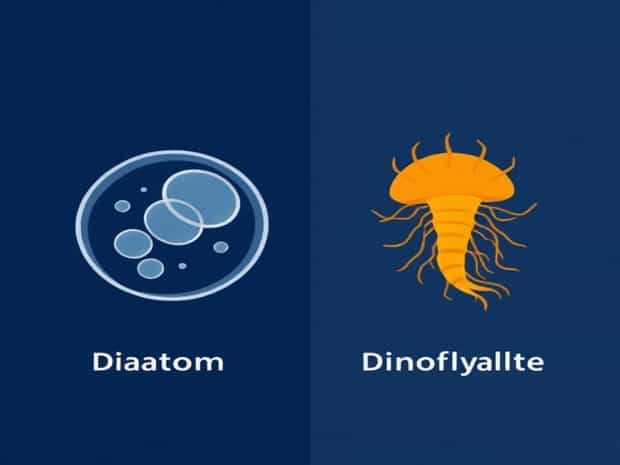
Diatoms are unicellular algae known for their unique silica-based cell walls, called frustules, which provide protection and give them a distinct geometric appearance. These microscopic organisms are found in both freshwater and marine environments and are major contributors to global oxygen production through photosynthesis. Diatoms vary in shape, including cylindrical, circular, and elongated forms, and their cell walls consist of two overlapping halves that fit together like a petri dish. This structure is one of the defining features that distinguish diatoms from other phytoplankton.
Characteristics of Diatoms
- Cell wall made of silica, forming a rigid frustule.
- Mostly non-motile; they rely on water currents for movement.
- Photosynthetic, containing chlorophyll a and c, as well as carotenoids.
- Reproduce primarily through asexual binary fission, with occasional sexual reproduction.
- Form intricate patterns on their frustules, often visible under a microscope.
Diatoms are often used as bioindicators to monitor water quality and environmental conditions because of their sensitivity to changes in nutrients and pollutants.
Overview of Dinoflagellates
Dinoflagellates are another diverse group of single-celled algae that can be found in both marine and freshwater environments. Unlike diatoms, dinoflagellates have two flagella that allow them to move actively through the water. They may have cellulose plates forming a protective theca, although some species lack these plates. Dinoflagellates can be photosynthetic, heterotrophic, or mixotrophic, which means they can switch between photosynthesis and consuming other organisms. Some dinoflagellates are known for their bioluminescence and the ability to produce toxins, leading to phenomena such as red tides.
Characteristics of Dinoflagellates
- Possess two flagella for active movement in water.
- Cell covering can be composed of cellulose plates, forming a theca.
- Can be photosynthetic, heterotrophic, or mixotrophic.
- Reproduce mainly through asexual division, with some sexual reproduction.
- Some species produce toxins or bioluminescence, affecting ecosystems and human health.
Dinoflagellates play a critical role in marine ecosystems as both primary producers and, in some cases, as harmful algal bloom species that disrupt aquatic food webs and water quality.
Structural Differences
One of the most apparent differences between diatoms and dinoflagellates is their cell covering. Diatoms have rigid silica frustules with intricate designs, which provide structural support but limit mobility. Dinoflagellates, in contrast, have cellulose-based plates or lack plates entirely, allowing them greater flexibility and movement thanks to their flagella. The presence of two flagella in dinoflagellates allows them to swim in different directions, while diatoms drift passively with water currents. Additionally, the shape and symmetry of diatoms are more regular and geometric, while dinoflagellates often have more irregular or asymmetrical shapes.
Reproduction and Life Cycle
Diatoms reproduce mainly through asexual binary fission, where each daughter cell receives one half of the frustule and secretes a new half. Over successive divisions, the size of some diatom populations may decrease until sexual reproduction occurs, restoring size and genetic diversity. Dinoflagellates reproduce primarily through mitotic division but can also undergo sexual reproduction in response to environmental stress. This reproductive flexibility allows dinoflagellates to adapt to varying conditions and maintain population stability in dynamic ecosystems.
Ecological Roles
Both diatoms and dinoflagellates are critical components of aquatic food webs, serving as primary producers and forming the base of the diet for many marine organisms. Diatoms are particularly abundant in nutrient-rich waters and contribute significantly to carbon fixation and oxygen production. They are often involved in sediment formation when their silica frustules sink to the ocean floor. Dinoflagellates, meanwhile, play a dual role as primary producers and predators in some cases, consuming other plankton. However, some dinoflagellates can create harmful algal blooms, which can produce toxins that affect fish, shellfish, and even human health.
Impact on Human Activities
- Diatoms are important in industries like water quality monitoring, biofuel production, and nanotechnology because of their silica frustules.
- Dinoflagellates are studied for their role in harmful algal blooms and bioluminescent phenomena, which can have economic and environmental impacts on fisheries and tourism.
Understanding these organisms helps in managing aquatic ecosystems, predicting algal blooms, and exploring potential industrial applications.
Summary of Key Differences
- Cell CoveringDiatoms have silica frustules; dinoflagellates have cellulose plates or are naked.
- MobilityDiatoms are non-motile; dinoflagellates have flagella for active movement.
- NutritionDiatoms are strictly photosynthetic; dinoflagellates can be photosynthetic, heterotrophic, or mixotrophic.
- ShapeDiatoms are regular and geometric; dinoflagellates often irregular and asymmetrical.
- Ecological EffectsDiatoms contribute mainly to primary production; dinoflagellates can produce toxins and cause red tides.
Diatoms and dinoflagellates are both essential to aquatic ecosystems, but they exhibit significant differences in structure, mobility, nutrition, reproduction, and ecological roles. Diatoms are characterized by their rigid silica frustules, non-motile behavior, and strict photosynthetic nutrition, while dinoflagellates possess flagella, variable cell coverings, and a flexible nutritional strategy. Both groups contribute to marine food webs, carbon cycling, and oxygen production, but dinoflagellates can also pose challenges through harmful algal blooms. Understanding the differences between these two types of phytoplankton is critical for marine biology, environmental management, and the study of global ecological processes, highlighting their unique and complementary roles in aquatic environments.