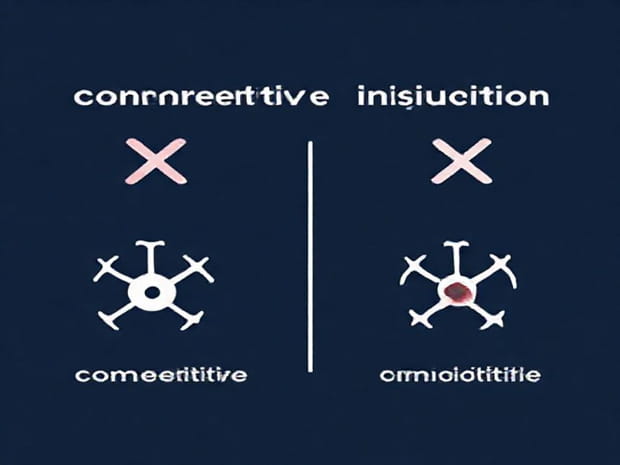
Difference Between Competitive And Noncompetitive Inhibitors
Enzyme inhibition is a critical concept in biochemistry that impacts how chemical reactions occur within living organisms. Understanding the differences between competitive and noncompetitive inhibitors is essential for grasping how enzymes regulate biological processes and how drugs or toxins can influence these processes. Both types of inhibitors reduce enzyme activity, but they operate through distinct mechanisms, affecting enzyme kinetics in different ways. By examining their characteristics, effects on enzyme function, and examples in biological systems, we can better appreciate how these inhibitors influence metabolism and pharmaceutical applications.
What Are Enzyme Inhibitors?
Enzyme inhibitors are molecules that decrease the rate of enzymatic reactions. They can bind to enzymes in ways that prevent substrates from interacting efficiently with the active site or alter the enzyme’s shape to reduce activity. Inhibitors play crucial roles in regulating metabolic pathways and are also widely utilized in medicine to modulate enzyme activity for therapeutic purposes. The two major categories of reversible inhibitors are competitive and noncompetitive inhibitors, which differ primarily in how they interact with the enzyme and its substrate.
Competitive Inhibitors
Competitive inhibitors are molecules that resemble the substrate’s structure and compete for binding at the enzyme’s active site. By occupying the active site, competitive inhibitors prevent the substrate from binding, thereby reducing the enzyme’s activity. The inhibition can be overcome by increasing the concentration of the substrate, which allows the substrate molecules to outcompete the inhibitor for access to the active site.
Mechanism of Competitive Inhibition
In competitive inhibition, the inhibitor and the substrate both attempt to bind to the enzyme’s active site. When the inhibitor binds, it blocks substrate binding temporarily, which reduces the overall reaction rate. However, because this binding is reversible, adding more substrate can eventually restore the enzyme’s activity to normal levels. This type of inhibition primarily affects the apparent affinity of the enzyme for the substrate, represented by an increase in the Michaelis constant (Km), while the maximum reaction rate (Vmax) remains unchanged.
Examples of Competitive Inhibitors
- Statins, which inhibit HMG-CoA reductase in cholesterol biosynthesis.
- Methotrexate, which inhibits dihydrofolate reductase in nucleotide synthesis.
- Malonate, which competes with succinate in the Krebs cycle enzyme succinate dehydrogenase.
Noncompetitive Inhibitors
Noncompetitive inhibitors function differently from competitive inhibitors by binding to a site on the enzyme other than the active site. This allosteric site binding causes a conformational change in the enzyme, altering its shape and reducing its catalytic activity. Unlike competitive inhibitors, noncompetitive inhibitors do not directly compete with the substrate for the active site, so their effect cannot be overcome by increasing substrate concentration.
Mechanism of Noncompetitive Inhibition
Noncompetitive inhibitors bind to both the free enzyme and the enzyme-substrate complex, causing a reduction in the enzyme’s overall catalytic efficiency. This results in a decrease in the maximum reaction rate (Vmax) without affecting the substrate’s binding affinity (Km). The conformational change induced by the inhibitor disrupts the enzyme’s ability to catalyze the reaction effectively, even if the substrate is bound properly.
Examples of Noncompetitive Inhibitors
- Heavy metals like lead and mercury, which bind to enzyme structures and disrupt their function.
- Many allosteric regulators in metabolic pathways that control enzyme activity.
- Some antibiotics, such as certain inhibitors of bacterial enzymes that alter enzyme conformation.
Key Differences Between Competitive and Noncompetitive Inhibitors
While both competitive and noncompetitive inhibitors reduce enzyme activity, their differences can be summarized in terms of binding sites, effects on enzyme kinetics, and reversibility by substrate concentration.
Binding Site
- Competitive InhibitorsBind to the active site, competing directly with the substrate.
- Noncompetitive InhibitorsBind to an allosteric site, changing the enzyme’s shape without occupying the active site.
Effect on Enzyme Kinetics
- Competitive InhibitorsIncrease Km (lower substrate affinity) but do not affect Vmax.
- Noncompetitive InhibitorsDecrease Vmax but do not change Km (substrate binding unaffected).
Reversibility
- Competitive InhibitorsEffect can be overcome by increasing substrate concentration.
- Noncompetitive InhibitorsEffect cannot be overcome by adding more substrate.
Impact on Enzyme Function
- Competitive InhibitorsMainly affect how readily the substrate binds to the enzyme.
- Noncompetitive InhibitorsReduce the enzyme’s catalytic effectiveness regardless of substrate binding.
Applications in Medicine and Research
Understanding the difference between competitive and noncompetitive inhibitors is crucial for drug development, therapeutic interventions, and research. Many medications are designed as competitive inhibitors to target specific enzymes in disease pathways, such as cholesterol-lowering drugs or chemotherapy agents. Noncompetitive inhibitors are also important in cases where altering enzyme activity rather than blocking substrate binding is desirable, such as in allosteric regulation of metabolic enzymes or in antibacterial treatments. Researchers also use inhibitors to study enzyme mechanisms, measure kinetic parameters, and understand regulatory networks within cells.
The distinction between competitive and noncompetitive inhibitors is fundamental to the study of biochemistry and molecular biology. Competitive inhibitors compete with substrates for the active site and can be overcome by increasing substrate concentration, affecting Km but not Vmax. Noncompetitive inhibitors bind at allosteric sites, reduce enzyme activity by altering the enzyme’s conformation, and lower Vmax without changing Km. Both types of inhibitors are essential for understanding enzyme regulation, drug design, and metabolic control. By appreciating these differences, scientists and medical professionals can better manipulate enzyme activity for therapeutic purposes, advancing both research and clinical outcomes. Knowledge of enzyme inhibition provides valuable insights into the molecular basis of life and the development of treatments for a wide range of diseases.