Difference Between Carpus And Metacarpus
The human hand is a complex structure composed of bones, muscles, tendons, and ligaments that work together to allow precise movement, strength, and dexterity. Among the skeletal components of the hand, the carpus and metacarpus play crucial roles in forming the framework of the wrist and palm. Understanding the difference between the carpus and metacarpus is essential for students of anatomy, healthcare professionals, and anyone interested in the biomechanics of the hand. These two regions, while closely connected, have distinct structures, functions, and clinical significance that influence movement and hand mechanics.
Definition and Location of the Carpus
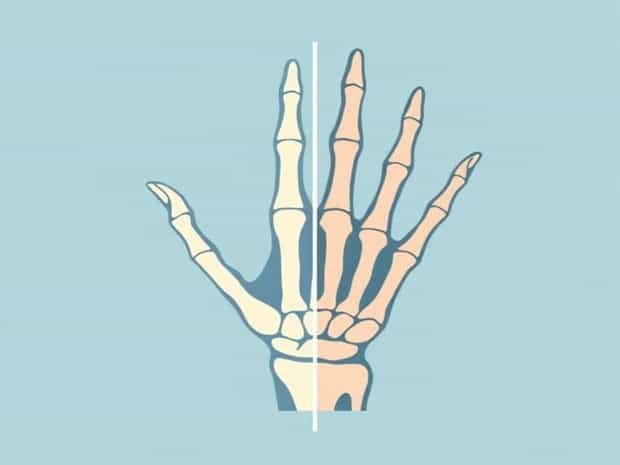
The carpus, commonly known as the wrist, is the proximal portion of the hand skeleton located between the forearm and the metacarpus. It consists of eight small, irregularly shaped bones arranged in two rows the proximal row, which articulates with the radius and ulna, and the distal row, which connects to the metacarpal bones. The carpal bones are named scaphoid, lunate, triquetrum, pisiform, trapezium, trapezoid, capitate, and hamate. These bones form a flexible and stable structure that allows the wrist to move in multiple directions, including flexion, extension, abduction, and adduction.
Structure of the Carpus
The carpal bones are arranged to provide maximum mobility while maintaining stability. The proximal row acts as a hinge that interfaces with the radius and ulna, allowing wrist flexion and extension, while the distal row forms a stable platform for the metacarpals. The carpus is held together by an intricate system of ligaments that connect the bones to each other and provide support during movement.
Function of the Carpus
- Facilitates wrist movements, including flexion, extension, abduction, and adduction.
- Acts as a shock absorber for forces transmitted from the hand to the forearm.
- Provides a stable base for hand movements and precise positioning of the fingers.
- Supports the transmission of muscular force from the forearm to the hand.
Definition and Location of the Metacarpus
The metacarpus forms the intermediate portion of the hand skeleton, located between the carpus and the phalanges (finger bones). It consists of five long bones called metacarpals, numbered from one to five starting at the thumb side. The metacarpals are arranged in a slightly curved pattern that conforms to the natural arch of the hand. They connect proximally to the distal row of carpal bones and distally to the proximal phalanges, forming the skeletal framework of the palm.
Structure of the Metacarpus
Each metacarpal bone has a base, shaft, and head. The base articulates with the carpal bones, the shaft provides structural support, and the head forms the knuckle joint with the proximal phalanx. This arrangement allows the metacarpals to serve as levers that facilitate finger movements and grip strength. The metacarpal bones are surrounded by muscles and tendons that enable fine motor control and dexterity.
Function of the Metacarpus
- Forms the structural framework of the palm.
- Acts as a lever for finger movements and gripping actions.
- Supports muscles and tendons that control precise finger movements.
- Helps distribute force during hand activities, reducing stress on individual bones.
Key Differences Between Carpus and Metacarpus
Although the carpus and metacarpus are closely linked and work together to facilitate hand movement, they differ in several important ways, including bone composition, structure, location, and function.
Bone Composition
- Carpus Composed of eight small, irregularly shaped bones arranged in two rows.
- Metacarpus Composed of five long bones, each with a base, shaft, and head.
Location
- Carpus Located proximally between the forearm and the metacarpus, forming the wrist.
- Metacarpus Located distally to the carpus, forming the palm of the hand.
Function
- Carpus Provides mobility, shock absorption, and a stable base for wrist and hand movements.
- Metacarpus Provides structural support for the palm, acts as levers for finger movements, and enables gripping and dexterity.
Articulations
- Carpus Articulates with the radius and ulna proximally and the metacarpals distally.
- Metacarpus Articulates with the carpal bones proximally and the phalanges distally.
Clinical Significance
Understanding the difference between the carpus and metacarpus is important in clinical practice, particularly in diagnosing and treating injuries or conditions affecting the hand and wrist. Common injuries include fractures, dislocations, and ligament tears, which may affect either the carpal or metacarpal bones differently due to their structural and functional roles.
Carpal Injuries
- Scaphoid fractures are common due to falls on an outstretched hand.
- Carpal tunnel syndrome results from compression of the median nerve within the carpal tunnel.
- Dislocations of carpal bones can impair wrist mobility and require careful realignment.
Metacarpal Injuries
- Boxer’s fracture, commonly affecting the fifth metacarpal, occurs due to direct trauma.
- Fractures of the metacarpals can affect grip strength and finger mobility.
- Metacarpal deformities may result from congenital conditions or trauma, requiring surgical intervention.
Summary
In summary, the carpus and metacarpus are integral components of the hand skeleton, each with unique characteristics and functions. The carpus, composed of eight small bones, forms the wrist and provides mobility, stability, and shock absorption. The metacarpus, consisting of five long bones, forms the palm and acts as a lever system for finger movements and gripping actions. Understanding the differences between these two regions is essential for anatomical education, clinical assessment, and effective treatment of hand injuries. Proper knowledge of carpal and metacarpal anatomy enables healthcare professionals to support hand function, maintain dexterity, and optimize rehabilitation outcomes.