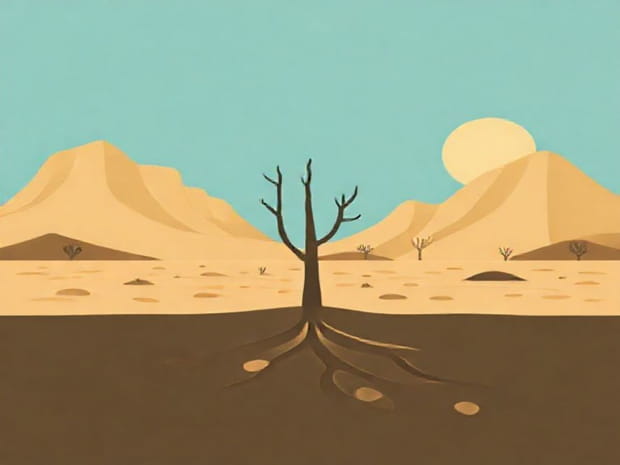
Difference Between Aridity And Drought
Understanding the difference between aridity and drought is crucial for comprehending climate patterns, managing water resources, and planning agricultural and environmental strategies. Although these terms are often used interchangeably in casual conversation, they represent distinct concepts with unique characteristics, causes, and impacts. Aridity refers to the inherent dryness of a region based on long-term climatic conditions, whereas drought describes a temporary period of water scarcity that can affect even normally wet areas. Recognizing the distinction between these two phenomena is essential for scientists, policymakers, farmers, and the general public in addressing water management and environmental sustainability challenges.
Defining Aridity
Aridity is a climatic condition that reflects the long-term lack of moisture in a particular region. It is determined by factors such as low annual rainfall, high evaporation rates, and limited water availability relative to the region’s potential evapotranspiration. Arid regions are typically found in deserts or semi-deserts, where the environment has naturally adapted to minimal water availability. These areas exhibit dry soils, sparse vegetation, and limited surface water resources, making them uniquely challenging for human habitation and agriculture.
Characteristics of Arid Regions
- Low annual rainfall, often less than 250 millimeters per year.
- High evaporation rates due to intense heat and sunlight.
- Limited surface water such as rivers, lakes, or streams.
- Sparse vegetation adapted to survive with minimal water.
- Soils that are often sandy or rocky, reducing water retention capacity.
Causes of Aridity
Aridity is primarily a result of long-term climatic and geographical factors. Major causes include
- Geographical location near subtropical high-pressure zones where descending air suppresses rainfall.
- Distance from oceans or large bodies of water, limiting moisture sources.
- Rain shadow effects from mountain ranges that block precipitation.
- High temperatures that accelerate evaporation and reduce water retention in soil.
Defining Drought
Drought, in contrast, is a temporary climatic phenomenon characterized by a significant reduction in water availability over a specific period. It can occur in any region, including those that are typically humid or temperate. Droughts are often measured by deviations from average precipitation, soil moisture levels, or streamflow and can have severe consequences for agriculture, ecosystems, and human populations. Unlike aridity, which is a permanent feature of a region, drought is transient and varies in intensity and duration.
Types of Drought
- Meteorological DroughtOccurs when there is an extended period of below-average precipitation.
- Agricultural DroughtImpacts crop production due to insufficient soil moisture, affecting food security.
- Hydrological DroughtInvolves decreased water levels in rivers, lakes, and reservoirs, affecting water supply systems.
- Socioeconomic DroughtResults when water shortages impact human activities and economic sectors, such as industry and agriculture.
Causes of Drought
Drought can be caused by a variety of factors, including
- Prolonged periods of low precipitation due to atmospheric anomalies.
- High temperatures and increased evaporation rates.
- Poor water management or over-extraction of groundwater and surface water resources.
- Climate change, which can intensify the frequency and severity of drought events.
Key Differences Between Aridity and Drought
While both aridity and drought involve water scarcity, there are several key differences that distinguish the two phenomena. Understanding these distinctions is important for accurate scientific analysis and effective resource management.
Duration and Permanence
Aridity is a permanent climatic characteristic of a region, reflecting its long-term low moisture conditions. Drought, however, is temporary and can occur in regions with normally sufficient rainfall.
Geographical Scope
Aridity is location-specific and usually applies to deserts or semi-arid regions, whereas drought can affect any area, including humid and temperate climates, depending on short-term weather variations.
Measurement Criteria
Aridity is often measured using indices like the Aridity Index (AI), which compares mean annual precipitation with potential evapotranspiration. Drought is measured through deviations from normal rainfall, soil moisture deficits, or streamflow reductions.
Impact on Environment and Society
Arid regions have ecosystems and human activities adapted to low water availability. In contrast, droughts can cause sudden disruptions, leading to crop failures, water shortages, and economic losses in areas that are not normally dry.
Examples
- AridityThe Sahara Desert, Atacama Desert, and Arabian Peninsula exhibit permanent arid conditions.
- DroughtThe 2012-2016 California drought and the 2010-2011 Horn of Africa drought represent temporary periods of extreme water shortage.
Interrelation Between Aridity and Drought
Although aridity and drought are distinct, they can interact in significant ways. Arid regions are more vulnerable to the impacts of drought, as even slight reductions in rainfall can exacerbate water scarcity. Conversely, droughts can temporarily make normally humid regions behave like arid zones, stressing water supplies and ecosystems. Recognizing these interrelations is critical for planning and mitigating the effects of water scarcity.
Adaptation and Mitigation Strategies
Addressing aridity and drought requires different approaches. In arid regions, long-term strategies include
- Developing water-efficient agricultural practices such as drip irrigation.
- Constructing reservoirs and water storage systems.
- Planting drought-resistant crops and vegetation.
For drought, mitigation focuses on short-term measures like
- Implementing water rationing and conservation programs.
- Monitoring weather patterns and soil moisture levels.
- Providing emergency relief to affected communities and industries.
In summary, aridity and drought are related but distinct concepts essential for understanding climate, environmental management, and water resource planning. Aridity represents the long-term dryness of a region and is a permanent feature of certain climates, while drought is a temporary shortage of water that can affect any region, regardless of its usual climate. Recognizing the differences between these phenomena allows for more effective preparation, adaptation, and response strategies. By understanding aridity and drought, communities can better manage water resources, safeguard agriculture, and mitigate environmental and socioeconomic impacts, ensuring resilience in the face of climate variability.