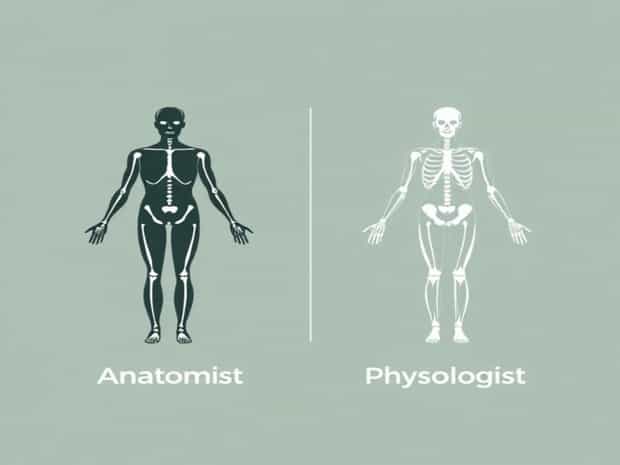
Difference Between Anatomist And Physiologist
When we hear the words anatomist and physiologist, they may sound similar because both professions deal with the study of the human body. However, the difference between an anatomist and a physiologist lies in their approach, focus, and methods of understanding how living organisms function. An anatomist is primarily concerned with the structure of the body, while a physiologist studies the processes that make those structures work. Knowing these differences is essential for students, health professionals, and anyone curious about biology or medicine, since each role contributes uniquely to our knowledge of life and health.
Understanding the Role of an Anatomist
An anatomist specializes in studying the structure of living organisms. Their focus is on the form, arrangement, and relationships of body parts, from organs to tissues and down to microscopic cells. The word anatomy” itself comes from Greek, meaning to “cut up,” which reflects the traditional method of dissecting specimens to reveal their internal design.
Main Responsibilities of an Anatomist
- Dissecting organisms to understand internal and external structures
- Studying the organization of tissues, muscles, and organs
- Teaching anatomy to medical and biology students
- Conducting research on structural abnormalities or variations
In modern times, anatomists may not only rely on dissection but also use advanced imaging technologies such as MRI, CT scans, or digital modeling. These tools allow them to explore the human body without invasive procedures. Their work is vital in fields like surgery, radiology, and biomedical research.
Exploring the Role of a Physiologist
A physiologist, on the other hand, focuses on function rather than structure. They investigate how organs, cells, and systems work together to maintain life. Physiology is about processes like breathing, digestion, circulation, and even cellular signaling. By understanding these functions, physiologists can explain how the body adapts to changes, recovers from stress, or develops diseases.
Main Responsibilities of a Physiologist
- Studying how systems like the cardiovascular, respiratory, and nervous systems function
- Investigating cellular activities and biochemical processes
- Researching how organisms respond to environmental changes
- Developing knowledge that contributes to treatments and medical innovations
Physiologists often run experiments in laboratories, measuring reactions and responses under controlled conditions. They may work in medical research, sports science, pharmacology, or even environmental studies, depending on their specialization. Their discoveries help improve healthcare, fitness, and understanding of diseases.
Key Differences Between an Anatomist and a Physiologist
Although both professions complement each other, they are not the same. Understanding the difference between an anatomist and a physiologist can be broken down into focus, methods, and applications
1. Focus
An anatomist examines the physical structure of the body, such as bones, muscles, and organs. A physiologist studies how those structures perform their functions, like how muscles contract or how blood circulates.
2. Methods
Anatomists may dissect bodies, use imaging tools, or analyze physical specimens. Physiologists rely on experiments, monitoring body responses, and using biochemical and biophysical techniques to track processes.
3. Applications
The knowledge of anatomy is essential in surgery, medical imaging, and physical therapy. The insights of physiology are crucial in drug development, disease treatment, exercise science, and clinical testing.
How Anatomy and Physiology Work Together
While the difference between anatomist and physiologist is clear, their roles are deeply interconnected. You cannot fully understand function without structure, and vice versa. For example, a surgeon must know the anatomy of the heart to operate safely, but they also need to understand its physiology to know how it pumps blood. Similarly, medical students study both anatomy and physiology because these disciplines complement each other in explaining life.
Examples of Their Interconnection
- The anatomy of the lungs provides the framework, while physiology explains the gas exchange process during breathing.
- The structure of muscles is studied in anatomy, but physiology describes how they generate force and movement.
- The kidney’s physical layout belongs to anatomy, while filtration and urine production are physiological functions.
Career Paths and Specializations
Both anatomists and physiologists can pursue various career paths depending on their interests. An anatomist may become a university professor, a medical illustrator, or a researcher in structural biology. A physiologist might work in hospitals, pharmaceutical companies, sports institutes, or even in environmental research centers. Their knowledge supports medical advancements, new treatments, and better health practices worldwide.
Specializations in Anatomy
- Gross anatomy study of visible body parts
- Microscopic anatomy (histology) study of tissues and cells
- Developmental anatomy study of growth from embryo to adult
Specializations in Physiology
- Cell physiology study of cell functions and processes
- Systems physiology focus on cardiovascular, respiratory, or nervous systems
- Comparative physiology study of different species’ adaptations
Why the Difference Matters
Recognizing the difference between anatomist and physiologist is not only important in academics but also in practical applications. Medical schools, for example, design their curriculum to balance both subjects. Health professionals need a deep knowledge of both to diagnose conditions, perform treatments, or conduct research. The distinction also helps in choosing a career path for students who may prefer studying structures versus processes.
The difference between an anatomist and a physiologist lies in their primary focus one studies the structures of the body, while the other studies the functions of those structures. Both are essential, complementary disciplines that together create a complete understanding of life and health. Without anatomy, we would not know where body parts are located or how they connect. Without physiology, we would not understand how these parts keep us alive. Together, they form the foundation of medical science and biology, shaping the future of healthcare, research, and education.