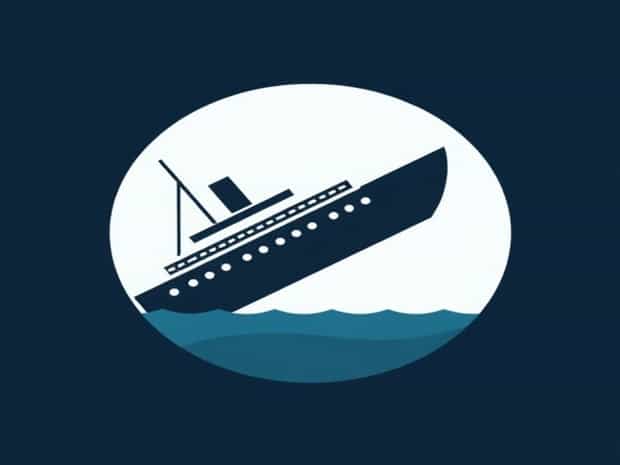
Did The Titanic Capsize?
The sinking of the RMS Titanic in 1912 remains one of the most infamous maritime disasters in history. For over a century, historians, engineers, and enthusiasts have debated the precise details of how the ship went down, including whether it capsized before sinking or broke apart while going under. Eyewitness accounts, survivor testimonies, and modern investigations provide a complex picture of the events on that fateful night. Understanding whether the Titanic capsized is important not only for historical accuracy but also for insights into ship design, maritime safety, and human decision-making during catastrophic events.
The Construction and Design of the Titanic
The Titanic was the largest passenger liner of its time, built by the White Star Line with advanced technology for the early 20th century. The ship measured over 882 feet in length and had a gross tonnage of 46,000 tons. It featured multiple watertight compartments intended to keep the vessel afloat in case of hull breaches. Despite its size and engineering innovations, the Titanic had vulnerabilities, including insufficient lifeboats and a hull that could be compromised by a significant iceberg collision. Understanding the ship’s design is crucial when considering whether it could have capsized during its final moments.
Initial Collision and Damage
On the night of April 14, 1912, the Titanic struck an iceberg in the North Atlantic. The impact caused multiple compartments along the starboard side to flood. Engineers later determined that the ship could stay afloat if a limited number of compartments were breached. However, the iceberg damage exceeded expectations, leading to an uncontrolled intake of water. The flooding caused the bow to gradually sink, lifting the stern higher out of the water. This tilting is a key factor in discussions about whether the ship capsized or simply sank in a more vertical position.
Eyewitness Accounts of the Sinking
Survivors’ accounts provide valuable, though sometimes contradictory, evidence about the Titanic’s final moments. Some passengers reported that the stern rose sharply into the air before the ship disappeared beneath the waves. Others described a steady sinking of the bow, with the deck tilting as water filled the forward compartments. The variety of observations has led to debate over whether the Titanic’s stern momentarily lifted high enough to suggest a near-capsizing before the ship broke apart.
Evidence from the Wreck Site
The discovery of the Titanic wreck in 1985 by Robert Ballard and his team offered new information about the ship’s final moments. The wreck lies in two main pieces, separated by hundreds of meters of debris. The bow section is relatively intact, while the stern is heavily damaged and twisted. This physical evidence supports the idea that the ship did not capsize entirely but rather broke apart as it sank. The stern’s deformation suggests it collapsed under its own weight and water pressure while the ship was mostly vertical, rather than rolling over completely.
Scientific Analysis of Capsizing Possibility
Marine engineers and historians have conducted detailed analyses to determine whether the Titanic could have capsized. Capsizing would have required the ship to tip entirely onto its side before sinking. Experts argue that due to the ship’s weight distribution, buoyancy, and flooding pattern, a full capsize was unlikely. Instead, the flooding of the bow caused a forward tilt, lifting the stern skyward. This vertical orientation put extreme stress on the ship’s structure, ultimately causing it to break in two and sink rapidly.
Factors Preventing a Complete Capsize
- Hull DesignThe Titanic’s hull had a wide beam that provided stability, making a full roll less likely.
- Water Ingress PatternFlooding occurred mostly at the bow, which caused forward tilt rather than sideways tipping.
- Weight DistributionHeavy engines, boilers, and cargo held low in the ship prevented lateral instability.
- Time of SinkingThe ship sank over approximately two hours, allowing gradual bow submersion rather than sudden capsize.
Popular Misconceptions
Some myths, often fueled by movies and literature, suggest that the Titanic capsized before sinking. Dramatic depictions show the ship rolling over entirely before plunging into the ocean. While the stern did rise dramatically, available evidence from survivors and the wreck indicates that the ship remained largely upright until it broke apart. Misinterpretations of the tilting stern and debris field may have contributed to the misconception of full capsizing.
Impact of Modern Media
Films and documentaries have a tendency to simplify complex events for narrative impact. Scenes depicting the Titanic flipping onto its side may exaggerate the appearance of instability but do not fully represent historical and engineering evidence. Experts caution that while the ship’s stern lifted high and may have appeared as if it could roll, the Titanic sank primarily in a vertical orientation with a breakup in the midsection.
Lessons from the Titanic Sinking
The question of whether the Titanic capsized provides broader lessons about ship design, safety regulations, and emergency preparedness. Modern ships are designed with more stringent stability requirements to prevent capsize even when compartments flood. Lifeboat capacity and evacuation protocols have improved as a result of lessons learned from the Titanic disaster. Additionally, understanding the mechanics of the sinking helps historians reconstruct events more accurately, giving insight into human responses and decisions during crises.
Historical and Engineering Insights
- Structural StressThe Titanic’s breakup illustrates how uneven flooding can place extreme stress on a ship’s structure.
- Ship StabilityThe design prevented lateral roll, highlighting the importance of weight distribution and hull engineering.
- Emergency PlanningThe disaster prompted international maritime laws, including SOLAS (Safety of Life at Sea) regulations.
- Data for SimulationSurvivor accounts and wreck analysis provide a basis for modern simulation of maritime disasters.
Based on survivor testimonies, scientific analysis, and wreck site evidence, the Titanic did not fully capsize before sinking. Instead, the ship’s bow flooded and sank, lifting the stern high into the air. Structural stresses caused the ship to break apart, with the bow and stern sections sinking separately to the ocean floor. While the stern’s dramatic rise may have appeared like a capsize to some eyewitnesses, the Titanic primarily sank in a mostly upright orientation. Understanding this distinction clarifies historical misconceptions and underscores the importance of ship design, safety protocols, and accurate historical investigation. The Titanic’s story remains a powerful reminder of the limits of human engineering and the lessons learned from maritime disasters.