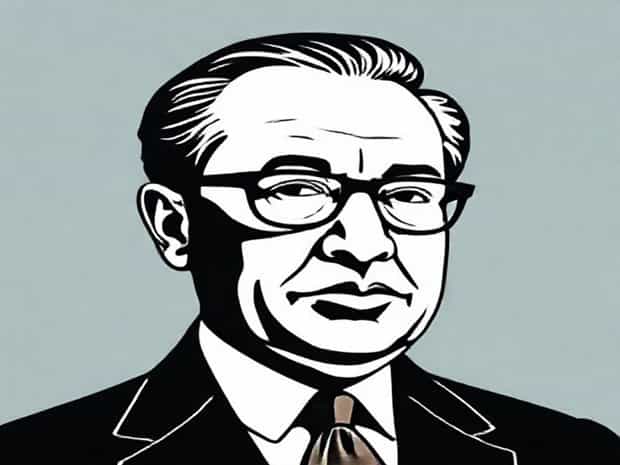
Did Samuel Gompers Run For President?
When looking back at the history of the American labor movement, the name Samuel Gompers often appears as one of the most influential figures. He played a central role in shaping workers’ rights and advocating for fair labor standards in the United States during the late nineteenth and early twentieth centuries. Because of his prominence, many people wonder if Samuel Gompers ever pursued the highest office in the land and ran for president. The answer may surprise readers, as Gompers was deeply involved in politics and policy debates but never officially sought the presidency. To understand this more clearly, it is helpful to explore his background, his work with labor organizations, his political views, and how his leadership influenced American democracy.
Who Was Samuel Gompers?
Samuel Gompers was born in London in 1850 and emigrated with his family to the United States in 1863. He grew up in a working-class environment, which shaped his perspective on labor and the need for organization. He became a skilled cigar maker and soon became involved in trade unions, rising to prominence as a leader in his field. His firsthand experience with the struggles of workers helped him understand the importance of solidarity and advocacy.
In 1886, Gompers co-founded the American Federation of Labor (AFL), an organization that would become the largest and most powerful federation of labor unions in the United States. He served as the AFL’s president for decades, except for one year, and dedicated his life to improving the wages, working hours, and conditions of American workers. Through his leadership, he transformed labor unions into a strong and lasting force in American society.
Did Samuel Gompers Run for President?
Despite his high profile and strong political influence, Samuel Gompers never ran for president of the United States. His main focus was always on labor rights and advancing the interests of workers rather than holding political office. While he worked closely with politicians and influenced political agendas, Gompers believed his role was best served outside of partisan campaigns. His philosophy was that labor unions should avoid becoming directly tied to political parties but should instead pressure all parties to respond to workers’ needs.
There were moments when his leadership and national reputation made people speculate about his potential for higher office, but Gompers himself rejected such aspirations. His life’s mission was to secure practical gains for working people rather than to climb the political ladder.
Gompers’ Political Influence Without a Campaign
Although Gompers never ran for president, he played a key role in shaping political discussions during his lifetime. He worked to ensure that both Democratic and Republican leaders understood the importance of labor issues. His strategy was often called pure and simple unionism, which focused on practical goals such as higher pay, shorter working days, and safer working conditions. Rather than tying the labor movement to one political party, Gompers advocated for supporting whichever candidates aligned with workers’ interests at the time.
He was particularly active during World War I, when he served on advisory committees and helped the government organize labor to support the war effort. His influence reached the White House, where presidents valued his input. This gave him a level of political power without ever running for an elected office.
Key Aspects of Gompers’ Approach
- Focus on collective bargaining instead of partisan politics.
- Advocating for practical reforms such as an eight-hour workday.
- Maintaining independence of labor unions from political parties.
- Using influence to shape public policy without holding office.
Why Didn’t He Run for President?
Several factors explain why Samuel Gompers never launched a presidential campaign. First, his vision of leadership was tied to labor unions rather than political parties. He believed that unions could achieve more through negotiation and influence than through direct political control. Second, the political climate of his era made it difficult for a labor leader to gain broad support for a presidential run. Business leaders, politicians, and newspapers often portrayed labor activists as radical or dangerous, even though Gompers himself was moderate compared to more radical figures of the time.
Additionally, Gompers did not see himself as a politician. He saw himself as an advocate for the working class, and he feared that seeking office would compromise his ability to represent labor’s true interests. His lifelong dedication to unionism shows that his energy was directed toward improving workers’ lives rather than pursuing personal power.
Impact on the Labor Movement
Even without ever running for president, Gompers’ legacy remains one of the most important in American labor history. The American Federation of Labor grew under his leadership into a powerful organization that laid the groundwork for modern labor rights. Many policies that workers take for granted today, such as standardized work hours and the recognition of unions, were influenced by his leadership.
By keeping labor relatively independent from political parties, Gompers ensured that workers’ needs remained central, no matter which party held office. His methods inspired generations of union leaders to focus on practical reforms rather than political ambitions.
Comparison with Other Labor Leaders
It is interesting to compare Gompers with other labor leaders who did pursue political power. For example, Eugene V. Debs, another prominent labor activist of the era, ran for president several times as a candidate of the Socialist Party. While Debs gained a large following, he was ultimately unsuccessful in winning office. Gompers, in contrast, avoided the risks of partisan politics and instead achieved real policy victories by influencing both major parties.
This contrast highlights why Gompers’ strategy was effective. While he lacked the visibility of a presidential campaign, he maintained credibility and avoided the polarizing effects of party politics. His decision not to run for president was strategic and consistent with his philosophy of unionism.
Samuel Gompers remains one of the most influential figures in American labor history. Although he never ran for president, his impact on politics and society was immense. Through his leadership of the American Federation of Labor, he fought for better wages, hours, and conditions for workers while maintaining independence from political parties. His refusal to seek the presidency was not a sign of weakness but a reflection of his priorities to strengthen the labor movement and protect the dignity of workers. In this way, Gompers demonstrated that true influence does not always require holding the highest office, but rather shaping the conditions under which millions of people live and work.