Did Hector And Andromache Have A Child
Hector, the valiant Trojan prince, and Andromache, his devoted wife, are among the most poignant figures in Greek mythology, particularly in the context of the Trojan War. Their love story, marked by deep affection and tragic circumstances, has been immortalized in epic poetry and literature for centuries. A central question often arises among readers and scholars alike did Hector and Andromache have a child? Exploring this question requires an understanding of the myths surrounding them, their roles in the Iliad, and the legacy they left behind.
The Relationship Between Hector and Andromache
Hector and Andromache’s marriage represents one of the most tender and humanizing aspects of the epic tales of the Trojan War. Hector, the eldest son of King Priam and Queen Hecuba of Troy, is renowned for his bravery, honor, and dedication to his city. Andromache, known for her loyalty and compassion, is depicted as a devoted wife who deeply fears for Hector’s life in battle. Their relationship is characterized by mutual respect, love, and an understanding of the grave realities of war.
Andromache’s Role as a Wife
In Homer’s Iliad, Andromache is portrayed as the archetypal supportive spouse. She pleads with Hector not to return to battle, highlighting her awareness of the dangers he faces and her desire to protect him. This moment emphasizes her wisdom and emotional intelligence, as she balances her love for her husband with the obligations of duty and honor that Hector must uphold as a warrior and prince of Troy.
Evidence of a Child
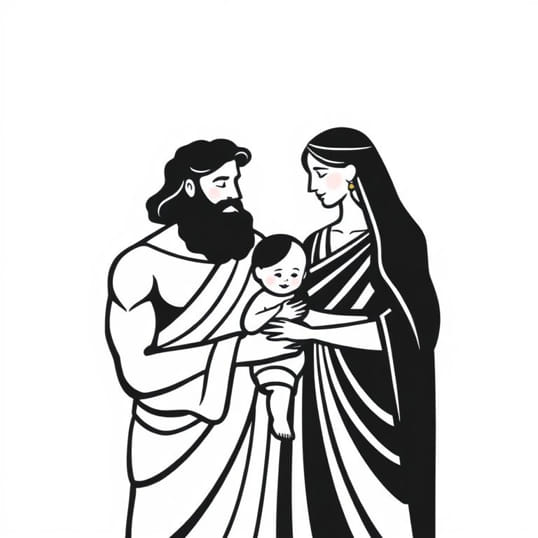
Yes, Hector and Andromache did have a child. According to the Iliad and subsequent mythological sources, their son was named Astyanax. Astyanax’s birth added a personal dimension to Hector and Andromache’s story, illustrating not only their love but also the human cost of war. The presence of their child underscores the themes of familial duty, legacy, and the devastating consequences of conflict that permeate Greek mythology.
Astyanax The Son of Hector and Andromache
Astyanax, whose name translates to Lord of the City, symbolizes the hope for the future of Troy. His existence represents the continuation of Hector’s lineage and the possibility of life beyond the immediate horrors of war. However, Astyanax’s fate is tragically tied to the downfall of Troy. After the city falls, the Greek conquerors kill him to prevent any potential resurgence of Trojan leadership. This act adds a layer of sorrow and inevitability to the narrative, reflecting the harsh realities of war in ancient storytelling.
The Significance of Astyanax in Mythology
Astyanax’s story serves multiple narrative and symbolic purposes. As the child of two beloved figures in Trojan lore, he embodies the innocence lost due to human conflict. His tragic death highlights the collateral damage of war and the vulnerability of families in the midst of political and military turmoil. For Andromache, the loss of Astyanax represents the ultimate personal tragedy, compounding her grief after Hector’s death at the hands of Achilles.
Astyanax as a Symbol
- Innocence and VulnerabilityAstyanax represents the unprotected and dependent members of society who suffer due to circumstances beyond their control.
- Legacy and ContinuityAs Hector’s son, he embodies the potential continuation of Trojan leadership and cultural heritage.
- Tragic Consequences of WarHis fate underscores the destructive impact of war on families and future generations.
- Emotional ResonanceAstyanax’s death intensifies the emotional depth of Hector and Andromache’s story, highlighting the personal costs of heroic narratives.
Hector and Andromache’s Family Dynamics
Their family life, though brief due to the war’s interruptions, is portrayed with great emotional richness. Scenes depicting Hector playing with Astyanax or discussing the child with Andromache offer a glimpse into their domestic world, contrasting sharply with the brutality of the battlefield. These moments humanize Hector, emphasizing that his heroism is intertwined with his responsibilities as a husband and father. Likewise, Andromache’s concern for her child underscores her role as a protective and nurturing figure, whose life is deeply intertwined with the well-being of her family.
The Emotional Toll of War on Families
Hector and Andromache’s story demonstrates the broader impact of war on family structures. Their marriage is marked by love and loyalty, yet constantly threatened by external conflict. The looming presence of war shapes their interactions, infusing their domestic life with anxiety and uncertainty. Astyanax’s eventual death is a tragic culmination of these threats, illustrating how war extends its reach into the most intimate aspects of human life, affecting spouses, children, and entire communities.
Literary Interpretations and Adaptations
Many authors, poets, and playwrights have explored the relationship between Hector, Andromache, and their child. In ancient Greek literature, their story functions as both a historical account within the mythological tradition and a moral lesson on the fragility of human life. Modern interpretations often highlight themes of love, duty, and the devastating effects of war on families, using Hector and Andromache’s story as a lens to examine human resilience and tragedy.
Depictions in Literature and Drama
- Homer’s IliadOffers detailed portrayals of Hector and Andromache’s interactions, emphasizing the emotional impact of war on personal relationships.
- Greek TragediesPlaywrights often explore the tension between public duty and private life, with Hector and Andromache serving as exemplars of this conflict.
- Modern Novels and RetellingsContemporary writers frequently reinterpret their story to explore universal themes of love, loss, and resilience in the face of adversity.
Lessons from Hector and Andromache’s Family
The story of Hector, Andromache, and Astyanax offers enduring lessons for readers and scholars. It emphasizes the importance of family bonds, the profound effects of external conflict on personal lives, and the enduring legacy of love and loyalty. Even in the face of inevitable tragedy, their story demonstrates the strength of human relationships and the moral complexity of duty versus personal desire.
Key Takeaways
- Love and Duty CoexistHector’s obligations to Troy and his love for his family illustrate the tension between public duty and private life.
- War’s Impact on InnocenceAstyanax’s death reminds readers that children and families often bear the brunt of conflict.
- Resilience in TragedyAndromache’s continued strength after her losses highlights the human capacity for endurance and coping with grief.
- Legacy MattersThe story underscores the importance of familial and cultural legacy in shaping human experiences.
Hector and Andromache did indeed have a child, Astyanax, whose presence adds a deeply human dimension to the mythology surrounding the Trojan War. Their story illustrates the intimate consequences of heroic conflict, emphasizing the interplay between love, duty, and tragedy. The narrative of Hector, Andromache, and Astyanax continues to resonate because it reflects universal human experiences the joys of family, the anguish of loss, and the enduring impact of war on the most vulnerable. Understanding their story provides insight into the complexities of human emotion and the timeless lessons embedded in Greek mythology.