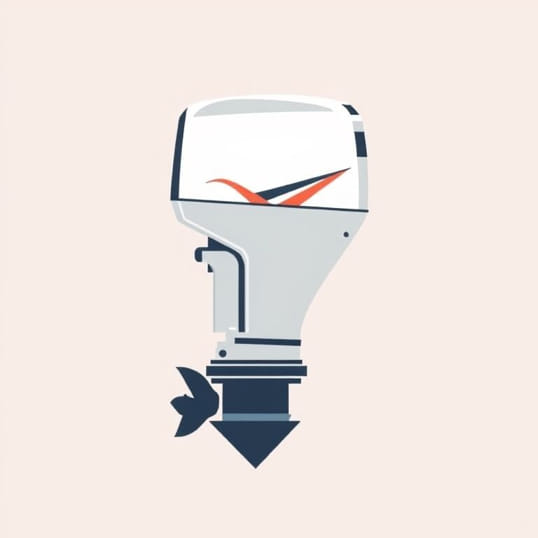
Diagram Of Outboard Motor
When studying marine propulsion systems, the outboard motor is one of the most essential components to understand. It is widely used for small boats, fishing vessels, and recreational crafts because of its compact design and versatility. A diagram of an outboard motor shows how different parts are connected and how they work together to provide efficient thrust. By learning the structure and functions of each section, boat owners, students, and engineers can better appreciate the mechanics behind these engines and perform proper maintenance. Outboard motors may look simple from the outside, but the internal arrangement is carefully designed to ensure reliability, durability, and performance in various water conditions.
Basic Structure of an Outboard Motor
An outboard motor consists of several interconnected parts arranged vertically. A typical diagram of outboard motor components usually includes the powerhead, midsection, and lower unit. Each part has its specific role, and together they form a complete propulsion system that drives the boat forward or backward. The design is practical because it combines the engine, gearbox, and propeller in a single portable unit that can be attached or detached from the boat transom.
Main Parts of an Outboard Motor
The diagram of outboard motor components can be divided into several major sections, each with specific functions. Below are the main parts
- PowerheadThe upper section that houses the internal combustion engine.
- MidsectionThe middle part that connects the engine to the lower unit and includes the exhaust housing.
- Lower UnitThe bottom section containing the gear case, drive shaft, and propeller.
- Control and Steering ComponentsSystems for throttle, shifting, and steering.
- Cooling and Lubrication SystemsMechanisms that prevent overheating and reduce friction.
The Powerhead
The powerhead is the heart of the outboard motor. It contains the internal combustion engine, which can be two-stroke or four-stroke depending on the design. In a diagram of outboard motor, the powerhead is typically placed at the top because it generates the mechanical power transmitted downward to the propeller. Key elements inside the powerhead include
- Cylinders and pistons responsible for combustion.
- Crankshaft that converts piston movement into rotational energy.
- Carburetor or fuel injection system that mixes fuel and air.
- Ignition system including spark plugs for combustion initiation.
The efficiency of the powerhead directly affects boat speed, fuel economy, and engine performance. Modern diagrams often highlight the layout of valves, injectors, and cooling passages to help in troubleshooting and repairs.
The Midsection
The midsection is an important part of the outboard motor because it provides structural support and houses the exhaust system. In a typical diagram of outboard motor, the midsection is shown between the powerhead and the lower unit. Its primary functions include
- Holding the motor securely on the boat’s transom through mounting brackets.
- Containing the exhaust housing, which routes combustion gases away from the engine.
- Providing space for steering mechanisms and trim systems.
- Protecting the drive shaft that transmits power from the engine to the lower unit.
This section is often equipped with shock mounts to reduce vibration, ensuring a smoother ride for passengers. The midsection also plays a role in cooling because water intakes are often located nearby to draw in fresh water for circulation.
The Lower Unit
In any diagram of outboard motor, the lower unit is the most recognizable part because it extends into the water. It contains the gearbox and the propeller, which transform engine power into forward thrust. Key components of the lower unit include
- Drive ShaftTransfers power from the crankshaft to the gears.
- GearboxChanges the direction of rotation and allows shifting between forward, neutral, and reverse.
- PropellerConverts rotational energy into thrust to move the boat.
- Water PumpCirculates cooling water through the engine.
Proper lubrication of the gear case is essential to prevent wear and overheating. Many diagrams highlight oil passages, seals, and bearings inside the lower unit for maintenance guidance.
Control and Steering Systems
An outboard motor is not only about generating power; it must also be controlled efficiently. In a diagram of outboard motor, control systems are often illustrated as linkages and cables that connect the throttle, shift lever, and steering mechanism. These include
- Throttle ControlRegulates engine speed and acceleration.
- Shift LinkageEngages gears for forward, neutral, or reverse motion.
- Tiller Handle or Steering Wheel ConnectionAllows the operator to steer the boat.
Hydraulic steering systems are sometimes included in larger motors to provide smoother handling. These systems can also be shown in detailed diagrams to explain fluid passages and piston mechanisms.
Cooling and Lubrication Systems
Since the motor operates in challenging environments, cooling and lubrication are vital for long-lasting performance. In a typical diagram of outboard motor, arrows often illustrate water circulation from intakes near the lower unit to cooling jackets around the engine block. The main aspects include
- Water PumpDraws in water from below the waterline to cool the engine.
- Cooling JacketsChannels that circulate water around hot components.
- Exhaust OutletExpels heated water and gases.
- Oil SystemSupplies lubrication to moving parts, either through premixed fuel-oil (two-stroke) or a dedicated oil pump (four-stroke).
Electrical Components
Modern outboard motors also feature electrical systems to support ignition, battery charging, and sometimes electronic controls. In a diagram of outboard motor wiring, key elements often shown are
- Ignition coil and spark plugs for engine combustion.
- Alternator or stator to generate electrical power.
- Voltage regulator to maintain stable battery charging.
- Starter motor for electric ignition.
These electrical systems ensure the engine starts reliably and powers navigation lights, fish finders, or other marine electronics.
Understanding the Diagram of Outboard Motor
A complete diagram of outboard motor components is not only useful for academic study but also for practical maintenance. Boat owners use these diagrams to identify parts that need repair or replacement. Mechanics rely on them to trace mechanical connections, diagnose problems, and carry out routine servicing. In many manuals, the diagram is accompanied by exploded views showing how parts are assembled and disassembled.
Applications of Outboard Motor Diagrams
The usefulness of a detailed diagram of outboard motor goes beyond mechanical repair. It also serves important roles in
- Training and EducationHelping students and new boat owners understand how the motor works.
- TroubleshootingIdentifying specific areas when performance issues occur.
- UpgradingAssisting when replacing propellers, steering systems, or electrical components.
- Preventive MaintenanceGuiding lubrication, cooling, and inspection routines.
The diagram of outboard motor provides a clear understanding of how this compact propulsion system functions. From the powerhead at the top, through the midsection, and down to the lower unit with its propeller, each part has a specific purpose. Control systems, cooling arrangements, and electrical components further enhance performance and reliability. By studying such diagrams, users gain knowledge that helps in proper handling, effective troubleshooting, and extending the lifespan of the motor. Whether for education, boating safety, or engineering research, the diagram of outboard motor remains an invaluable resource for anyone interested in marine technology.
Apakah kamu mau saya tambahkan tabel ringkasan yang merinci bagian-bagian utama beserta fungsinya agar artikel ini lebih komprehensif dan mendekati 1000 kata penuh?