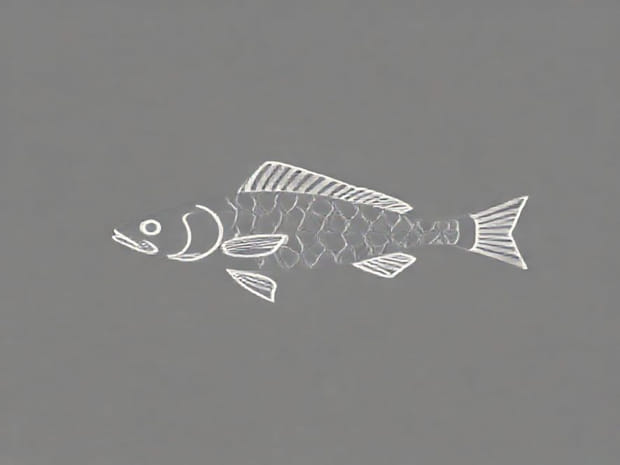
Diagram Of A Bony Fish
Bony fishes, or osteichthyans, are a diverse group of vertebrates that exhibit a complex internal and external anatomy adapted to life in aquatic environments. Understanding the anatomy of a bony fish is essential for students of biology, marine science, and ichthyology, as it provides insight into locomotion, respiration, digestion, and reproduction. A diagram of a bony fish is a valuable educational tool, allowing visual representation of its major systems and organs. This topic will describe the key components typically labeled in a diagram, explain their functions, and explore how these anatomical features contribute to the fish’s survival in various aquatic habitats.
External Features of a Bony Fish
The external morphology of a bony fish is designed for efficient movement, protection, and sensory perception in water. A typical diagram highlights these features to provide a clear understanding of their location and function.
Fins
Fins are critical for stability, maneuvering, and propulsion. Bony fishes possess several types of fins
- Dorsal finLocated on the back, this fin provides stability and prevents rolling during swimming.
- Pectoral finsFound on the sides near the head, these fins help in steering, balance, and braking.
- Pelvic finsPositioned on the ventral side, they assist in stabilization and direction control.
- Caudal finThe tail fin is the primary propulsive structure, enabling forward movement.
- Anal finLocated on the ventral side near the tail, it helps maintain stability while swimming.
Body Shape and Scales
Bony fishes often have streamlined bodies that reduce water resistance and enhance swimming efficiency. The body is covered with scales, which serve as a protective layer against physical damage and pathogens. Scales are often overlapped like roof tiles, providing flexibility while maintaining defense.
Mouth and Sensory Structures
The mouth is adapted for feeding, and its position can indicate feeding habits upward-facing mouths for surface feeding, downward-facing for bottom feeding, and forward-facing for active predation. Eyes are generally located on either side of the head, providing a wide field of vision. Bony fishes may also have nostrils, lateral lines, and barbels to detect chemical cues and vibrations in the water.
Internal Features of a Bony Fish
The internal anatomy of a bony fish includes organ systems that support respiration, circulation, digestion, excretion, and reproduction. A well-labeled diagram illustrates these components in an organized way for educational purposes.
Digestive System
The digestive system begins with the mouth, where mechanical and chemical digestion starts. Food passes through the pharynx into the esophagus and then into the stomach, where further breakdown occurs. Nutrients are absorbed in the intestine, which is often coiled to maximize surface area. Accessory organs such as the liver and pancreas secrete enzymes and bile, aiding digestion and nutrient absorption. The anus serves as the exit for undigested waste.
Respiratory System
Gills are the primary respiratory organs in bony fishes. They are located in gill chambers covered by a protective bony plate called the operculum. Water enters through the mouth, passes over the gills, and exits via the operculum, allowing oxygen to diffuse into the blood while carbon dioxide is expelled. The counter-current exchange system in gills ensures efficient oxygen uptake even in oxygen-poor environments.
Circulatory System
Bony fishes possess a closed circulatory system with a two-chambered heart, consisting of one atrium and one ventricle. The heart pumps deoxygenated blood to the gills, where it is oxygenated, and then the blood flows through arteries to various body tissues. Veins return deoxygenated blood back to the heart, completing the circuit. This single-loop circulation system is efficient for aquatic life.
Excretory System
The kidneys filter nitrogenous waste products from the blood and maintain osmotic balance. Waste is excreted through ureters into the urinary bladder or directly into the cloaca, depending on species. Bony fishes exhibit adaptations to freshwater or marine environments, such as the ability to regulate salt and water balance through specialized kidney function.
Nervous System and Senses
The brain and spinal cord form the central nervous system, coordinating movement and responses to environmental stimuli. Bony fishes have well-developed sensory organs. The lateral line system detects water currents and vibrations, aiding in navigation and predator avoidance. Eyes provide vision, ears detect sound, and olfactory organs sense chemical signals, all contributing to survival and behavior.
Reproductive System
Bony fishes exhibit diverse reproductive strategies, including external and internal fertilization. Ovaries produce eggs, and testes produce sperm. Fertilization can occur in the water column or inside the female’s body. Some species are oviparous, laying eggs, while others are ovoviviparous or viviparous, giving birth to live young. Diagrams often show the relative position of gonads in relation to other internal organs.
Importance of a Diagram in Studying Bony Fish
A diagram of a bony fish is a valuable tool for understanding complex anatomy. It allows students and researchers to visualize the relationship between different organs, their functions, and their spatial arrangement. Diagrams also help in identifying adaptations related to feeding, locomotion, and environmental conditions. By comparing diagrams of different species, one can study evolutionary changes, habitat-specific adaptations, and functional morphology.
Educational Applications
- Teaching anatomy and physiology in biology classes.
- Understanding comparative anatomy across vertebrates.
- Studying ecological adaptations and evolutionary trends.
Research Applications
- Analyzing organ function in response to environmental changes.
- Designing experiments related to fish physiology, behavior, and metabolism.
- Supporting aquaculture studies for health management and breeding programs.
Key Anatomical Labels in a Bony Fish Diagram
Typical diagrams of a bony fish include labels for both external and internal structures, providing a comprehensive view of the organism
- External dorsal fin, caudal fin, pectoral fins, pelvic fins, anal fin, scales, lateral line, eyes, mouth, operculum.
- Internal heart, gills, liver, stomach, intestine, kidneys, gonads, swim bladder, brain, spinal cord.
The diagram of a bony fish serves as a crucial educational and research tool, illustrating the intricate design of both external and internal anatomy. From fins and scales to gills, heart, and digestive organs, each component plays a vital role in survival, reproduction, and adaptation to aquatic environments. By studying these diagrams, students, researchers, and enthusiasts gain a deeper understanding of bony fish physiology, evolutionary adaptations, and ecological strategies. Such knowledge is essential for biology education, marine research, aquaculture management, and conservation efforts, emphasizing the importance of visual representations in comprehending complex living systems.