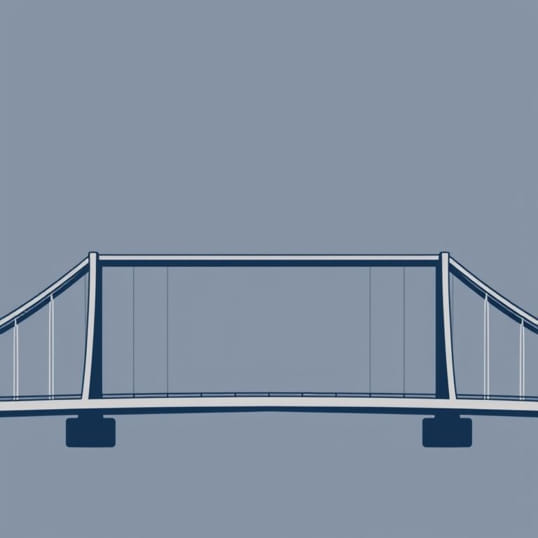
Definition Of Truss Bridge
A truss bridge is a type of bridge that uses a framework of interconnected elements to support the weight of the bridge and the loads traveling across it. These elements, often arranged in triangular patterns, distribute forces efficiently, allowing the bridge to span longer distances than simple beam bridges. Truss bridges have been an essential part of engineering history due to their ability to combine strength, stability, and material efficiency. They are widely used in both road and rail infrastructure, providing reliable passage over rivers, valleys, and other obstacles. Understanding the definition of a truss bridge involves examining its components, types, and structural principles, which help explain why this bridge design remains popular in modern construction.
Basic Structure of a Truss Bridge
The primary feature of a truss bridge is its truss framework. This framework consists of a series of triangular units, which are highly effective in distributing tension and compression forces. Triangles are inherently stable shapes because they do not deform easily under pressure, unlike rectangles or squares, which can distort without diagonal support. By connecting multiple triangles in a truss arrangement, the bridge can handle significant loads without excessive bending or twisting.
Key Components
- Top ChordThe top horizontal element of the truss, typically in compression.
- Bottom ChordThe lower horizontal element, usually under tension.
- Vertical MembersThese connect the top and bottom chords and handle compressive or tensile forces.
- Diagonal MembersDiagonal elements create triangular patterns and help distribute loads efficiently across the structure.
- DeckThe surface on which vehicles, pedestrians, or trains travel.
Types of Truss Bridges
Truss bridges come in various designs, each suited for specific engineering challenges and aesthetic considerations. The choice of truss type can influence the bridge’s load capacity, span length, and construction complexity.
Pratt Truss
The Pratt truss features diagonals that slope towards the center of the bridge span. This design is especially effective in handling both vertical and horizontal loads. Its simplicity and efficiency make it one of the most common truss bridge types used in rail and road construction.
Warren Truss
The Warren truss uses equilateral triangles without vertical members, creating a repeating W pattern. This design minimizes material usage while maintaining strength, making it suitable for moderate spans and lightweight structures.
Howe Truss
The Howe truss is similar to the Pratt truss but with diagonals sloping away from the center of the bridge. It is effective for wooden and steel bridges and is often used in older railway bridges.
Other Variants
- K TrussA variation designed for long spans and heavy loads.
- Bowstring TrussFeatures an arched top chord, ideal for aesthetic appeal and distributing loads efficiently.
- Pennsylvania TrussUsed for long-span rail bridges, combining elements of multiple truss types.
Advantages of Truss Bridges
Truss bridges offer several benefits that have made them a preferred choice in civil engineering for centuries. Their unique design provides strength, durability, and material efficiency, allowing them to span greater distances than simple beam bridges while using less material.
Efficient Load Distribution
The triangular patterns in truss bridges distribute forces evenly across the structure. Compression and tension are effectively managed by the top, bottom, and diagonal members, reducing the risk of structural failure even under heavy loads.
Material Efficiency
Because the forces are distributed so effectively, truss bridges can be constructed with less material than other bridge types of equivalent span. This reduces costs without compromising safety or stability.
Flexibility in Span Length
Truss bridges can be designed for a wide range of span lengths, from short pedestrian crossings to long railroad bridges over rivers and valleys. The modular nature of truss elements allows for customization based on engineering requirements.
Durability
When properly maintained, truss bridges can last for many decades. Steel trusses resist environmental wear and corrosion, while wooden trusses can be treated for longevity. Regular inspections ensure continued performance and safety.
Applications in Modern Infrastructure
Truss bridges remain relevant in modern infrastructure due to their adaptability and strength. They are commonly used for roadways, railway lines, pedestrian paths, and even temporary military bridges. In addition, the design principles of truss bridges influence other structures such as towers, cranes, and roof systems.
Railway Bridges
Truss bridges are particularly suitable for railways because they can handle heavy loads and distribute weight efficiently over long spans. Historical railway networks frequently incorporated truss bridges to cross rivers and valleys with minimal material cost.
Roadway Bridges
Highways and urban roads also benefit from truss bridge designs, especially when spanning obstacles where intermediate supports are impractical. Modern construction often combines steel or reinforced concrete with truss principles for optimal performance.
Pedestrian Bridges
Smaller truss bridges provide safe and aesthetic solutions for pedestrian traffic. Lightweight materials and simple designs make these bridges cost-effective while maintaining structural integrity.
Maintenance and Longevity
Maintaining a truss bridge involves regular inspections, cleaning, and structural assessments. Corrosion, fatigue, and wear are the most common issues, particularly in steel bridges. Preventive maintenance such as painting, joint replacement, and bolt tightening ensures that the bridge remains safe and functional over time.
Inspection Techniques
- Visual inspection to detect cracks, rust, and deformation.
- Non-destructive testing methods such as ultrasonic testing and radiography for hidden flaws.
- Load testing to verify that the bridge can safely handle expected traffic.
Modern Innovations
Advancements in materials, such as high-performance steel and weathering steel, extend the lifespan of truss bridges. Computer-aided design and simulation also allow engineers to optimize truss structures for specific loads and environmental conditions.
Truss bridges are a fundamental element of civil engineering, combining strength, efficiency, and adaptability. Their design, centered on triangular frameworks, ensures even distribution of forces, allowing for long spans and reliable performance. From roadways to railways and pedestrian crossings, truss bridges continue to be a preferred choice due to their durability and material efficiency. Understanding the definition of a truss bridge, its components, types, and advantages provides valuable insight into why this bridge design has endured for centuries and remains essential in modern infrastructure development.