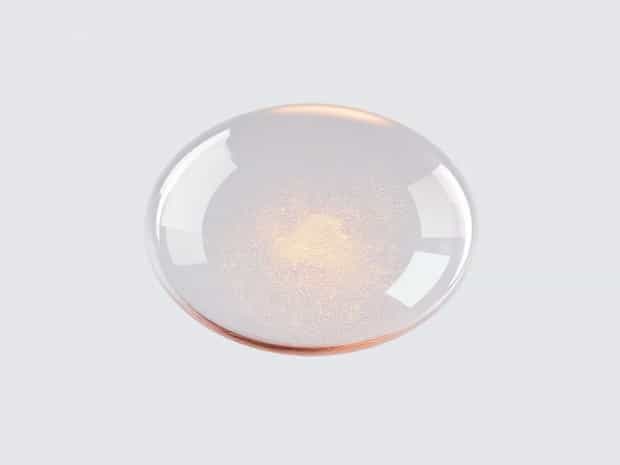
Definition Of Luster In Science
In the study of science, particularly in chemistry and physics, the concept of luster plays a significant role in understanding the physical properties of materials. Luster refers to the way light interacts with the surface of a substance, determining how shiny or reflective it appears to the human eye. This property is essential for identifying minerals, metals, and other substances, and it provides insights into their composition and structure. Understanding luster helps scientists and students differentiate between materials with similar appearances but different underlying characteristics. It also has practical applications in industries such as jewelry, metallurgy, and materials science, where surface qualities affect functionality and aesthetics.
Definition of Luster in Science
Luster, in scientific terms, is defined as the quality of light reflected from the surface of a mineral or material. It describes how shiny, glossy, or dull a surface appears under normal lighting conditions. Luster is a key diagnostic property in mineralogy and is classified into various types depending on the nature of reflection. It can range from metallic, where the material appears like metal, to non-metallic, which includes glassy, pearly, silky, or earthy appearances. The study of luster not only provides aesthetic information but also offers clues about the atomic and molecular structure of substances, as the way light reflects is influenced by electron arrangements and surface texture.
Types of Luster
There are several categories of luster that scientists commonly use to describe materials. Each type of luster indicates a different interaction between light and the material’s surface.
Metallic Luster
Metallic luster is characteristic of metals and metal-rich minerals. Materials with metallic luster reflect light in a way that makes them appear shiny like polished metal. This type of luster usually indicates the presence of metallic bonding and free electrons, which efficiently reflect light.
Non-Metallic Luster
Non-metallic luster includes a variety of subtypes
- Vitreous (Glassy) LusterAppears similar to glass, common in minerals like quartz.
- Pearly LusterExhibits an iridescent sheen, similar to pearls, often found in mica.
- Silky LusterResembles the appearance of silk, seen in fibrous minerals like gypsum.
- Resinous LusterLooks like resin or plastic, typical in minerals such as sphalerite.
- Adamantine LusterBrilliant, diamond-like shine, usually observed in diamonds and some topaz.
- Earthy or Dull LusterAppears rough and non-reflective, common in minerals like kaolinite.
Factors Affecting Luster
Several factors influence the luster of a material. The atomic structure, surface smoothness, and the way light interacts with the material all contribute to its appearance. Metals generally exhibit strong metallic luster due to the free movement of electrons, while non-metals show varied luster depending on crystal structure and surface texture. The presence of impurities, surface oxidation, or weathering can also alter luster, making it an important diagnostic tool in assessing the quality and origin of minerals.
Surface Texture and Smoothness
The smoother the surface, the more uniform and reflective the luster. Polished surfaces enhance metallic and vitreous lusters, whereas rough or granular surfaces tend to produce dull or earthy lusters.
Composition and Bonding
The type of chemical bonding affects luster. Metallic bonding allows free electrons to move, reflecting light effectively and producing metallic luster. Covalent or ionic bonds often result in non-metallic lusters, with varying degrees of shininess depending on crystal arrangement.
Importance of Luster in Science
Luster serves as an essential diagnostic property in mineralogy and material science. By observing luster, scientists can classify minerals, identify unknown substances, and understand their chemical and physical properties. Luster is also critical in industries where surface appearance affects both function and aesthetics, such as jewelry, electronics, and coatings.
Applications in Mineral Identification
- Helps differentiate between visually similar minerals, such as pyrite and gold.
- Assists in classifying minerals based on their reflective properties.
- Provides insights into the purity and composition of natural and synthetic materials.
Industrial Applications
- Jewelry design relies on understanding luster to enhance the visual appeal of gemstones.
- Metallurgy uses luster to assess metal quality and surface finishing.
- Material science utilizes luster to evaluate coatings, films, and polished surfaces for functional and decorative purposes.
Measuring and Observing Luster
Observing luster is generally qualitative and involves visual inspection under proper lighting conditions. Scientists look for reflections, shine, and surface appearance to classify the luster type. Advanced techniques, such as spectrophotometry, can quantify light reflection and absorption, providing precise data for research and industrial quality control.
Observation Techniques
- Visual inspection under natural or controlled light.
- Comparison with standard mineral samples to determine luster type.
- Microscopic examination for surface texture analysis.
- Spectrophotometric analysis to quantify reflectivity and gloss levels.
Luster is a fundamental property in science that describes the way light interacts with a material’s surface, influencing how shiny or reflective it appears. Understanding luster provides valuable insights into the composition, structure, and quality of minerals and materials. Its importance spans from academic research in mineralogy and physics to practical applications in jewelry, metallurgy, and material science. By classifying luster into types such as metallic, vitreous, pearly, and earthy, scientists and professionals can identify materials, assess their properties, and utilize them effectively in various industries. Luster continues to be a key characteristic in scientific observation and industrial application, highlighting the interplay between physical appearance and material properties in understanding the natural and synthetic world.