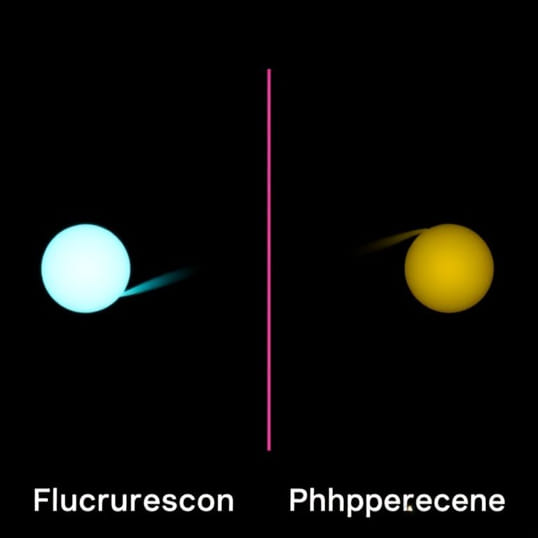
Comparison Between Fluorescence And Phosphorescence
The phenomena of fluorescence and phosphorescence are fundamental concepts in physics and chemistry, often observed in materials that emit light after being exposed to a source of energy. Both processes involve the absorption of energy and subsequent emission of light, but they differ in the mechanisms, duration, and applications. Understanding the distinctions between fluorescence and phosphorescence is crucial for fields such as material science, chemistry, biology, and even everyday applications like glow-in-the-dark products, fluorescent markers, and medical imaging. Exploring these differences provides insight into how molecules interact with energy and light.
Definition and Basic Principles
Fluorescence is the emission of light by a substance that has absorbed light or other electromagnetic radiation. It occurs almost immediately after the absorption of energy, typically within nanoseconds, and stops as soon as the external energy source is removed. Phosphorescence, on the other hand, is a delayed emission of light. In phosphorescent materials, the absorbed energy is stored and released slowly over time, which allows the material to glow even after the initial energy source is no longer present.
Fluorescence Process
Fluorescence occurs when an electron in a molecule absorbs energy and moves to a higher electronic state. Almost immediately, the electron returns to its ground state, releasing the excess energy as visible light. The rapidity of this process means that the light emission ceases almost instantly when the excitation source is removed. This property is commonly exploited in fluorescent dyes, lamps, and biological markers.
Phosphorescence Process
Phosphorescence involves a similar initial absorption of energy, but with a key difference the electron undergoes a spin change that traps it in a metastable state known as a triplet state. Returning from this triplet state to the ground state is a slower, forbidden transition, which causes the material to continue emitting light for seconds, minutes, or even hours after the excitation source has been removed. This delayed glow is characteristic of glow-in-the-dark materials and safety signage.
Duration of Emission
One of the most noticeable differences between fluorescence and phosphorescence is the duration of light emission. Fluorescent materials emit light almost instantaneously and stop emitting the moment the excitation source is removed. Phosphorescent materials, in contrast, have a prolonged emission due to the slow transition of electrons from the triplet state to the ground state.
Comparison Table Duration
- Fluorescence Emission duration is typically nanoseconds to microseconds.
- Phosphorescence Emission duration can range from milliseconds to hours.
The difference in duration directly impacts practical applications. Fluorescent lights provide immediate illumination, while phosphorescent coatings are used where long-lasting glow is needed, such as emergency exit signs or novelty products.
Energy States and Electron Transitions
The underlying difference between fluorescence and phosphorescence lies in the electron transitions within molecules. Fluorescence involves singlet-to-singlet transitions, where the electron returns to its ground state without changing its spin. Phosphorescence involves singlet-to-triplet transitions, which are spin-forbidden and therefore slower.
Electron Behavior
- Fluorescence Electrons return directly from the excited singlet state to the ground state.
- Phosphorescence Electrons are trapped in a triplet state, delaying their return to the ground state.
These differences in electron behavior explain why phosphorescent materials can continue glowing long after the light source is removed, while fluorescent materials cannot.
Applications in Daily Life and Science
Fluorescence and phosphorescence have numerous practical applications across various industries. Fluorescence is widely used in biological imaging, forensic analysis, and lighting solutions. Phosphorescence is commonly seen in glow-in-the-dark products, emergency signage, and certain types of safety equipment.
Fluorescence Applications
- Fluorescent dyes for microscopy and cellular imaging in biology
- Highlighter pens and fluorescent markers for writing and artistic purposes
- Fluorescent lamps for energy-efficient lighting
- Medical diagnostics, including fluorescent tagging in laboratory tests
Phosphorescence Applications
- Glow-in-the-dark toys and stickers for children
- Emergency exit signs and safety pathways in buildings
- Watch dials and clock faces that remain visible in darkness
- Special effects in entertainment and decorative items
Factors Affecting Fluorescence and Phosphorescence
Several factors influence how effectively materials fluoresce or phosphoresce. Temperature, molecular structure, and environmental conditions such as the presence of oxygen can affect the intensity and duration of light emission. Quenching agents, impurities, or chemical reactions can also impact these phenomena. Understanding these factors is essential for designing materials and applications that utilize fluorescence or phosphorescence efficiently.
Environmental Influence
- Temperature Higher temperatures may reduce emission intensity due to increased molecular vibrations.
- Oxygen Oxygen can quench both fluorescence and phosphorescence, reducing glow.
- pH Levels Certain fluorescent dyes are sensitive to acidity or alkalinity.
- Chemical Composition Purity and molecular structure influence emission efficiency.
Scientific Significance
Beyond practical applications, fluorescence and phosphorescence provide valuable tools for scientific research. Fluorescent molecules are used to track cellular processes, detect pollutants, and study chemical reactions. Phosphorescent materials help researchers understand energy transfer, molecular lifetimes, and quantum mechanics. Both phenomena contribute to advancements in chemistry, physics, and material science, enhancing knowledge and enabling innovation.
Educational Importance
Teaching the differences between fluorescence and phosphorescence is important in education to illustrate concepts of energy states, electron transitions, and light-matter interaction. Demonstrations using glow-in-the-dark materials or fluorescent dyes help students visualize these principles and foster interest in science and technology.
In summary, fluorescence and phosphorescence are related phenomena that involve light emission, but they differ significantly in duration, electron transitions, and practical applications. Fluorescence produces immediate light that stops when the energy source is removed, while phosphorescence results in a delayed glow due to electrons trapped in triplet states. Both phenomena have extensive applications in science, technology, safety, and daily life. Understanding their differences enhances appreciation for the principles of photophysics and provides practical insights for their use in research, industry, and education. Whether in a laboratory, a glow-in-the-dark toy, or a fluorescent marker, the distinct properties of fluorescence and phosphorescence continue to illuminate both scientific exploration and everyday experiences.