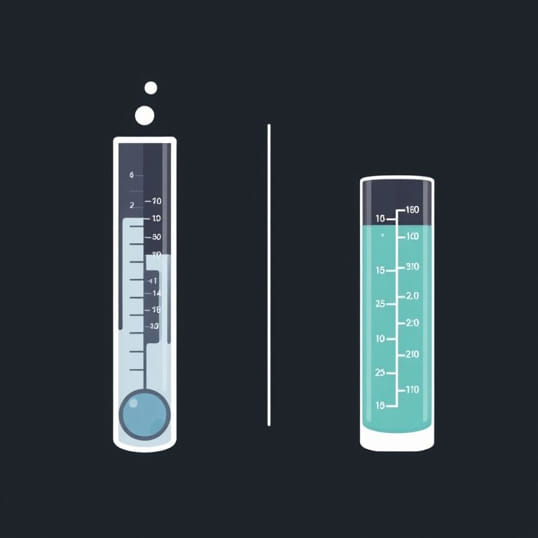
Compare Mercury And Alcohol As Thermometric Liquid
Thermometers are essential instruments used to measure temperature in various scientific, industrial, and everyday applications. Among the many types of thermometers, liquid-in-glass thermometers are widely recognized for their simplicity, accuracy, and reliability. Two of the most commonly used liquids in these thermometers are mercury and alcohol. Each thermometric liquid has unique properties that affect its suitability for different temperature ranges and applications. Comparing mercury and alcohol as thermometric liquids provides insights into their advantages, limitations, and practical uses, helping users select the appropriate thermometer for specific needs. Understanding these differences is crucial for accurate temperature measurement and ensuring safety in diverse environments.
Physical Properties of Mercury and Alcohol
Mercury and alcohol have distinct physical properties that make them suitable for different temperature measurement applications. These properties include density, thermal expansion, freezing and boiling points, and visibility, all of which influence their performance as thermometric liquids.
Mercury
Mercury is a dense, silvery liquid metal with a high coefficient of thermal conductivity. It remains liquid over a wide range of temperatures, from approximately -39°C to 356°C. This wide temperature range allows mercury thermometers to measure relatively high temperatures accurately. Mercury expands uniformly with temperature, providing precise and consistent readings. Additionally, mercury’s metallic nature makes it easily visible in a narrow glass capillary tube due to its shiny surface.
Alcohol
Alcohol, commonly dyed red or blue for visibility, is a liquid with lower density than mercury. It has a much lower freezing point, around -114°C for ethanol, making alcohol thermometers ideal for extremely cold environments where mercury would solidify. The boiling point of alcohol is around 78°C, which limits its use for very high-temperature measurements. Alcohol expands more than mercury for the same temperature change, allowing alcohol thermometers to detect smaller temperature variations with greater sensitivity. However, alcohol’s transparency requires coloring to enhance visibility in the thermometer tube.
Range and Accuracy
The measurement range and accuracy of a thermometer are directly influenced by the choice of thermometric liquid. Mercury and alcohol thermometers serve different needs based on these characteristics.
Temperature Range
- Mercury ThermometersIdeal for high-temperature measurements due to mercury’s high boiling point, capable of measuring temperatures from -39°C to 356°C.
- Alcohol ThermometersSuitable for very low temperatures due to alcohol’s low freezing point, effective for measurements down to -100°C or lower, but limited at high temperatures above 78°C.
Accuracy and Sensitivity
Mercury thermometers are known for their high accuracy and stability. Mercury’s uniform expansion and low vapor pressure reduce measurement errors, making these thermometers reliable for precise laboratory work. Alcohol thermometers, while slightly less precise, offer higher sensitivity for small temperature changes due to alcohol’s greater thermal expansion. This makes alcohol thermometers suitable for applications where detecting minor variations in temperature is important, such as meteorology or environmental monitoring.
Safety Considerations
Safety is a significant factor when choosing between mercury and alcohol thermometers. Both liquids present different hazards that influence their practical use in various environments.
Mercury Hazards
Mercury is toxic and poses health risks if inhaled or ingested. Breakage of a mercury thermometer can release mercury vapor, which is hazardous and requires careful cleanup procedures. Due to these risks, the use of mercury thermometers is restricted in many regions, and safer alternatives are encouraged for educational and household purposes.
Alcohol Safety
Alcohol is flammable, which requires caution when using alcohol thermometers near open flames or high heat sources. However, alcohol is less toxic than mercury, and spills are generally easier and safer to handle. Dyed alcohol thermometers are commonly used in schools, homes, and outdoor environments due to their lower health risk.
Applications and Practical Uses
Both mercury and alcohol thermometers are chosen based on the specific temperature range and environmental conditions of their intended applications.
Mercury Thermometers
- Laboratory experiments requiring high precision.
- Industrial processes involving high temperatures, such as furnaces or chemical reactions.
- Medical thermometers for clinical use (though increasingly replaced by digital alternatives).
Alcohol Thermometers
- Meteorological measurements, including outdoor temperature monitoring in extreme cold.
- Scientific research in cryogenics or low-temperature experiments.
- Educational demonstrations where safety is a priority.
Environmental and Economic Factors
The choice between mercury and alcohol also involves environmental and cost considerations. Mercury extraction and disposal have significant environmental impacts due to its toxicity and persistence in the environment. Alcohol, being less harmful and biodegradable, presents a more eco-friendly option. Economically, alcohol thermometers are generally cheaper to produce, making them accessible for widespread use in schools and outdoor monitoring stations.
Durability and Maintenance
Mercury thermometers are highly durable and maintain accuracy over long periods if handled properly. Alcohol thermometers are more susceptible to evaporation or leakage, but proper sealing and maintenance can extend their usability. The choice of thermometric liquid must balance durability, cost, and environmental impact.
Comparing mercury and alcohol as thermometric liquids highlights their distinct advantages and limitations. Mercury offers high precision, stability, and a broad high-temperature range, making it suitable for laboratory and industrial applications. However, mercury’s toxicity and environmental risks necessitate careful handling and often limit its use. Alcohol, on the other hand, is ideal for very low temperatures, offers high sensitivity, and is safer for educational and outdoor applications, though it is limited at high temperatures and flammable. Understanding these differences allows users to select the most appropriate thermometric liquid for specific needs, ensuring accurate, safe, and efficient temperature measurement. Both mercury and alcohol thermometers continue to play important roles in science, education, and industry, each serving unique functions that complement the other in measuring and understanding temperature variations across diverse environments.
Ultimately, the choice between mercury and alcohol thermometers depends on factors such as temperature range, accuracy requirements, safety, environmental considerations, and application context. By evaluating these aspects carefully, users can make informed decisions that optimize performance, reliability, and safety while minimizing health and environmental risks. The ongoing comparison between these two thermometric liquids reflects the broader need in science and engineering to balance precision, practicality, and responsibility in measurement tools.