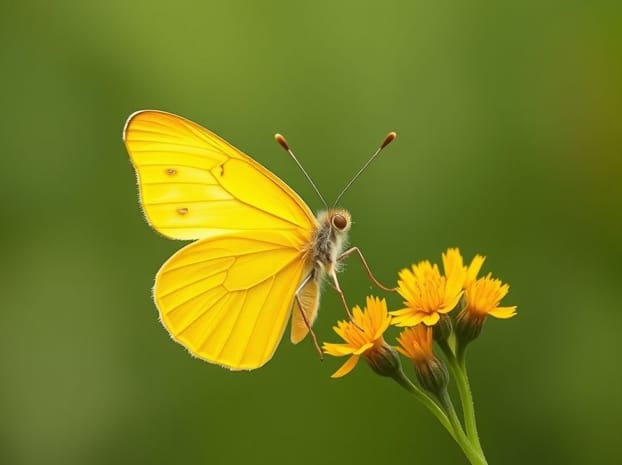
Cloudless Giant Sulphur Butterfly
The cloudless giant sulphur butterfly, scientifically known asPhoebis sennae, is a striking and vibrant species that captivates both amateur and professional lepidopterists. Known for its bright yellow coloration and large wingspan, this butterfly is commonly found across the Americas, from the southern United States to South America. Its presence in gardens, meadows, and open fields makes it a familiar yet fascinating sight. Observing the cloudless giant sulphur butterfly offers insight into its life cycle, behavior, and ecological role, highlighting its importance within natural habitats and the broader ecosystem.
Physical Characteristics
The cloudless giant sulphur butterfly is notable for its vivid coloration and substantial size. Adult butterflies typically have a wingspan ranging from 7 to 10 centimeters, making them one of the larger sulphur species. Their bright yellow wings are often marked with subtle orange or black spots, which can vary depending on sex and geographical location. Male butterflies usually have brighter and more uniform coloration, while females may display additional markings for camouflage and protection against predators.
Wing Structure and Flight
The wing structure of the cloudless giant sulphur butterfly allows for strong and graceful flight. Its broad wings enable long-distance travel, which is especially important during seasonal migrations. The butterfly’s flight is characterized by a slow, deliberate pattern that helps it conserve energy while navigating open spaces and searching for nectar sources. This adaptation makes it highly efficient in exploring large areas and finding suitable habitats.
Habitat and Distribution
Cloudless giant sulphur butterflies thrive in warm climates and are highly adaptable to various environments. They are commonly found in tropical and subtropical regions, including forests, grasslands, and cultivated gardens. Open fields, roadsides, and meadows provide ideal conditions for foraging and breeding. Their adaptability allows them to occupy diverse ecological niches, from lowland areas to higher elevations in mountainous regions.
Geographical Range
- Southern United States, including Florida and Texas
- Central America, encompassing countries like Mexico, Costa Rica, and Panama
- South America, including Brazil, Argentina, and Colombia
This wide distribution highlights the species’ resilience and ability to thrive under varying climatic and environmental conditions. Seasonal migrations are common in northern ranges, with butterflies moving southward to avoid cooler temperatures and ensure survival during colder months.
Life Cycle and Reproduction
The life cycle of the cloudless giant sulphur butterfly consists of four stages egg, larva (caterpillar), pupa (chrysalis), and adult butterfly. Each stage is crucial for the species’ development and survival. Females lay eggs on host plants, particularly members of the legume family, including senna species, which provide essential nutrients for growing larvae.
Caterpillar Stage
Larvae are bright green with small black or white markings, allowing them to blend in with the foliage and avoid predators. During this stage, caterpillars feed voraciously on host plants to accumulate energy for metamorphosis. The growth and health of the larva are critical for successful pupation and eventual emergence as an adult butterfly.
Pupation and Adult Emergence
Once fully grown, the caterpillar forms a chrysalis, within which it undergoes metamorphosis. The pupal stage is a period of transformation, where internal structures are reorganized to create wings, antennae, and other adult features. After several days to weeks, depending on environmental conditions, the adult butterfly emerges, ready to feed, reproduce, and continue the species’ life cycle.
Feeding Behavior
Cloudless giant sulphur butterflies primarily feed on nectar from a variety of flowering plants. They have a long proboscis that allows them to reach deep into flowers to extract nutrients. Nectar sources include lantana, bougainvillea, and milkweed, among others. Feeding behavior is not only vital for individual survival but also supports pollination, making these butterflies important contributors to ecosystem health.
Role in Pollination
- Transfers pollen between flowers, aiding in plant reproduction
- Supports the growth of fruit and seed-bearing plants
- Enhances biodiversity within local ecosystems
- Maintains ecological balance by connecting plants and other pollinators
By visiting multiple plants during feeding, cloudless giant sulphur butterflies facilitate cross-pollination, which is essential for the genetic diversity and resilience of plant populations.
Predators and Survival Strategies
Despite their bright coloration, these butterflies face predation from birds, spiders, and other insectivores. Their coloration can serve as a warning or deterrent, signaling potential unpalatability to some predators. Additionally, their strong and agile flight helps them escape from threats, while camouflage during the larval stage provides protection against predators.
Adaptive Behaviors
- Seasonal migration to avoid unfavorable weather and reduce predation risk
- Use of host plants for camouflage during the larval stage
- Quick, high flight patterns to evade predators
- Bright coloration to signal potential toxicity or unpalatability
Conservation and Environmental Impact
While the cloudless giant sulphur butterfly is currently not considered endangered, its survival depends on the preservation of habitats and host plants. Urbanization, deforestation, and pesticide use can negatively impact populations by reducing available nectar sources and breeding grounds. Promoting butterfly-friendly gardens and natural habitats helps maintain healthy populations and contributes to broader biodiversity conservation.
How to Support Butterfly Populations
- Plant native flowering plants and legumes to provide food and breeding sites
- Limit pesticide use in gardens and public spaces
- Create open spaces with sunlight and shelter for resting and mating
- Participate in citizen science programs to monitor local butterfly populations
By taking these measures, individuals can support the survival of cloudless giant sulphur butterflies and other pollinator species, which are vital for maintaining ecological balance and healthy ecosystems.
The cloudless giant sulphur butterfly is a remarkable species that combines striking beauty with ecological importance. Its bright yellow wings, large wingspan, and widespread distribution make it a familiar and admired insect across the Americas. From its intricate life cycle to its role in pollination and contribution to biodiversity, this butterfly highlights the interconnectedness of species and ecosystems. Observing and preserving the cloudless giant sulphur butterfly encourages appreciation for nature and supports broader conservation efforts. Through awareness, habitat protection, and responsible gardening practices, individuals can help ensure that these magnificent butterflies continue to thrive and inspire future generations.