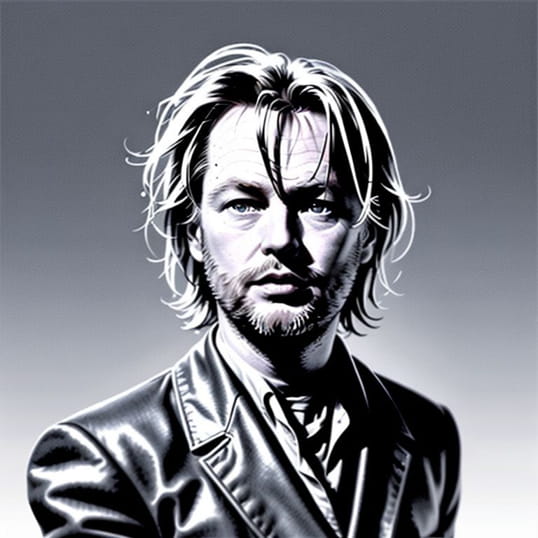
Christopher Nolan Nicolas Roeg
Christopher Nolan, one of the most influential filmmakers of the 21st century, has often cited a wide array of inspirations throughout his career, with one particularly notable influence being the legendary British director Nicolas Roeg. Roeg, known for his groundbreaking work in visual storytelling and unconventional narrative structures, left an indelible mark on the cinema world. Nolan’s admiration for Roeg is evident in the way he experiments with time, narrative fragmentation, and visual composition in films like Memento,” “Inception,” and “Tenet.” Understanding the connection between these two directors offers a fascinating glimpse into how cinematic legacies are passed down and reinterpreted across generations.
Nicolas Roeg’s Cinematic Style
Nicolas Roeg was renowned for his innovative approach to filmmaking, particularly during the 1970s and 1980s. His films often challenge traditional storytelling by embracing nonlinear narratives and complex temporal structures. Movies like “Performance” (1970), “Don’t Look Now” (1973), and “The Man Who Fell to Earth” (1976) exemplify his ability to weave psychological depth with visually striking imagery. Roeg’s editing style frequently juxtaposes disparate scenes, creating a dreamlike, sometimes disorienting effect that forces viewers to actively engage with the story rather than passively consume it.
Visual Innovation
Roeg’s work is characterized by bold cinematography and innovative camera techniques. He often uses juxtaposition and montage to convey psychological tension, memory, and perception. His films tend to explore the subconscious mind, blending surreal imagery with raw emotion, which has inspired numerous filmmakers to rethink how visual storytelling can evoke both intellectual and emotional responses. Christopher Nolan, in particular, has cited these elements as foundational to his own visual experimentation, especially in scenes where time and perception are manipulated to create suspense and narrative complexity.
Christopher Nolan’s Homage to Roeg
Christopher Nolan’s films frequently reflect a deep engagement with the ideas pioneered by Nicolas Roeg. In “Memento,” for instance, Nolan employs a reverse chronological structure that mirrors Roeg’s fascination with fractured timelines and memory. The narrative disorientation in “Memento” echoes Roeg’s approach in films like “Don’t Look Now,” where past, present, and subjective experiences intertwine to create a layered storytelling experience. Nolan has acknowledged that Roeg’s fearless experimentation gave him the confidence to explore unconventional narrative frameworks in mainstream cinema.
Time and Narrative Structure
Nolan’s preoccupation with time as a narrative device is perhaps his most direct connection to Roeg’s influence. In “Inception,” the multiple dream layers and simultaneous temporal flows evoke the fragmented, surreal time schemes that Roeg often utilized. Similarly, “Tenet” plays with time inversion in a manner reminiscent of Roeg’s nonlinear editing, challenging audiences to consider causality, perception, and the subjective nature of reality. Roeg’s influence is evident in Nolan’s willingness to blend psychological depth with intricate plot structures, resulting in films that reward careful attention and repeated viewings.
Psychological Depth and Character Study
Both directors share a commitment to exploring the human psyche in unconventional ways. Roeg often delved into the psychological and emotional states of his characters, using visual motifs to externalize internal conflicts. Nolan similarly constructs characters whose decisions and experiences are deeply intertwined with the manipulation of time and memory. The meticulous attention to character psychology in Nolan’s films, from Leonard Shelby in “Memento” to Dom Cobb in “Inception,” can be traced back to the narrative sensibilities championed by Roeg decades earlier.
Legacy of Influence
The connection between Christopher Nolan and Nicolas Roeg underscores the enduring impact of cinematic innovation. Roeg’s willingness to experiment and challenge narrative conventions paved the way for filmmakers like Nolan to expand the boundaries of mainstream storytelling. While Nolan’s films achieve a level of commercial success and global recognition that Roeg’s did not always enjoy, the stylistic and conceptual debt to Roeg is undeniable. Both directors share a fascination with memory, perception, and the human mind, though each interprets these themes through their unique cinematic lens.
Critical Reception and Scholarly Analysis
Film critics and scholars have noted the parallels between Roeg and Nolan, often highlighting the thematic and visual connections. Academic discussions point to Roeg’s nonlinear editing, psychological depth, and innovative camera work as formative influences that Nolan adapted and evolved for contemporary audiences. In interviews, Nolan has explicitly mentioned studying Roeg’s techniques and filmography, emphasizing the importance of understanding cinematic history to innovate effectively. This interplay between homage and innovation exemplifies how filmmakers honor predecessors while forging their own artistic identity.
Audience Engagement
The influence of Roeg on Nolan also affects how audiences experience the films. By employing complex narratives and unconventional structures, Nolan encourages viewers to actively interpret and engage with the story, a technique popularized by Roeg. The interplay of visual storytelling and fragmented narrative challenges audiences to piece together meaning, creating a more immersive and intellectually stimulating cinematic experience. Fans of both directors often cite the psychological and emotional engagement of their films as a major reason for their lasting appeal.
Christopher Nolan’s work demonstrates the profound impact of Nicolas Roeg’s pioneering approach to filmmaking. From nonlinear narratives to psychological exploration and innovative visual techniques, Nolan’s films are both a tribute to and an evolution of Roeg’s cinematic legacy. By studying Roeg’s contributions, Nolan was able to create films that combine intellectual rigor, emotional depth, and visual mastery, establishing himself as one of the most influential directors of his generation. The connection between these two filmmakers highlights the importance of mentorship, inspiration, and the continual reinterpretation of artistic ideas across time, showing how the legacy of one generation can profoundly shape the artistry of the next.