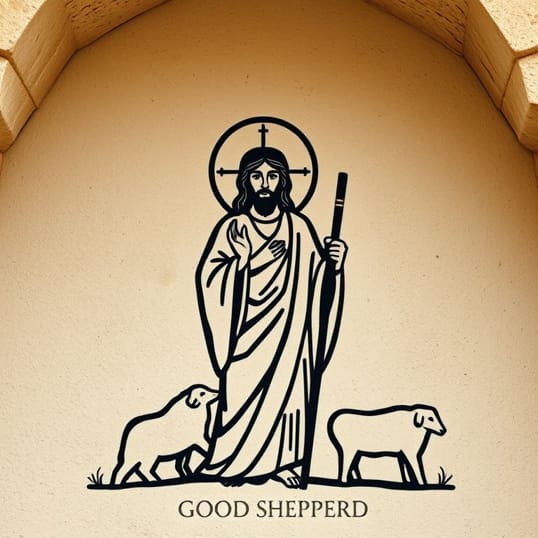
Christ As Good Shepherd From The Catacomb Of Priscilla
The image of Christ as the Good Shepherd is one of the earliest and most powerful symbols of Christian art, particularly in the Catacomb of Priscilla in Rome. Created during a time when Christians were still a persecuted minority, this image combines simple artistry with profound meaning. The fresco depicts Christ carrying a lamb on his shoulders while surrounded by other sheep, a scene filled with tenderness, protection, and guidance. It is more than a piece of ancient art; it is a visual sermon that reflects the early Christian understanding of Jesus as the shepherd who lays down his life for his flock. This symbol continues to resonate because it captures the essence of care, sacrifice, and spiritual leadership in a way that is both timeless and deeply human.
Historical Background of the Catacomb of Priscilla
The Catacomb of Priscilla, located along the Via Salaria in Rome, is one of the most important burial sites for early Christians. Dating back to the 2nd century, it served not only as a resting place for the faithful but also as a space for worship and expression of Christian identity. The catacomb contains numerous frescoes, symbols, and inscriptions that reflect the beliefs and hopes of the early church community.
Among these works, the fresco of Christ as the Good Shepherd stands out as a central image. Painted at a time when open displays of Christianity were dangerous, the art served as a coded form of communication. The figure of the shepherd, which could be interpreted as a simple pastoral scene, carried profound spiritual meaning for those who understood its biblical references.
The Image of the Good Shepherd
The fresco shows a youthful figure dressed in simple attire, holding a lamb across his shoulders and surrounded by sheep. The image is not grand or regal but rather humble and approachable. This simplicity reflects the early Christian emphasis on Jesus as a caring and protective guide, one who is close to his followers and attentive to their needs.
Biblical Inspiration
The Good Shepherd imagery is rooted in scripture. In the Gospel of John, Jesus declares, I am the good shepherd. The good shepherd lays down his life for the sheep. This passage emphasizes sacrifice, responsibility, and unconditional love. The image in the Catacomb of Priscilla visually captures these words, presenting Christ as a figure of compassion and dedication.
Symbolism of the Sheep and Lamb
The sheep represent the Christian community, often vulnerable and in need of protection. The lamb carried on the shoulders of Christ symbolizes the lost or weak believer being rescued and cared for. This visual metaphor communicates the idea that no one is too small or insignificant to receive Christ’s care and guidance.
Why the Good Shepherd Was Significant to Early Christians
During the early centuries of Christianity, believers faced persecution, social exclusion, and even death for their faith. The image of the Good Shepherd offered comfort and reassurance. It reminded them that Christ was present, guiding and protecting his followers even in times of great danger.
- Comfort in persecutionThe fresco reassured Christians that they were not abandoned, even in suffering.
- Identity and belongingThe image created a sense of unity among believers, portraying them as sheep cared for by one shepherd.
- Hope of salvationThe shepherd’s role as protector and rescuer pointed to eternal life and safety in Christ’s presence.
Artistic Style and Influence
The fresco of Christ as the Good Shepherd is painted in a simple Roman style, reflecting the artistic techniques of the time. It draws upon familiar imagery from Greco-Roman culture, where shepherds were often used as symbols of care and pastoral life. By adopting this style, early Christians created art that was both relatable to the surrounding culture and deeply rooted in their own beliefs.
This blending of cultural imagery and spiritual meaning allowed the fresco to serve as both a protective disguise and a bold statement of faith. The shepherd, a common figure in Roman art, became transformed into a powerful symbol of Christ’s presence and role as redeemer.
Theological Meaning of the Good Shepherd Image
Beyond its visual simplicity, the image conveys deep theological truths. It presents Christ not as a distant king but as a humble caretaker. This portrayal emphasizes accessibility, compassion, and personal connection. For early Christians, the Good Shepherd illustrated the idea of Jesus as both divine and intimately involved in human lives.
Christ’s Role as Protector
The shepherd protects the flock from harm, symbolizing Christ’s role in guiding believers through life’s dangers and temptations. This protective quality reassured Christians that they were safe under his care.
Christ’s Sacrificial Love
The act of carrying the lamb illustrates sacrifice and service. It visually represents the willingness of Jesus to bear the burdens of humanity, echoing his ultimate sacrifice on the cross.
Universal Care
The shepherd tends to all sheep, not just the strong or healthy. This inclusivity reflects the Christian message that Christ’s love extends to every believer, regardless of their weaknesses or struggles.
Legacy of the Good Shepherd Symbol
The image of Christ as the Good Shepherd from the Catacomb of Priscilla did not remain confined to the early church. It influenced Christian art for centuries, appearing in mosaics, sculptures, and paintings throughout Europe and beyond. The symbol became one of the most enduring representations of Christ’s relationship with humanity.
- In medieval artThe Good Shepherd was often depicted in illuminated manuscripts and church decorations.
- In modern worshipThe image continues to be used in churches, hymns, and stained-glass windows as a reminder of Christ’s care.
- In personal devotionMany believers still find comfort in the symbol, using it as a focus for prayer and reflection.
Cultural and Spiritual Impact
For early Christians, the fresco was more than decoration; it was a declaration of faith. It showed that their hope and trust were in Christ, even when society rejected them. For modern viewers, the fresco continues to inspire reflection on the qualities of love, sacrifice, and protection. The cultural impact of this image extends beyond religion, as it represents universal values of care and guidance that are meaningful to people across time and tradition.
The depiction of Christ as the Good Shepherd in the Catacomb of Priscilla is a powerful example of how art, faith, and history intersect. In its simplicity, the fresco communicates profound truths about protection, sacrifice, and belonging. For the early church, it was a symbol of comfort during persecution, and for today’s world, it remains a reminder of the compassionate and guiding presence of Christ. This image, preserved in the darkness of the catacombs, continues to shine as a testimony to the enduring message of the Good Shepherd who never abandons his flock.