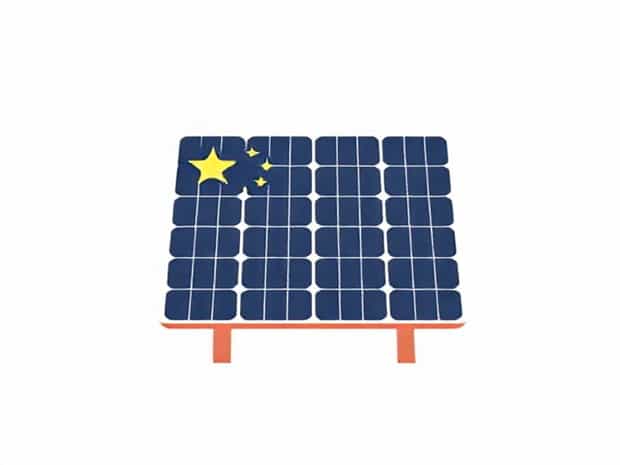
China Solar Panel Overcapacity
In recent years, China has become the undisputed leader in solar panel production, supplying the majority of the world’s photovoltaic modules. While this dominance has accelerated the adoption of renewable energy worldwide, it has also created a new challenge solar panel overcapacity. The issue arises when production far exceeds demand, leading to falling prices, intense competition, and financial strain on manufacturers. Understanding the problem of China’s solar panel overcapacity requires looking at its causes, global implications, and potential solutions for the future of clean energy.
Background of China’s Solar Industry
China began investing heavily in solar technology in the early 2000s, supported by government subsidies and strategic policies to establish global dominance in clean energy manufacturing. Today, Chinese companies account for more than 80% of the world’s solar panel production, from polysilicon to finished modules. This large-scale production capacity was initially celebrated as a way to drive down costs and accelerate renewable energy adoption. However, the rapid expansion of factories has led to significant overcapacity, creating more supply than the market can absorb.
What is Solar Panel Overcapacity?
Solar panel overcapacity occurs when the total production of panels surpasses the amount of global demand. Instead of matching market needs, manufacturers continue to increase output, leading to excess inventory. While this might result in cheaper panels for consumers and solar developers, it creates a challenging environment for producers, many of whom struggle to remain profitable under shrinking margins.
Key Indicators of Overcapacity
- Production capacity far exceeding installation rates in domestic and global markets.
- Falling solar panel prices due to surplus supply.
- Financial difficulties and bankruptcies among smaller solar manufacturers.
- Intensified trade tensions as countries impose tariffs on Chinese panels.
Causes of China’s Solar Panel Overcapacity
Several factors have contributed to the overcapacity situation in China’s solar industry. These include government policy, international competition, and rapid technological development.
Government Support and Subsidies
The Chinese government has long supported solar energy through subsidies, low-interest loans, and favorable policies. While these measures accelerated growth, they also encouraged excessive expansion, with many companies building factories without fully considering long-term demand.
Global Market Competition
To maintain their competitive edge, Chinese manufacturers increased production capacity aggressively. This strategy, while successful in capturing market share, has contributed to oversupply as companies flood both domestic and international markets with panels.
Technological Advancements
Rapid improvements in solar cell efficiency and design have pushed companies to upgrade and expand manufacturing lines. However, as older panels quickly become outdated, inventories pile up, and competition to sell newer models further intensifies.
Impacts of Solar Panel Overcapacity
The consequences of China’s solar panel overcapacity extend beyond the country itself, influencing global energy markets, trade relations, and environmental strategies.
Falling Prices and Industry Pressure
One of the most immediate impacts of overcapacity is the significant drop in solar panel prices. While this benefits consumers and accelerates renewable energy adoption, manufacturers especially smaller ones face shrinking profit margins and financial instability.
Trade Disputes and Tariffs
Countries such as the United States, India, and members of the European Union have imposed tariffs and trade barriers on Chinese solar panels, accusing the industry of dumping products at below-market prices. These disputes create uncertainty in the global solar market and limit opportunities for free trade.
Environmental Considerations
While overcapacity has made solar power more affordable, it has also raised environmental concerns. Excess production requires vast amounts of energy and raw materials, and discarded or outdated panels create waste management challenges. Balancing affordability with sustainability remains a key issue.
Global Implications of China’s Solar Strategy
The dominance of Chinese manufacturers has reshaped the renewable energy landscape worldwide. On one hand, it has accelerated global solar adoption by making panels more accessible. On the other hand, it has concentrated production in one country, creating dependency risks for other nations seeking to develop independent clean energy industries.
Benefits for Global Renewable Energy Growth
- Lower costs for solar power installations worldwide.
- Faster transition to clean energy in developing countries.
- Increased innovation and efficiency in solar technology.
Challenges for Other Countries
- Difficulty for local manufacturers to compete with Chinese pricing.
- Potential reliance on a single supply chain source for renewable energy infrastructure.
- Economic risks if China reduces exports or prioritizes domestic demand.
Possible Solutions to Overcapacity
Addressing China’s solar panel overcapacity requires a combination of policy reform, market diversification, and innovation. Both China and the international community have roles to play in balancing production and demand.
Domestic Policy Adjustments
China could reduce subsidies that encourage overproduction and shift toward policies that emphasize quality, innovation, and sustainability. Encouraging mergers and consolidation may also help reduce the number of small, financially unstable manufacturers.
Expanding Global Demand
One way to address oversupply is to stimulate higher demand for solar energy in emerging markets. Infrastructure investments, international cooperation, and renewable energy financing can help create new markets for solar panels.
Innovation and Diversification
Investing in next-generation solar technologies such as perovskite cells, energy storage, and integrated solar systems can reduce reliance on conventional panels and open new revenue streams. Companies that diversify beyond panels into broader clean energy solutions may also become more resilient.
Future Outlook
The issue of solar panel overcapacity is not unique to China but is magnified by the country’s scale of production. As global demand for clean energy continues to rise, some of the excess supply may be absorbed. However, without careful planning, the cycle of boom and bust in the solar industry may continue. Collaboration between governments, businesses, and international organizations will be essential to create a balanced and sustainable solar energy market.
China’s solar panel overcapacity highlights both the opportunities and challenges of rapid renewable energy growth. While cheap panels have made solar power more accessible than ever, oversupply has led to financial strain, trade disputes, and environmental concerns. Addressing this issue requires policy reforms, global cooperation, and technological innovation. Ultimately, finding a balance between affordability, sustainability, and fair competition will determine the future of solar energy as a cornerstone of the global transition to clean power.