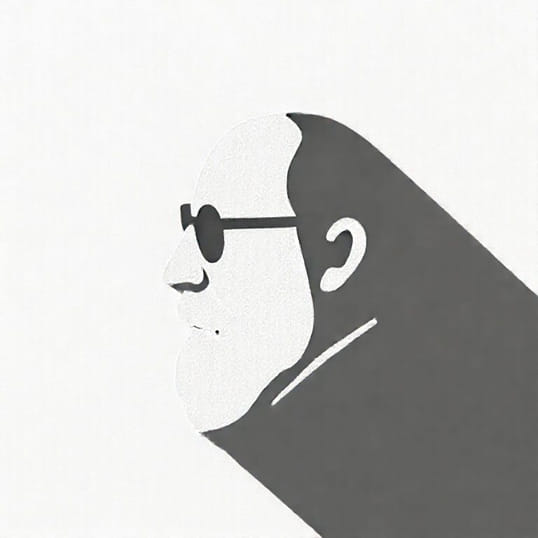
Charles Sanders Peirce’S Semiotic Theory
Charles Sanders Peirce, an American philosopher, logician, and scientist, developed one of the most influential semiotic theories in history. His approach to signs and meaning has shaped linguistics, philosophy, communication studies, and cultural theory. Peirce believed that human thought and communication are structured around signs, which serve as mediators between objects, ideas, and interpretation. Unlike simple definitions of language, his theory dives into how humans make sense of reality itself through a dynamic process of sign interpretation. Understanding Peirce’s semiotic theory is essential to exploring the foundations of meaning, knowledge, and communication in both everyday life and scientific inquiry.
Peirce’s Concept of Semiotics
Semiotics is the study of signs and symbols, including how they represent and communicate ideas. For Peirce, semiotics was not just about language or words, but about the way humans interpret the world. He argued that everything we know and understand comes through signs. This broad perspective made his theory much deeper than many other approaches of his time.
Peirce defined a sign as something that stands to somebody for something in some respect. This definition is crucial because it highlights the relational nature of meaning. A sign always involves a connection between three elements the sign itself, the object it represents, and the interpretation by a mind.
The Triadic Model of Signs
One of Peirce’s most significant contributions is his triadic model of signs. Unlike Ferdinand de Saussure’s dyadic model that emphasized a signifier and signified, Peirce introduced three interconnected components
- Representamen– the form which the sign takes. It could be a word, image, sound, or any symbol that conveys meaning.
- Object– the actual thing or concept that the sign refers to. This can be physical, abstract, or even imagined.
- Interpretant– the meaning produced in the mind of the interpreter. It is not the object itself, but the understanding formed by encountering the sign.
This triadic relationship ensures that signs are never fixed. Meaning evolves depending on context and interpretation, making communication a continuous process of negotiation.
Types of Signs
Peirce classified signs into three main categories based on their relationship to the object they represent. These categories are still widely studied and applied in many disciplines today.
Icon
An icon is a sign that resembles its object. The relationship is based on similarity. Examples include photographs, drawings, or even sound effects that mimic real noises. For instance, a map is iconic because it visually represents geographical areas.
Index
An index is a sign that has a direct connection to its object. This connection is often physical or causal. Smoke indicates fire, a footprint points to someone’s presence, and a weather vane shows the direction of the wind. The index is powerful because it links signs with reality through evidence.
Symbol
A symbol is a sign whose connection to its object is based on convention or agreement. Words are the clearest example there is no natural reason why the word tree should refer to the object we recognize as a tree, but language users agree on this association. Symbols dominate human communication because they depend on shared cultural understanding.
The Process of Semiosis
Peirce described semiosis as the ongoing process by which signs create meaning. When someone encounters a sign, they form an interpretant. That interpretant can itself become another sign, leading to further interpretation. This chain is infinite, reflecting the complexity of meaning-making.
For example, seeing a red traffic light (representamen) refers to the object of stopping vehicles, and the interpretant is the understanding that one must halt. The interpretant may lead to another chain of thought, such as associating the act of stopping with safety. Thus, meaning is dynamic and constantly evolving.
Categories of Signs Beyond the Basics
While the iconic, indexical, and symbolic classification is most famous, Peirce’s semiotic theory is much broader. He developed a complex typology with ten classes of signs, extending from the most basic perceptual forms to highly abstract symbolic systems. This shows how rich and flexible his model is for understanding communication.
Philosophical Foundations
Peirce’s theory was rooted in pragmatism, a philosophical movement that emphasized the practical effects of concepts and beliefs. For him, the meaning of a sign lay in its conceivable practical consequences. This view ensured that semiotics was not a detached theory but a tool for understanding real-world reasoning and problem-solving.
He also connected semiotics to his broader metaphysical categories firstness (possibility and quality), secondness (existence and reaction), and thirdness (law and mediation). These categories influenced his classification of signs and gave his theory a unique philosophical depth.
Applications of Peirce’s Semiotic Theory
Although Peirce lived in the 19th and early 20th centuries, his semiotic theory remains highly relevant today. It has influenced fields such as
- Linguistics– explaining how words function as signs and how meaning shifts with interpretation.
- Media studies– analyzing how images, films, and advertisements construct meaning through icons, indexes, and symbols.
- Anthropology– studying cultural symbols and rituals as systems of signification.
- Philosophy of science– exploring how scientific concepts are signs that help interpret natural phenomena.
- Communication theory– understanding human interaction as a chain of semiotic processes.
Peirce and Modern Communication
In the digital age, Peirce’s ideas are more significant than ever. Social media, digital icons, emojis, and online communication all rely on the interplay of icons, indexes, and symbols. For instance, an emoji may function as an icon when it resembles a facial expression, an index when it reflects an emotional state, and a symbol when its meaning is culturally agreed upon. Peirce’s triadic model explains how these forms of communication remain fluid and open to multiple interpretations.
Strengths of Peirce’s Semiotics
Several features make Peirce’s semiotic theory stand out
- Its triadic structure captures the complexity of meaning better than simpler models.
- It accommodates both linguistic and non-linguistic signs, making it versatile.
- It explains how meaning evolves dynamically over time through semiosis.
- It bridges philosophy, logic, and communication, offering a comprehensive framework.
Critiques and Limitations
While Peirce’s semiotics is influential, it is also complex and sometimes difficult to grasp. His writings are dense and filled with technical terminology, which can make them challenging for beginners. Some scholars argue that his classifications are overly detailed, making practical application complicated. Nonetheless, the richness of his theory ensures that it remains a powerful resource for researchers.
Charles Sanders Peirce’s semiotic theory is one of the most comprehensive frameworks for understanding signs and meaning. His triadic model of representamen, object, and interpretant provides a flexible way to explain communication. By categorizing signs into icons, indexes, and symbols, he offered a toolkit that still resonates in fields ranging from linguistics to digital communication. The ongoing process of semiosis highlights the fluid and evolving nature of meaning, reminding us that interpretation never truly ends. Although complex, Peirce’s ideas remain indispensable for anyone interested in the foundations of communication, thought, and human understanding.
In a world saturated with signsfrom traffic symbols to online memesPeirce’s insights continue to help us decode the messages around us. His semiotic theory is not only a cornerstone of academic study but also a guide for making sense of everyday life. By recognizing how signs shape our reality, we gain deeper awareness of how meaning is constructed, shared, and transformed.