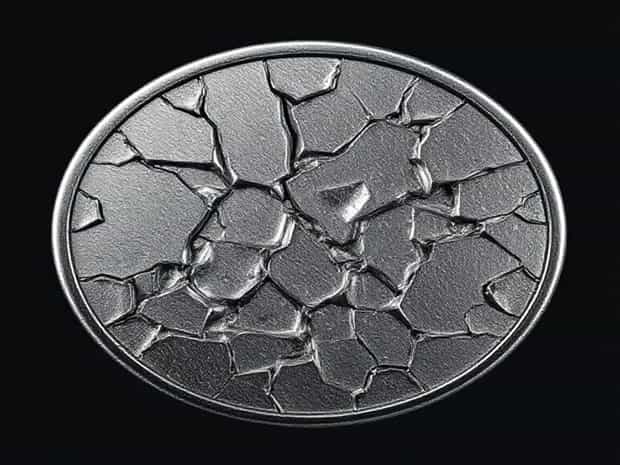
Brittle Metal Or Nonmetal
When people study the differences between metals and nonmetals, one property that often becomes important is brittleness. This characteristic refers to how easily a material breaks, shatters, or cracks when stress is applied. Unlike toughness or malleability, brittleness shows the inability of a material to bend or deform without breaking. The question of whether brittle materials are more commonly metals or nonmetals requires an understanding of chemical bonding, atomic structure, and physical behavior. Exploring the nature of brittle metal or nonmetal substances helps in identifying their applications and limitations in science, engineering, and everyday life.
Understanding Brittleness
Brittleness is defined as the tendency of a substance to fracture or break with little deformation. Materials that are brittle often do not bend or stretch under pressure; instead, they snap when the stress exceeds their limits. Glass, for example, is a classic brittle nonmetallic material. On the other hand, certain metals can also be brittle, especially when they are subjected to specific conditions such as low temperatures or alloying with other elements.
Difference Between Brittle and Ductile
To understand brittle metal or nonmetal substances, it is important to compare brittleness with ductility
- Brittle materialsBreak easily under stress, little to no plastic deformation.
- Ductile materialsCan stretch, bend, or deform without breaking, like copper or gold.
This contrast highlights why brittleness is a key property in determining whether a material is suitable for building structures, conducting electricity, or serving as a protective layer.
Brittle Metals
While many metals are known for being ductile and malleable, not all exhibit these properties. Some metals are naturally brittle or can become brittle under certain conditions. Examples include
- Cast ironA common brittle metal due to its high carbon content.
- BismuthBreaks easily and lacks flexibility.
- ZincBrittle at room temperature but becomes ductile when heated slightly.
Why Some Metals Are Brittle
Brittleness in metals usually results from their crystal structure and bonding. For instance, when metals have large amounts of impurities or are combined with nonmetals in alloys, their atomic layers cannot slide easily. This makes the material prone to breaking rather than bending. Temperature can also play a role; some metals are ductile at room temperature but become brittle in colder environments.
Brittle Nonmetals
Nonmetals are more commonly associated with brittleness than metals. Their atomic structures often rely on covalent bonding, which does not allow layers of atoms to slide over one another. This explains why many nonmetals shatter instead of deforming when stressed. Examples of brittle nonmetals include
- Carbon in diamond formVery strong but breaks when hit with enough force.
- SulfurCrumbles easily when pressure is applied.
- PhosphorusCertain forms are brittle and cannot bend without breaking.
Glassy and Crystalline Structures
Nonmetals that form glassy or crystalline structures, such as quartz or diamond, are often brittle. The tightly packed atoms provide strength but limit flexibility. When enough energy is applied, these materials fracture instead of bending. This brittleness makes them useful in applications where hardness is important, but unsuitable for situations that require flexibility.
Metalloids and Brittleness
Metalloids, which have properties of both metals and nonmetals, often exhibit brittleness as well. For example, silicon and arsenic are brittle despite having some metallic characteristics. These substances break easily under stress, which is why they are used in electronics but not in structural materials.
Testing for Brittleness
Scientists and engineers often test materials for brittleness to determine their applications. Common tests include
- Impact testingMeasures how well a material absorbs energy before fracturing.
- Tensile testingPulls a material until it breaks to observe whether it stretches or snaps.
- Fracture mechanicsStudies the growth of cracks in brittle materials.
These tests help distinguish between brittle metal or nonmetal substances and identify how they should be used in industries like construction, automotive, and electronics.
Applications of Brittle Materials
Brittle metals and nonmetals are not always disadvantages; in many cases, their properties are useful. For instance
- Cast ironUsed in pipes, engine blocks, and cookware due to its hardness.
- GlassEssential for windows, lenses, and screens despite being brittle.
- SiliconA brittle metalloid critical in semiconductors and solar panels.
Advantages of Brittleness
Brittleness often means that materials are hard and resistant to wear. This makes them ideal for cutting tools, protective coatings, and surfaces that must resist scratching. For example, diamond, although brittle, is used in drills and saws because of its hardness.
Disadvantages of Brittleness
On the other hand, brittleness limits the use of certain materials in load-bearing applications. A brittle material may fracture suddenly under stress, leading to structural failures. This is why engineers must carefully consider brittleness when selecting materials for bridges, buildings, or machinery parts.
Comparing Brittle Metals and Nonmetals
To summarize the differences between brittle metals and nonmetals, the following points are useful
- Nonmetals are generally more brittle than metals due to covalent bonding.
- Some metals, especially those with impurities or specific crystal structures, also show brittleness.
- Temperature and environmental conditions can make metals more brittle.
Thus, brittleness is not limited to one category but can be observed in both, depending on the circumstances.
Case Studies in Brittleness
Several real-world cases highlight the importance of understanding brittle materials. For instance, the failure of cast iron structures in the 19th century showed the dangers of relying on brittle metals for bridges. On the other hand, the controlled use of brittle materials like glass in modern architecture demonstrates how their properties can be advantageous when managed correctly.
Future Perspectives
As technology advances, scientists are developing ways to reduce brittleness in materials through alloying, heat treatment, and nanotechnology. For example, creating composite materials can combine the hardness of brittle substances with the flexibility of ductile ones. This has the potential to expand the usefulness of both brittle metals and brittle nonmetals.
The study of brittle metal or nonmetal substances reveals that brittleness is a complex property influenced by bonding, atomic structure, and environmental conditions. While nonmetals are more often brittle, certain metals can also display this characteristic under the right circumstances. Understanding brittleness is essential in choosing the right materials for different applications, from construction and manufacturing to electronics and medicine. By appreciating the strengths and limitations of brittle materials, industries can design safer, stronger, and more efficient systems that take full advantage of the unique properties of both metals and nonmetals.