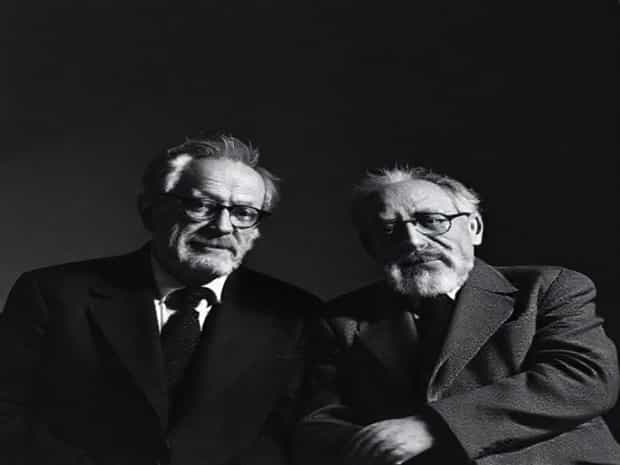
Barney Glaser And Anselm Strauss
In the field of sociology and qualitative research, few names are as influential as Barney Glaser and Anselm Strauss. These two scholars reshaped how researchers approach data by introducing grounded theory, a method that emphasizes building theories directly from empirical evidence. Their collaboration left a significant impact on the social sciences, inspiring generations of researchers to rethink how theories are developed and applied. Understanding their contributions requires looking at their backgrounds, their partnership, and the evolution of their ideas in academic circles.
Background of Barney Glaser
Barney Glaser was born in 1930 and later became one of the most recognized sociologists in the world. He studied at Columbia University, where he was influenced by leading scholars in sociology and statistics. His academic path emphasized methodological rigor and a strong foundation in both qualitative and quantitative research. This background helped him bring a systematic perspective to qualitative research, which later played a vital role in his work on grounded theory.
Background of Anselm Strauss
Anselm Strauss, born in 1916, came from a slightly different academic tradition. He studied at the University of Chicago, a place known for the Chicago School of Sociology. Strauss was deeply involved in symbolic interactionism, an approach that highlights how individuals create meaning through social interactions. This perspective shaped much of his later work, especially his contributions to grounded theory. Strauss emphasized the importance of understanding human experiences, particularly in contexts such as health, illness, and everyday life.
The Collaboration Between Glaser and Strauss
The partnership of Glaser and Strauss began in the 1960s when they worked together at the University of California, San Francisco. Their collaboration led to one of the most influential works in qualitative research the bookThe Discovery of Grounded Theory(1967). In this publication, they introduced the idea that theory should not just be imposed from existing literature but rather emerge from the data itself. This was a groundbreaking shift in how social research was conducted, challenging traditional approaches that relied heavily on pre-existing frameworks.
The Discovery of Grounded Theory
Their 1967 book laid the foundation for what became known as grounded theory methodology. The central idea was that researchers should collect data and allow patterns, categories, and concepts to emerge naturally. Instead of starting with a hypothesis, researchers using grounded theory immerse themselves in the field, analyze qualitative data, and then gradually build theoretical insights. This approach provided a more flexible, dynamic, and authentic way to study social life.
Core Principles of Grounded Theory
The methodology introduced by Glaser and Strauss is built on several key principles
- Constant Comparative MethodData is continuously compared with other data to identify similarities, differences, and patterns.
- Theoretical SamplingData collection is guided by emerging concepts rather than predetermined samples.
- Coding ProcessResearchers categorize data into codes, which later form broader themes and concepts.
- Emergent TheoryThe theory arises naturally from the data instead of being forced into a pre-existing model.
Glaser’s Perspective on Grounded Theory
Barney Glaser strongly advocated for what he called classic grounded theory. His approach emphasized allowing data to speak for itself, without being overly influenced by preconceived frameworks. Glaser believed that researchers should maintain an open mind, avoid forcing data into rigid categories, and let theory naturally emerge through systematic analysis. He published several books expanding on his perspective, ensuring that grounded theory remained true to its original vision.
Strauss’s Perspective on Grounded Theory
Anselm Strauss, while sharing the original vision, later developed a slightly different approach to grounded theory. Along with Juliet Corbin, he co-authored several influential texts that provided more structured techniques for coding and analyzing data. This approach, often called the Straussian version of grounded theory, emphasized more detailed coding procedures and guidelines for building theoretical frameworks. While some saw this as adding clarity, Glaser criticized it for being too rigid and prescriptive.
Differences Between Glaser and Strauss
Over time, the collaboration between Glaser and Strauss gave way to differences in methodology. The split can be summarized as follows
- Glaser focused on flexibility, discovery, and keeping the researcher’s perspective open to unexpected findings.
- Strauss emphasized systematic coding, structured procedures, and practical guidance for researchers.
Although their perspectives diverged, both contributed valuable insights that expanded the scope and influence of grounded theory. Today, researchers can choose between the classic and Straussian approaches, depending on their needs and preferences.
Impact on Sociology and Beyond
The contributions of Glaser and Strauss extend far beyond sociology. Grounded theory has been adopted in various disciplines, including nursing, education, psychology, anthropology, and business studies. Its emphasis on data-driven insights makes it highly versatile across fields where understanding human behavior and experiences is essential. For example, in healthcare research, grounded theory has been widely used to study patient experiences, healthcare systems, and professional practices.
Applications of Grounded Theory
The grounded theory approach introduced by Glaser and Strauss has found practical applications in many research areas
- Healthcare ResearchUnderstanding patient narratives, coping strategies, and interactions with medical professionals.
- EducationExploring teaching methods, classroom interactions, and learning experiences.
- Organizational StudiesAnalyzing workplace dynamics, leadership styles, and employee behavior.
- Technology StudiesInvestigating how people adapt to digital tools and online environments.
This adaptability highlights the enduring relevance of their ideas across both academic and professional contexts.
Legacy of Barney Glaser and Anselm Strauss
Both Glaser and Strauss left a lasting legacy in the academic world. Strauss passed away in 1996, but his writings continue to shape research in sociology and beyond. Glaser, who lived until 2022, remained an active voice in defending and promoting classic grounded theory. Their combined contributions continue to guide how researchers think about data, theory, and the relationship between the two.
Criticisms and Challenges
While grounded theory has been highly influential, it has also faced criticism. Some argue that the approach can be too time-consuming, requiring extensive data collection and analysis. Others point out that differences between Glaser and Strauss have led to confusion about what constitutes true grounded theory. Despite these debates, the method remains a cornerstone of qualitative research, valued for its ability to capture the richness of social life.
Barney Glaser and Anselm Strauss transformed qualitative research by introducing grounded theory, a methodology that encourages building theories directly from data. Their collaboration, though later divided by methodological differences, produced one of the most influential research approaches in the social sciences. By focusing on real-world experiences and emphasizing flexibility in research design, they provided tools that remain relevant across multiple disciplines. Today, whether researchers follow Glaser’s classic approach or Strauss’s structured coding methods, the impact of their work continues to shape how knowledge is created and applied.